Capital Must Not Exceed Poetry: Claudio Tozzi’s Exhibition Insight

Multitude, Claudio Tozzi, 1968

Claudio Tozzi: Capital Must Not Exceed Poetry

marcelo guarnieri gallery | são paulo

Opening: March 29, 2025, from 11 am to 5 pm

Visitation: March 29 to April 30, 2025

Between March 29 and April 30, 2025, Galeria Marcelo Guarnieri presents “É necessário que o capital não exceda a poesia” (Capital must not exceed poetry), the first exhibition by artist Claudio Tozzi (São Paulo, 1944) at São Paulo location. The exhibition brings together works made by the artist between 1968 and 2024, covering more than fifty years of intense production, during which he reflected on the power of the constructed image in a visual transit between public and private space. The exhibition includes a critical text signed by curator Diego Matos. 

Claudio Tozzi began his artistic production in Brazil in the 1960s, approaching the language of Pop Art and the Brazilian “New Figuration” program with a critical reading of the emerging mass consumer culture that was part of a newly installed military dictatorship. In those early years, he paid special attention to symbols linked to popular militancy, such as images of protesting crowds or the face of Che Guevara, for example. The screw, a trivial object with a strong political charge when associated with the working class, runs through several decades of his production, becoming a symbol in itself within his poetics. Tozzi explores its geometry, sculptural qualities, structural function, and ability as a piercing object to articulate space-in and space-out.

His interest in the technical and visual possibilities of the reticule, initially explored through serigraphy, was reconfigured through dotted paintings or works such as “Polution” (1973), in which he explored the dot as a particle in the physical composition of the atmosphere. Still in the 1970s, as part of his investigations into compositional structures and the formation of the image in processes of integration and disintegration, he dedicated himself to the relationship between light, color, and pigment. In more recent productions, between 2022 and 2024, he explored the reticular nature of the grid format through serialized geometric compositions using materials as diverse as rubber and nylon.  

Diego Mattos observes in the exhibition’s critical text: “Tozzi has never lost sight of a future perspective in which he resiliently maintains the idea: Capital must not exceed poetry. This is perhaps a reflection that functions as the conceptual anchor of his production and has been appropriated in the most recent work selected for the exhibition. […] In this way, at a time of great sensitivity to the unresolved impasses of the past, such as the discussion of the amnesty law and the struggle for memory, truth, and justice, the artist’s works gain a new injection of historical pertinence and help us to think about the real emergencies of now. Just look, for example, at the profusion of images of astronauts represented in the most varied ways in his works: a heroic figure from the times of the Cold War who continues to be an ideology in the space race and the dispute over symbolic power.

Claudio Tozzi: Capital Must Not Exceed Poetry

by Diego Matos, March 2025

A necessary preamble

To present the vast artistic output of Claudio Tozzi (São Paulo, 1944) is to take a wide-ranging flight over more than six decades of contemporary Brazilian art. In this way, the exhibition produced and organized for the context of Galeria Marcelo Guarnieri, in São Paulo, sheds light on aspects of the artist’s poetics and practice that go far beyond his works linked to the new Brazilian figuration, sometimes treated as a manifestation of national pop art.

In the exhibition, it is possible to glimpse various paths of his experimentation that reverberate to this day, linking him unquestionably to the radicalism of Brazilian art in the 1960s and 1970s. However, Tozzi has never lost sight of a future perspective, in which he resiliently maintains the idea that “capital must not exceed poetry.” This is perhaps a reflection that functions broadly as the conceptual anchor of his production and which has been appropriated in one of his most recent works, a piece that is also present in this exhibition. 

From the idea of his art as a subjective reportage in the 1960s, formulated graphically, to the interferences and shuffling of object and graphic signs of the landscape under construction in the 1970s and 1980s, Tozzi’s repertoire provides us with an abundant apparatus for understanding the relations of capital and power that sustain our political-urban condition. The beginning of his artistic journey coincides with his first years as a student at the Faculty of Architecture and Urbanism of the University of São Paulo (FAU-USP), and the consolidation of his first studio in partnership with his generational peers, a time of great political unrest in the early years and, soon afterward, of intense repression, censorship and terrorism with the arrival of the Brazilian civil-military dictatorship in 1964. As such, there was no way contemporary expression could pass unscathed by the facts of the country’s reality. If we revisit some themes from our recent history today, let’s also do so by looking at Brazilian artistic production.

In fact, there is a real class consciousness and a genuine interest in thinking about Brazil in all its magnitude, paving the way for modern foundations and with a clear interest in socio-cultural transformations among all its peers, not just those who orbited the FAU-USP context or even in the São Paulo art circuit. Part of this artistic class was allied to student militancy and other social movements. Moreover, even though there was a clear separation between daily activities, real contamination between merits could occur.

It was almost inevitable, at times, that an ethical and social stance would require a position that was as political as it was aesthetic. This was what Hélio Oiticica discussed in his seminal text, Brasil Diarreia (1970), in which he assessed the state of the arts in the country. At the end of the text, he wrote: “There is no such thing as ‘experimental art,’ but the experimental, which assumes not only the idea of modernity and the avant-garde but also the radical transformation in the field of prevailing concepts-values: it is something that proposes transformations in behavior-context, that swallows and dissolves coexistence.” For this reason, a considerable part of Tozzi’s production, which radicalized language, is based on Oiticica’s far-sighted approach. In the exhibition, it is possible to recognize and understand his approach being put into practice at the end of the 1960s through the photographic and historical record of the Guevara flag (1968) produced by the artist.

Guevara, Claudio Tozzi, 1968.

Its public display occurred at a happening conceived and promoted by Hélio Oiticica himself in Praça General Osório, south of Rio de Janeiro, in February 1968. Both his banner and those of his peers – Nelson Leirner, Flávio Motta, Carlos Scliar, Marcello Nitsche, Carlos Vergara, Rubens Gerchman, Glauco Rodrigues, Anna Maria Maiolino, Pietrina Checcacci, among others – were arranged on clotheslines and trees, in an organic and ephemeral action, which included performance situations and activation of these devices. It was a clear move away from institutional spaces and a collective embrace of freedom in life, between celebration and demonstration. Months later, the siege would be closed with the arrival of the most violent and limiting institutional act, AI-5. Curiously, this political condition, with its strong castrating and anti-civilization content, contributed to an even more radical handling of our contemporary art, with the most diverse fissures in the language and circuit of art itself.

A historical perspective

Far beyond the world of art, there is no way to dissociate the current debate from our cultural wealth in times of new historical reparations. In general, plastic production has walked and is walking, pari passu, with our continuous historical process and its socio-economic and cultural reverberations. Claudio Tozzi is also part of this process. His work, while exploring the intricacies of language, is also a historical document of a passage of time, even causing critics in the past to define it with a reportage value. We’ve talked about this before.

Like many of his peers, the artist was a direct victim of the structure of the state of exception. His work was destroyed and seized, and he was persecuted, interrogated, and imprisoned. One way or another, in his professional activity, Tozzi never made concessions, whether in his decades-long teaching at FAU-USP or in the coherence, ethical, and ideological rigor of his production. As a student of professor and artist Sérgio Ferro – now one of his great friends – he learned the indelible mark of the political struggle that also took place in the aesthetic field. From an intellectual tradition based on historical materialism and the radicalism of the modern ideology in the Brazilian context, he built a production with a strong spatial concern (the space of life and experience), in which he always combined graphic and formal expression with the country’s cultural reality. 

Today, at a time of great sensitivity to the unresolved impasses of the past, such as the discussion of the amnesty law and the struggle for memory and truth, reparation and justice, the artist’s works gain a new injection of historical relevance and help us to think about the real emergencies of now. Between the title (text) and the work (image and material), we can see the precise choice of signs that tell us a little about the human adventure contaminated by everyday life and citizenship. In this respect, the 1971 work O retrato (The Portrait) provides an interesting reading of the meaning of “looking,” a cognitive function built far beyond the physicality of the five human senses. 

It’s also enough to notice, for example, the profusion of images of astronauts represented in the most varied ways in his works: a heroic figure from Cold War times, who continues to be a human ideology in the space race and the dispute for material and immaterial power. In fact, in recent times, when we see the traumatic return of astronauts trapped in a space station for several months, the doubling of the stakes in the space race in the face of the imminent climate catastrophe, and the new romanticization of the idea of exponential and infinite growth and expansion, as well as the frightening rearmament around the world, works with clear symbolic and semiotic value like the artist’s works gain a kind of new relevance in the historical present.

Austronauts, Claudio Tozzi, 1969

Another important issue is understanding that his conceptual and practical initiatives have spanned six decades of our history, making it possible always to be sensitive to social and behavioral transformations. Beyond a poetic perception, there is always a purpose to which the drawing or project seeks to respond. I’m not talking about the utilitarian aspect of design but an intention that goes beyond the formal condition of the work. In many of these works, there is a concern to understand and problematize the very nature of the space established by architecture and urbanism, as well as its unfolding in the conditions and characteristics of the city, art’s contact with notions of territoriality, etc. All of this, however, is under the umbrella of an irreducible understanding of relief such as that given by the show’s title. 

Some plastic-poetic contributions

Claudio Tozzi is responsible for a poetics of iconography, all rooted in his time. To this end, one of his longest-lasting initiatives is the canvases he produced with a keen command of reproducibility techniques, in which he examined (and continues to examine) the idea of the crowd and the power of collectivity as representation, more often than not, after photographing many of the popular demonstrations he attended. Since then, the artist has maintained the importance of three plastic factors: colors, pigments, and the study of light. Each of these factors has been refined over the years, along with the characters and objects he has chosen to represent. Note, for example, that a clear compositional study is dedicated directly to these three elements of plastic analysis, the series Color, Pigment, Light, first produced in 1974.

More broadly, two initiatives stand out in this selection of works, both because of their low profile in recent exhibitions and the expressive power of the signs that make them up. The first is the representation of the “screw” as a protagonist element. There are various forms of presentation, from technical drawing to perspective, from colors to multiple shadows, among others. In a certain sense, all of them focus on a pendulum ratio between the precision of contact, fixation, and union and the metaphor of violence in movement and force. This sophisticated perception of violence is the result of a traumatic reading by those who have actually been under the control of the mechanisms of a state of exception. Curiously, the presence of the “nail” element, a recurring sign in the work of his colleague Carlos Zílio in those same 1970s, is from the same period. 

The second, also highlighted, refers to the “interferences” in which images are superimposed using the silkscreen technique or in the suggestion of collages. In these cases, there is a search for graphic accuracy and a radical overlapping of signs that cause noise and strangeness. There is deliberate confusion in the definition of territories that integrate the natural and the built, as well as the disposable and the space of the landscape. These works can be easily paralleled with the North American production of the time and the more radical practices of Brazilian environmental art. Drawing these parallels is a critical exercise after browsing the exhibition.

In some of these works, there is also the representation of what actually exists in a given situation superimposed on another that may not exist, creating falsely real images, such as a combination of train tracks, for example. Also from the same period is the series of pollutions: in these cases, the titles act with the same force of meaning as the superimposed images that were conceived using different reproduction techniques. Thematizing and materializing the very idea of pollution seems to me to be something unprecedented for that moment in the early 1970s.

In the cases in which the object “screw” is brought in, there is a look that happens like a magnifying glass, one that goes into the intricacies of the fitting of the screw itself, in what defines it as such. On the other hand, in the contributions dedicated to the chaotic and overlapping outer space, the gaze is on what is outside, on the city and its most diverse and apparently random developments. It is a critical perception of the uncontrollable contemporary city. In both compositions, there is reverence for time. It is the only unwavering constant, captured momentarily in each image constructed by the artist. It is by observing the indices of time recorded in art that we gain a more accurate understanding of our history, our places, and our exchanges in the collective. As Chico Buarque (Julinho de Adelaide) – a lifelong friend and college classmate of Tozzi – said in the first verse of the song Jorge Maravilha (1974): “There’s nothing like time after a setback.” And that’s why making art is always about fighting for the next new time.
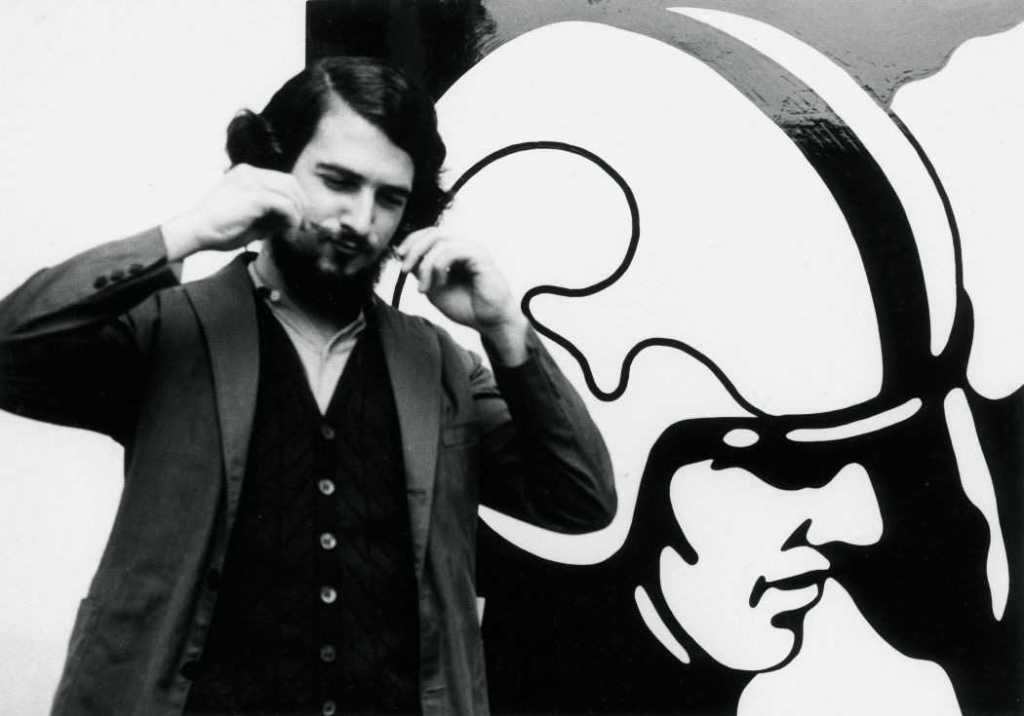
Claudio Tozzi. Courtesy of the artist. © Claudio Tozzi

galeria marcelo guarnieri | são paulo

Info: contato@galeriamarceloguarnieri.com.br

Alameda Franca, 1054
São Paulo
[ mapa/map ]

www.instagram.com/galeriamarceloguarnieri/

Exposing Pasithea at Gallery 612, Santa Monica, California

Gallery 612 Presents Exposing Pasithea

A solo painting showcase by artist Rachel Berkowitz

Gallery 612, Santa Monica, CA, proudly announces the upcoming solo exhibition by Rachel Berkowitz, Exposing Pasithea, on view from May 9th to May 31st. The opening reception will take place on May 17th from 5 PM to 8 PM at 612 Santa Monica Blvd, Santa Monica, CA 90401.

Exposing Pasithea

This series of oil paintings captures the goddess Pasithea’s essence of tranquility, blending soft Romanticism with the fast-paced energy of modern life to highlight the importance of self-care and reflection. Set within intimate, nature-infused spaces, each piece portrays a figure of divine femininity surrounded by contemporary symbols of nurturing. The work evokes a mystical yet playful invitation to pause and embrace rest, offering a visual sanctuary amid life’s chaos.

Each Pasithea is both grounded in the mundane and elevated by the surreal, capturing the delicate balance between self-care and introspection. The goddess acts as a bridge between reality and dreams, encouraging viewers to embrace stillness in a world that rarely slows down.

Join us for the opening reception on May 17th from 5 PM – 8 PM at Gallery 612 for an evening of art, conversation, and reflection.

About the Artist

Rachel Berkowitz (b. 1993) is a Los Angeles-based artist specializing in painting, drawing and photography. A UCLA Fine Art graduate, her work explores nature, magic, and human experience, focusing on biophilic structures that promote conservation and mental awareness. She has exhibited internationally, won fine art competitions, and her work has appeared in Netflix’s Selling SunsetBill Nye The Science Guy and the Wall Street Journal. Berkowitz has attended prestigious global artist residencies and has had many solo artist

showcases. Passionate about community engagement, she teaches art to underprivileged youth and creates nature-inspired murals, fostering creativity, conservation awareness and human connection through her art.

For press inquiries or further information, please contact:

Rachel Berkowitz

info@rachelberkowitzart.com http://www.rachelberkowitzart.com http://www.instagram.com/rachelberkowitzart

Gallery 612
612 Santa Monica Blvd, Santa Monica, CA 90401

http://www.gallery612.com

Art@gallery612.com

The goddess Pasithea, Rachel Berkowitz, 2025.

Renowned Polish and American Artist Paweł Grajnert Unveils New Exhibition in Chicago

Chicago, IL — The DragonFLY Gallery is proud to announce an upcoming solo exhibition by acclaimed artist Paweł Grajnert, opening on March 14, 2025. This marks Grajnert’s first major showcase in the United States, offering a unique opportunity to engage with his multifaceted body of work.

Grajnert, a Polish and American artist, has garnered international recognition for his contributions to visual art, filmmaking, and literature.

In addition to his cinematic achievements, Grajnert’s literary works have been featured in esteemed publications like Another Chicago Magazine and Bracken Magazine

The exhibition will feature a curated selection of Grajnert’s recent visual art pieces, reflecting his deep engagement with themes of nature, displacement, and ideology. Visitors can expect to experience diverse mediums, including painting, sculpture, and mixed-media installations.

“We are thrilled to host Paweł Grajnert’s work,” said the gallery’s curator. “His art resonates on multiple levels, inviting viewers to explore complex narratives and emotions.”

The opening reception is scheduled for March 14 at 6:00 PM, with the artist in attendance for a Q&A session. The exhibition will run through March 2025.

Exhibition Details

Opening Reception: March 14, 2025, 6:00 PM-9:00PM

Duration: March, 2025

Location: 2436 W Madison St, Chicago, IL 60612

For additional details, visit the gallery’s website or reach out via email

About DragonFLY

​We believe we must work together to address challenges and issues of under-resourced communities. We believe everyone has the capacity to succeed. At DragonFLY, we inspire creativity by challenging assumptions, pushing the boundaries and embracing the unknown. We put new ideas into practice, encouraging experimentation and transformation.

Ethos of Transfiguration, artist Francisco Guevara

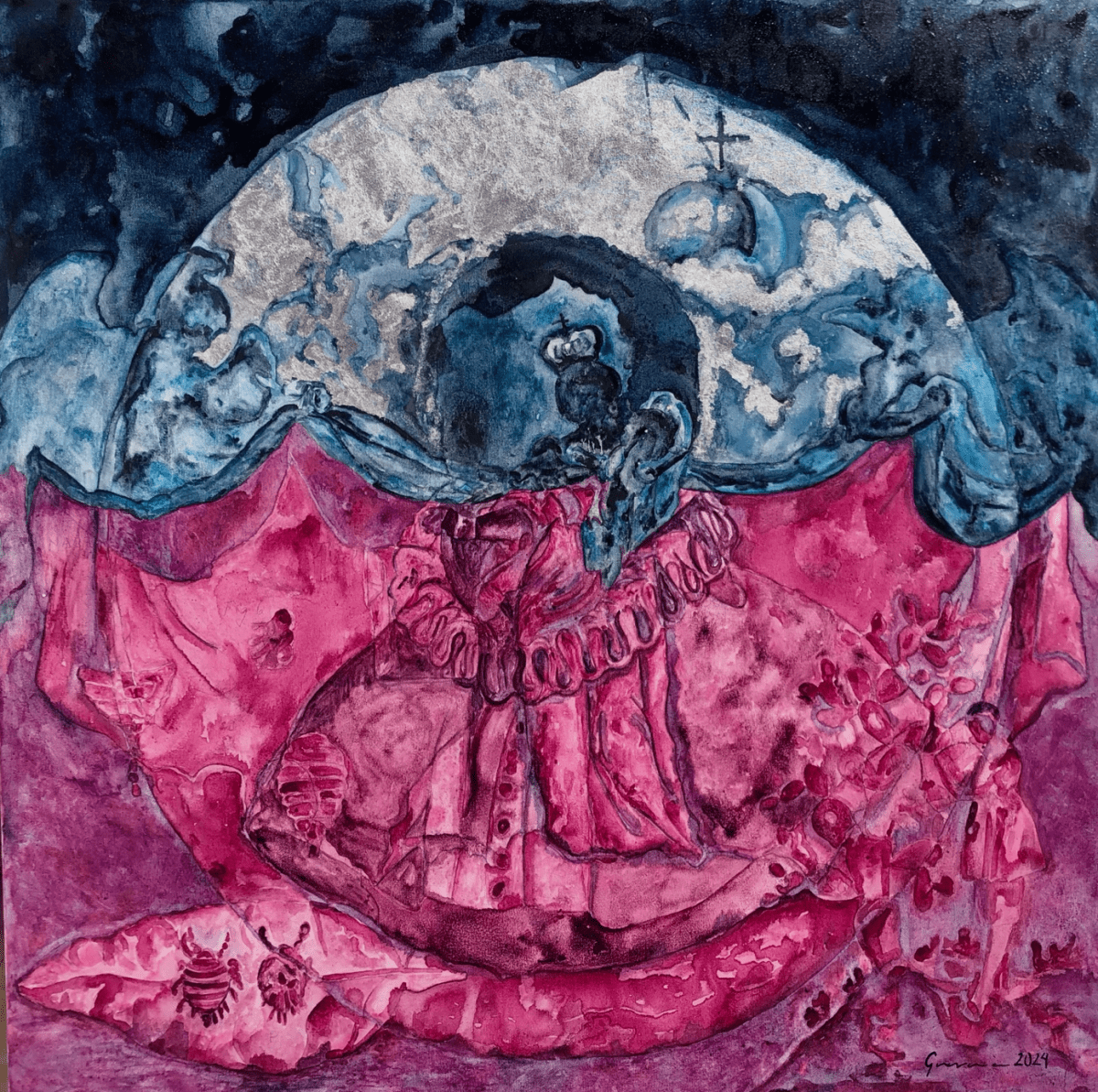
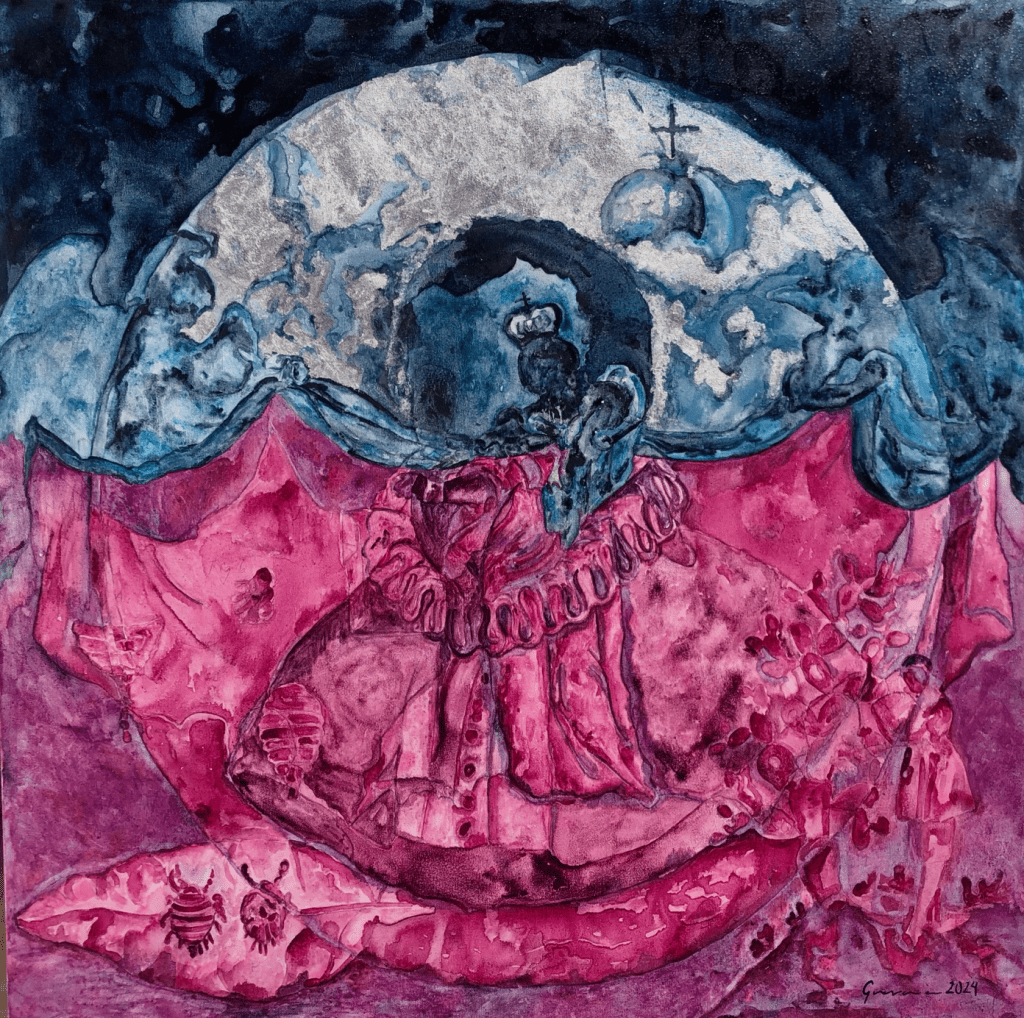
Francisco Guevara, Patrocinio de Sangre, 2024.

Scarlet Red a Symbol of Transfiguration

Scarlet red, a color evoking passion and power, defined the transformative influence of the Society of Jesus in the Americas. As they spread Catholic ideology, the Jesuits established an ideological center in Puebla, Mexico, leveraging civil patronage and the wealth from cochineal—a pigment derived from native exploitation—to found powerful educational institutions. In Ethos of Transfiguration, artist Francisco Guevara, in collaboration with Benemérita Universidad Autónoma de Puebla and Museo Universitario Casa de los Muñecos, reinterprets this legacy. Curated by Dr. Alejandro Julián Andrade and designed by museographer Quetzalina Sánchez, the exhibition opens November 28, 2024, featuring a collection of 18th-century colonial works and Guevara’s contemporary creations to explore the vivid intersections of faith, art, and economic power.

“Ethos of Transfiguration” is a captivating exhibition by contemporary artist Francisco Guevara, curated by art historian Dr. Alejandro Julián Andrade. It highlights both the violence and allure of cochineal red, a thread weaving together stories that have faded over time. Through a nuanced exploration of the Society of Jesus and its patronage rooted in the production and trade of scarlet red, the exhibition presents a dialogue between 18th-century Spanish colonial paintings, some of which presumably include cochineal as a pigment, and Guevara’s conceptual works. This artistic and material journey encompasses featherwork, textiles, gemstones, silversmithing, marquetry, and tempera painting, contextualizing carmine’s production and symbolic power while delving into the political-religious tensions tied to the Jesuits and the intellectual elite they cultivated. In this interplay, the unique brilliance and fluidity of cochineal establish a philosophical and material dialogue, inviting viewers to engage with their own histories through color.

 The scarlet red produced by a tiny insect from the Americas not only transformed Spanish Colonial painting but became a cornerstone of the global colonial economy, shaping color technologies and art across Europe. This exhibition revisits the regional history of the Society of Jesus and its unique practices through a compelling dialogue between historical canvases from the former College of the Holy Spirit—portraits of Ignatius of Loyola, founder of the order, and images of Our Lady of Sorrows—and contemporary works by artist Francisco Guevara. Known for his critical reflections on historical processes, Guevara’s research-based practice transforms these explorations into objects notable for their beauty, effectiveness, and persuasive power. His approach extends beyond content, emulating, deconstructing, and reinterpreting original forms through materials whose symbolic and precious qualities have endured since the viceregal era. Through four thematic pillars—Jesuit missionary work, the order’s foundational history in Puebla, its educational legacy, and the figure of Saint Ignatius—Guevara revisits a narrative that laid the cultural and educational foundations of modern Mexico.

As part of its 15th anniversary celebrations, Arquetopia presents “Ethos of Transfiguration” in collaboration with Benemérita Universidad Autonoma de Puebla, and Museo Universitario Casa de los Muñecos BUAP. This exhibition comprises 32 artworks, including 14 18th-century paintings and 18 contemporary pieces, curated to bridge historical and modern perspectives. Designed by renowned museographer Quetzalina Sánchez, the exhibition opens on November 28, 2024, and will run through February 2, 2025.

Exhibition Details:

Title: The Ethos of Transfiguration: Scarlet Reverence, Faith, and the Legacy of Cochineal

Artist: Francisco Guevara

Curator: Dr. Alejandro Julián Andrade

Exhibition Designer: Quetzalina Sánchez

Venue: Museo Universitario “Casa de los Muñecos,” BUAP, Puebla, Mexico

Dates: November 28, 2024 – February 2, 2025

About Arquetopia: 

Arquetopia is an international nonprofit organization dedicated to promoting art and culture through residency programs, exhibitions, and educational projects. Celebrating its 15th anniversary, it continues to be a benchmark in supporting artists and preserving cultural heritage in Mexico and beyond.  

About Francisco Guevara:

Francisco Guevara is a multidisciplinary artist from Puebla and co-founder of Arquetopia and International Artist Residencies in Mexico, Peru, and Italy. His research focuses on the historical construction of differentiation and distortion through mediums such as painting, installation, and metalwork. His work centers on history, identity, and power dynamics, and has been exhibited internationally in Australia, Spain, Slovenia, Romania, the United States, and Japan. With over 20 years of experience in international art projects, curation, and teaching, he has received numerous accolades for his ability to connect the past with the present through art.

For more information and interviews, please contact:
Nayeli Hernandez, Programs Director Arquetopia Foundation
Email: nhernandez@arquetopia.org

For more detailed information about the exhibition, please visit the following link: https://franciscoguevara.art/

Light Form, A Solo Exhibition by Bill Armstrong

Blue Sphere #433, 2012

BILL ARMSTRONG

Light Form

27th September – 23rd November 2024

HackelBury is pleased to present Light Form, a solo exhibition by Bill Armstrong which explores visual perception and the transformative power of image making to create meditative photographic artworks.

Renowned for his iconic Infinity series, Armstrong explores the boundaries of the visible edge to create ethereal and dreamlike images. Light Form further delves into his fascination with impermanence and abstraction, creating otherworldly compositions which encourage viewers to contemplate their own reality.

“Extreme de-focusing enables me to blend and distil hues, creating rhapsodies of colour that are meditative pieces—glimpses into a space of pure colour, beyond our focus, beyond our ken.“

The exhibition includes abstract works from Armstrong’s MandalasBlue Spheres, and Darshan series, which reference Eastern philosophy and spirituality. 

Armstrong is deeply interested in the viewer’s emotional response to imagery, shape, and colour, aiming to disrupt and transform their experience and expectations.

“The nature of visual perception intrigues me: how the eye continually tries to resolve these images, but is unable to do so, and how that is unsettling.“

Mandala #450, 2003

Blue Spheres explores the universal significance of the circle and the mystical possibilities of the colour blue, whilst Darshandelves into spiritual themes in Eastern thought, referencing the square as a sacred object and its symbolism. The four sides of the square correspond to the four elements (earth, water, wind, and fire), the four seasons, and the four cardinal directions. The Mandala series continues the interest in meditation and its central role in Buddhist spirituality. 

“I am drawn to the idea that we can believe something is real, while at the same time knowing it is illusory, and the experience of visual confusion, when the psyche is momentarily derailed, can free us to respond emotionally. “

This exhibition encourages us to reflect on the universality of human experience – our mortality and the impermanence of life. 

About Bill Armstrong

Bill Armstrong (American b.1952) is renowned for his distinctive technique of photographing collages, creating an illusionary effect that blurs the line between reality and artistic construction. His process subjects the images to a series of manipulations including photocopying, cutting, painting and re-photographing that transforms the originals and gives them a new meaning and context. This approach allows Armstrong to explore themes of impermanence, abstraction and the boundaries of visual perception.

Armstrong graduated from Boston University in 1979 magna cum laude with an BA in History of Art and an MBA in 1987. He has held various teaching positions, including Photography Instructor at the International Center for Photography in New York, and Adjunct Professor of Photography at the School of Visual Arts in New York. He has exhibited extensively across the USA and internationally. He has a solo exhibition at Palau de la Musica Catalana, Barcelona, “Hero/Anti-Hero,” in October-November 2024.

Armstrong has been exhibited widely. Selected public exhibitions include ‘Blur: A Photographic History’, Musée Elysée, Switzerland, 2023, Northern Light, Irish Museum of Modern Art, Dublin and IN FULL LIGHT: Nine photographers interpret the Vatican Museums, Municipality of Milan- Department of Culture, Palazzo Reale, Milan 2018.

Untitled, 2024

About HackelBury

HackelBury was founded twenty-six years ago by Sascha Hackel and Marcus Bury. The gallery is committed to championing artists who push the boundaries of their medium to create meaningful and contemplative work. Originally renowned for showcasing classic 20th-century photography, the gallery has embraced more conceptual and abstract art over the past 15 years, expanding its stable of artists to include those working in photography, drawing, painting and collage.

Hackelbury Fine Art represents a select group of artists whose work reflects a profound depth of thought and dedication to their craft.

FOR ALL PRESS ENQUIRIES PLEASE CONTACT

Camilla Cañellas – Arts Consultancy & PR

E: camilla@culturebeam.com M:+34 660375123

Phil Crook – HackelBury Fine Art

E: phil@hackelbury.co.uk T: +44 20 7937 8688

Instagram @hackelburyfineart

Material Poetry: An Exhibition Exploring Contemporary New Media 

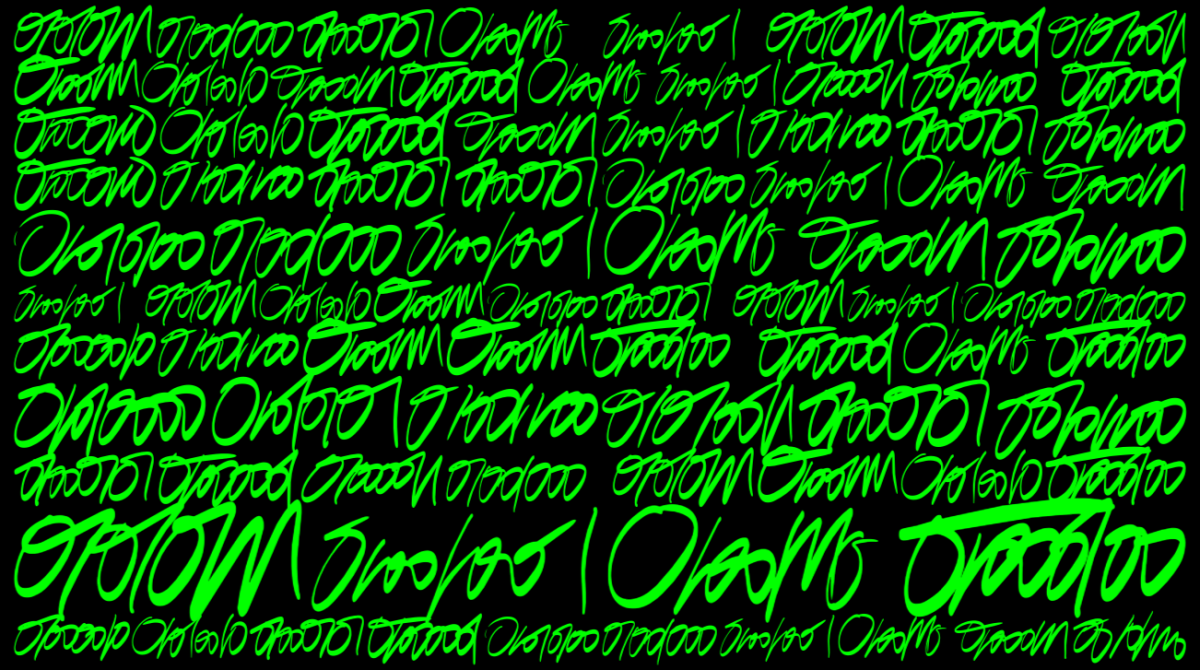
Sasha Stiles, Cursive Binary: Portrait of the Poet (Variation 1), 2024.

MATERIAL POETRY

October 3, 2024 – 2.30pm CET (online)

Ana María Caballero, Danielle Brathwaite-Shirley, Eduardo Kac, Franziska Ostermann, Sasha Stiles

HEK (House of Electronic Artsand synthesis gallery are pleased to announce MATERIAL POETRY, an exhibition exploring contemporary new media poetry, opening on October 3rd on Virtual HEK. Curated by Giorgio Vitale, MATERIAL POETRY showcases the work of five artists – Ana María Caballero, Danielle Brathwaite-Shirley, Eduardo Kac, Franziska Ostermann, and Sasha Stiles – each embracing distinct poetic languages and artistic strategies.

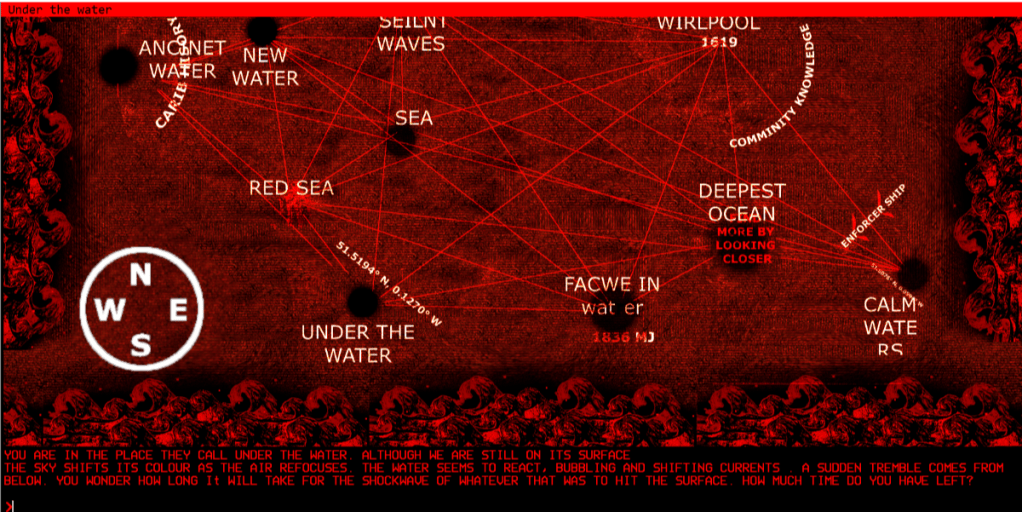
Danielle Brathwaite-Shirley ‘THE OCEAN REMEMBERED YOUR BODY’, 2021.

The exhibition delves into themes of intimacy, identity, and the self offering critical reflections on these topics through various media. Since the 1990s, poetry’s evolution has been profoundly shaped by technological advancements, moving away from the printed page and becoming a more dynamic, interactive, and inclusive art form. The incorporation of multimedia, hypertext, video, the web, emerging technologies like blockchain, and the role of performance have all contributed to poetry’s transformation in the digital age.

MATERIAL POETRY bridges analog and digital realms, embedding poetry into various artistic media and bringing it out of the ordinary. The exhibition disrupts the linearity of text, creating a unique space where the poetic emerges in the digital domain. In these artworks, the artists translate life into visual language, merging text with the viewer’s mind to recreate the lived rhythms and social textures of particular times and spaces, allowing someone else’s voice, words, and body to be experienced intimately. Each work in the exhibition reveals a different facet of this transformation.

Ana María Caballero’s Paperwork reflects the materiality of poetry and its role in transmitting memory. Through performances in cities such as Los Angeles, Bogotá, and Valencia, Caballero gathered audience reactions to her poetry, which she then used to generate digital paper sculptures. These sculptures invoke the architectural elements of each city, blending the personal with the public, and presenting poetry as both message and medium in a new, digital form.

In Danielle Brathwaite-Shirley’s THE OCEAN REMEMBERED YOUR BODY, players navigate a text-based video game that explores identity and memory. The ocean serves as both a metaphor and a physical space, drawing on the artist’s personal history and honoring the narratives of marginalized bodies. Inspired by early text-based adventure games, the piece encourages players to engage deeply with their imaginations, reconstructing the world from their own experiences and histories.

Eduardo Kac’s Letter, originally created as a VR experience, presents a poem in the form of two spiraling cones made of text. The work draws the viewer into an immersive reading experience, where the text can be rotated and navigated in three-dimensional space. Referencing moments of birth and death in the poet’s family, the poem’s emotional weight is amplified by its dynamic form. Letter is a powerful exploration of the spatial possibilities of language and is presented here in its video version, evocative of its vintage interactive form.

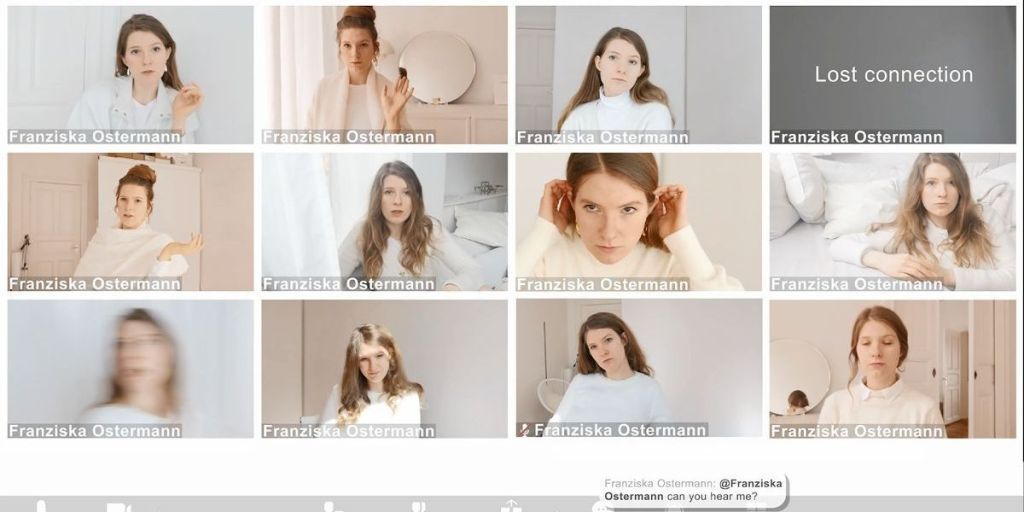
In Franziska Ostermann’s Can you hear me?, the artist stages a virtual Zoom call between different versions of herself. The fragmented conversations, filled with questions like Can you hear me?, highlight the challenges of authentic connection in the digital space. The piece underscores the alienation and separation caused by the very technology that enables the meeting, as the selves attempt to connect but never quite align.

Finally, Sasha Stiles’ Cursive Binary: Portrait of the Poet (Variation 1) is a layered, generative work that merges poetry with AI and digital language. Stiles collaborates with her AI alter ego to reinterpret her poem Portrait of the Poet as a Brief History of Humanity, transforming it into Cursive Binary – a language she developed for transhuman communication. The piece explores the intersection of human and machine, questioning the future of authorship and identity in a posthuman world.

Franziska Ostermann ‘Can you hear me?’, 2021.

MATERIAL POETRY is more than a collection of artworks – it is an intimate dialogue between language and form, with poetry becoming a living, breathing artifact: multifaceted and dynamic. These works challenge binary thinking and embrace hybridity, expanding our capacity to experience, comprehend, and engage with language on a deeply visceral level. They invite us into the ever-evolving story of what it means to be human.

synthesis gallery is a genre-defining cultural organization critically engaged with digital art. Since its inception in 2017, the gallery has produced over twenty-five exhibitions of new media art in Berlin and abroad, online and on-chain, and is dedicated to exhibiting internationally renowned, well-established artists alongside emerging ones.

HEK (House of Electronic Arts) in Basel is Switzerland‘s national center of excellence for all art forms that express and reflect new technologies and media. With its interdisciplinary orientation, the HEK provides a broad public with in-sights into art productions of different genres in the dialogue between art, media and technology. In a diverse programme of exhibitions, smaller festival formats, performances and concerts, the HEK is dedicated to current social themes and issues as well as technological and aesthetic developments.

Exhibition: October 3, 2024 – November 28, 2024

Opening: October 3, 2024 – 2.30pm CET (online)

Venue: virtual.hek.ch

Private tour: email to register (giorgio@synthesis.gallery)

The exhibition is generously supported by Le Random

Join the discussion about the exhibition online at:

Instagram: @synthesis.gallery 

Twitter: @synthesis

TikTok: @synthesis.gallery 

Website: synthesis.gallery

On the Timeless Bond Between Humans and Horses

On the Timeless Bond Between Humans and Horses — through the Lens of Art History

By Anna Archinger

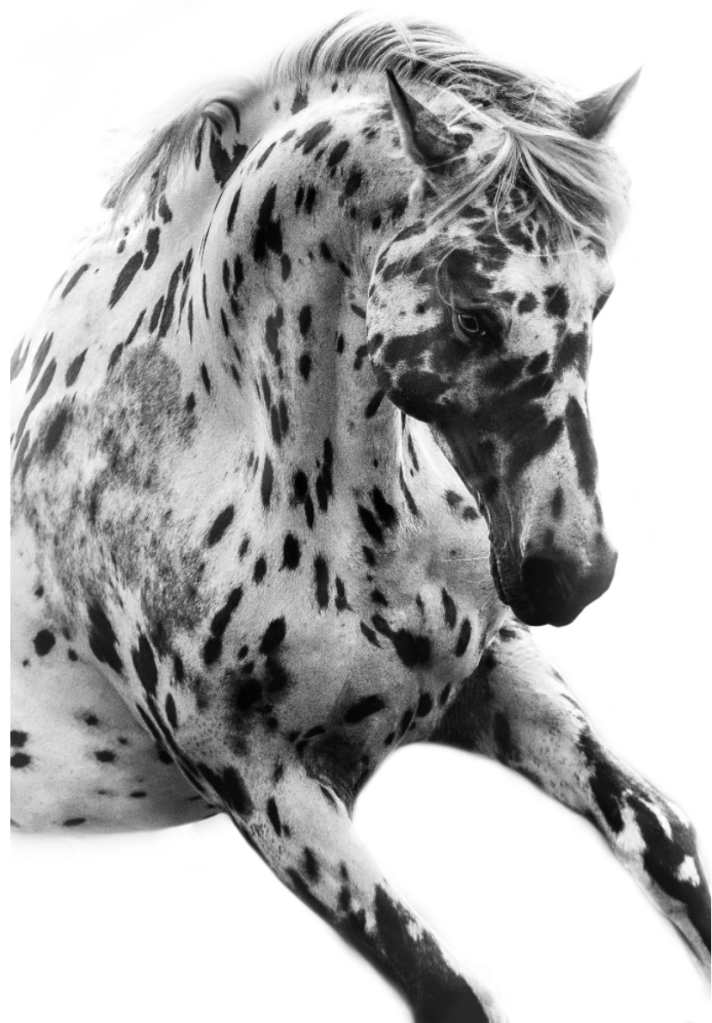
Anna Archinger, Knabstrupper, inkjet print on photographic paper, 2022. Image © Courtesy of the artist.

Horses (1933) by Pablo Neruda

From the window I saw the horses.

I was in Berlin, in winter. The light

had no light, the sky had no heaven.

I looked. I looked and was reborn,

for there, unknowing, was the fountain,

the dance of gold, heaven

and the fire that lives in beauty.

I have forgotten that dark Berlin winter.

I will not forget the light of the horses.

As an equine photographer, my artistic fascination with horses is boundless and continually expanding. Like many artists, I am captivated by their majestic power and elegance, key features that contribute to, as Neruda so eloquently put it, ‘the light of the horses.’  Artists and writers’ fascination with horses motivates me to look more into my own bond with horses and reflect on the reasons why they are so inspiring, making one experience an almost unearthly joy and, strangely, a sense of purpose.

Both Western art history and literature are fountains of inspiration, proof of the artists’ timeless fascination with these creatures whose presence has contributed to the quality of their lives by enhancing commerce and goods exchange, transporting traders from village to village (hundreds of years before e-commerce), or helping their human partners on the frontline. In war scenarios, to rely on a horse meant literally that – to trust the horse with your life. No other animal would be capable of such a deep connection and devotion, but building rapport with them is an art form that – equestrians or not – we all can learn and would gain from reflecting on this gracious, almost mythical bond. I first acknowledged this by studying not only through my photographic lens but also the “academic art of riding” itself, which has proven to be a never-ending source of inspiration for me.

Left: Peter Paul Rubens’s 1603 copy of Leonardo da Vinci’s lost fresco The Battle of Anghiari. Image © Alamy. Right: Sandro BotticelliPallas, and the Centaur, tempera on canvas, 207 x 148 cm, c. 1482. Image Source: Wikipedia

When riding became an art form

The art of riding is a complex process that involves communication and creative negotiation. Its history, as trainer researchers like Bent Branderup have extensively documented, helps us gain insight into how the horse as a means of combat transitioned throughout centuries until what can be called today as “leisure riding.”

Academic horsemanship dates back to the Renaissance when horses were important military vehicles – a tradition that’s been inherited from ancient times. In times of war, horses had, for centuries, two very precise purposes: -1- to protect the prince on the battleground; -2- to help fearless warriors win the battle. The goal was, to quote other professionals, very practical: “As long as the princes themselves fought in the front ranks on horseback on the battlefield, … it was simply a matter of survival, so the weapons exercises were given higher priority than the dressage.”

As princes and key members of European monarchies slowly withdrew from close combat, the demand for war horses decreased, and riding became a practice based on the concept of art for art’s sake. Cavalry schools began to recruit passionate people instead of professional soldiers. With this, the old riding techniques that involved a lot of training to handle weapons on horseback were also given up, and riding started experiencing its highest perfection.

The art of riding flourished for the first time in Naples around 1530, when Frederico Grisone founded the first riding academy in 1532. During the Renaissance, riding academies became so popular that horses captured the interest of artists such as Leonardo da Vinci, Michelangelo, and Raphael—all of whom left us some fascinating horse representations. Sandro Botticelli’s Pallas and the Centaur, a mythological painting tempera that fits in the Early Renaissance Genre, depicts two life-seize figures from classical mythology and probably, like most of his allegorical masterpieces, forms an allegory whose iconography still remains an enigma. The two figures dominate the bare landscape displayed in a vertical composition, focusing one’s gaze on the relationship between the two subjects. Though the composition does not unfold horizontally, its narrative force lies in the symbolism of the figures, which enhances the reading of the piece.

The centaur, a hybrid half-men half-horse creature from the Greco-Roman mythologies, was viewed as a lusty being, a wild and untamed beast, even a barbaric creature who commits violent acts to indulge their lust. Boticelli’s artwork represents the centaur being brought under control after having trespassed on forbidden territory. The tamer, an armed woman depicted as a confident guard, grabs the trespasser by the hair, determining him to take a submission posture. The female figure has been identified by art historians both as the goddess Pallas Athena and the Amazon Camilla, the chaste heroine of Virgil’s Aeneid — the Greek and Roman goddesses of wisdom and strategic warfare.

Some art historians have interestingly expanded the interpretations of this artwork to the point of explaining the political influence of the Medici family in the epoch – with Pallas as the embodiment of the Medici virtues and vision for peace (the rings emblem and the olive branches). Others have claimed that the female guardian encodes the state of alertness that Lorenzo de Medici maintained in Florence against the chaotic and cunning adversaries represented in this artwork by the Centaurs. What is without doubt hard to dispute is the moral content of the painting, in which virtue is depicted as victorious over sensuality and fierce behavior.

Connecting with a 500+ Kg horse requires their consent, and that’s captivating

I’ve been personally invested in horses as an equine photographer and a horse trainee, so I prefer to say that I connect with horses instead of taming them. Adult horses can weigh 500 kg (+/-). If you learn to connect with them, you can reach the point where you truly feel their power and that they generously share control over their own strength, making you feel almost like a centaur. To put it short, the bond can be empowering and, at the same time, humbling.

It became increasingly accepted that you can establish a predictable dialogue and body coordination with a horse by showing them that you are safe and know what you are doing. That means working with horses is based on learning to control your energy and compensate for the horses’ vibe. Riding, or horse training in general, is a sport that requires excellent control over your own body and coordination. But it is also a lot of intention. A high-energy horse requires a calm presence to calm them down. A low-energy horse, you can bring up by adding energy into the communication. Sometimes, just thinking of a correction will convince the horse to behave as expected. It’s like unconsciously giving them a signal with your body language, but there is definitely also a mental connection, especially with the more sensitive horses. Simply put, the relationship between a rider and their horse is based on respect and trust. Yet, there is no such thing as full control of horses. If they would change their mind, they could simply run us over. It is more about “consent,”  about building trust and learning to negotiate with them respectfully, which I find fascinating!

The Horse in Motion: Between objective and pictorial lenses

My photographic practice draws inspiration from Western art and how artists have expanded their understanding of horses’ value to our existence. During the Renaissance, painters mostly created anatomical studies of horses in various scenarios, especially military scenery. However, the invention of photography revolutionized knowledge in terms of its mechanical reproduction and distribution.

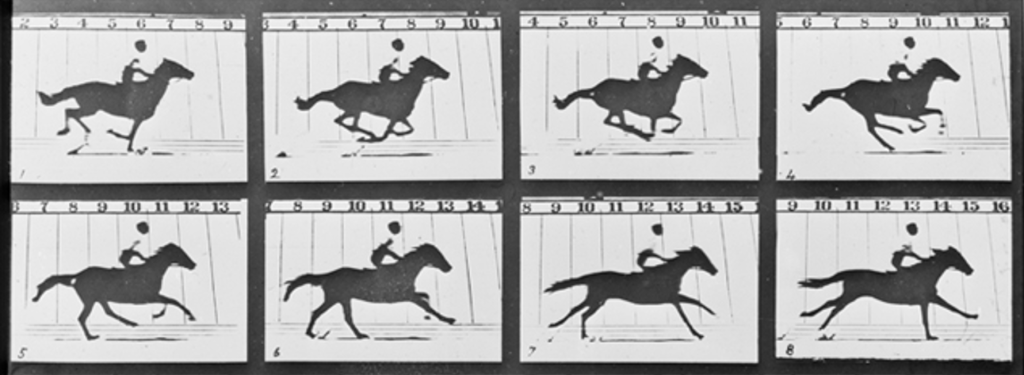
Eadweard Muybridge, Horse in Motion, cca. 1878. Image Source: Kingston Museum and Heritage Service.

Eadweard Muybridge’s first scientific study to use photography in the late 19th century perfectly shows that. Muybridge elaborated on a camera-shooting system that allowed him to capture the movement sequence, contributing to the understanding of “animal locomotion” and enriching visual effects with a perfect succession of images. His horse-riding studies became icons of the first visual research, demonstrating that a succession of images can represent movement. 

Muybridge pioneered motion pictures and is considered today the forefather of cinema due to his objective visual analysis of movement. His photographic inquiry of movement brings me back to my own artistic research and language. My equine photography is grounded on a strong bond with horses. My study of the “academic art of riding” informs my ‘portraiture’ of these monumental presences. Whenever I am commissioned for a horse shooting, I focus on its unique character and try to bring it out without pressing the animal to behave. Rather, I’m giving the horses space to express themselves; I observe their movements and capture their particularities, which often surprises many horse owners with accurate representations of their beloved friends. When you hear ”That’s exactly how my horse looks at me!” or people’s excitement when they recognize the particularities of their horses, I feel like an accomplished witness of a strong bond, and my photographs are ‘visual proofs’ of this special human-horse connection.

My artistic language is informed by studying the “academic art of riding”, as learning to control one’s energy and gaining a fundamental understanding of equine biomechanics is a prerequisite to a harmonious riding experience. This precious dynamic and a horse’s authentic character are aspects I’m trying to capture. However, I am meeting any horse without expectations from them. Even if I have certain visual compositions I might want to try beforehand, any of my sessions are horse-friendly as I adapt to the horse’s attitude. In a way, my artistic approach to horses is based on an objective reflection on a horse’s character and mood.

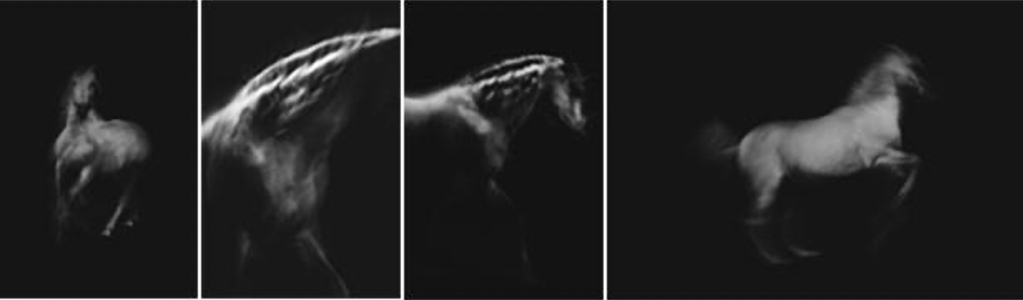
Unlike Muybridge’s objective lens, it’s important for me to play with different photographic techniques. For instance, long-exposure photography allows me to follow the horse’s motion, filling the frame with pictorial traces whose effects make the images almost look like drawings. My series Spirit in the Darkperfectly encapsulates this idea. The series consists of nine photographs depicting horses moving on a black background. The long-exposure technique gives the series a painterly aesthetic, almost Surreal, recalling Pictorialism, the first aesthetic movement in the history of photography to reclaim photography as an art form and not a mere device to represent reality. Dating from the same period as Eadweard Muybridge’s visual research. Pictorialism was an international style among photographers who explored the artistic potential of the new technology, often looking to iconic paintings for stylistic models. 

Given that I live at an equine education center, and I practice “academic at of riding” myself, my photographic language also builds on both objective and subjective approaches to photography, like Muybridge and the Pictorialists. Far from having reached a strict visual language, I’m boldly experimenting with techniques, composition formats, and chromatics, seeking to emphasize the beauty of horses in fresh ways.

Anna Archinger, Spirit in the Dark, photographic series, 1-4/9, 2023. Image © Courtesy of the artist.

Though equine representations in Western art history seem to be dominated by anatomical studies or glorifying and tragic postures in the military genre, horses have also been carrying humans in less dangerous scenarios, nurturing self-reflection on one’s inner power and true nature—freedom. Never in history was leisure riding so celebrated until today, enriching our timeless bond with horses more than ever. Because a horse is like a mirror. If the rider is insecure and hectic, so will the horse; if the rider is calm and relaxed, the horse will behave like them. This responsiveness inspires riders to seek harmony in the relationship and understand they must be present and aware of their own energy.

Like any mirror, another element whose symbolism has been fascinatingly reflected in art across centuries, the human-horse friendships expand a sense of immaterial space. This bond is timeless that, like any mirroring effect, it can be best reflected and celebrated in the present moment, in the here and now. A horse offers a mutual exchange to those who show them respect and confidence. It’s a symbolic exchange that can accompany the rider’s move through life and its unpredicted storms in one of the best companies. Actually, it would be accurate to say that horses are capable of more than symbolic exchange because their power and distinct characters help us forget ‘dark winters’ and replace uncomfortable emotions with their well-composed attitude and ‘light’ that shines from within. 

After one experiences the depths of the timeless bond with horses, it’s almost impossible to forget it. It’s a relationship you just want to nurture and sustain because it enhances the quality of your life. It is for this reason that I enjoy my commitment to equine photography and explore my fascination with horses through my lens — and I can only experience joy in sharing this passion with others.

Left: Anna Archinger, Connection, inkjet print on photographic paper, 30 x 45 inches, 2023. Image © Courtesy of the artist. Right: Anna Archinger, Framed Bambi, inkjet print on photographic paper, 30 x 45 inches, 2023. Image © Courtesy of the artist.

Anna Archinger (b. 1994, Neuburg an der Donau) is a self-taught German artist based in Dronningmølle, Denmark. Her art practice focuses on horse photography as her fascination with horses goes beyond a mere passion. She lives at the farm Enggaarden, an education center specialized in teaching the “Academic Art of Riding,” where her connection to horses recalls seminal artists’ fascination with horse study. Within the last three years, Anna has been elaborating a stunning body of equine artwork, some of which was distinguished with the Honorable Mention in the Professional category by International Photo Awards USA (2023) and was shortlisted in a private competition run by the Motif Collective Photography Gallery, (2023). Anna’s work is also scheduled to be presented to the public throughout 2024 in venues such as The Glasgow Gallery of Photography (Glasgow, United Kingdom), the Black and White Photography Festival (Athens), and the Chateau Gallery (Louisville). More about her work: http://www.archinger.dk/

Publishing in Art Style Magazine is free of charge for anyone. There are no article processing charges or other publication fees. Art Style Magazine is independent and supports the Open Access Movement. The editors of Art Style Magazine cannot be held responsible for errors or any consequences arising from the use of information contained in essays and articles published on the Art Style Magazine’s website and editions. Authors agree to the terms and conditions and assure that their submissions are free of third parties’ rights. The views and opinions expressed in the essays and articles are those of the author and do not reflect the views of Art Style Magazine. The authors of Art Style Magazine’s essays and articles are responsible for its content. The Art Style Magazine‘s website provides links to third-party websites. However, the magazine is not responsible for the contents of those linked sites, nor for any link contained in the linked site content of external Internet sites (see Terms & Conditions).

BLUE CITY, a solo exhibition by Katarina Andjelkovic

Singidunum Gallery of The Association of the Artists of Applied Arts and Designers of Serbia, in Belgrade, is pleased to present: BLUE CITY, a solo exhibition by Katarina Andjelkovic.

Katarina Andjelkovic – BLUE CITY

21-29 June 2024

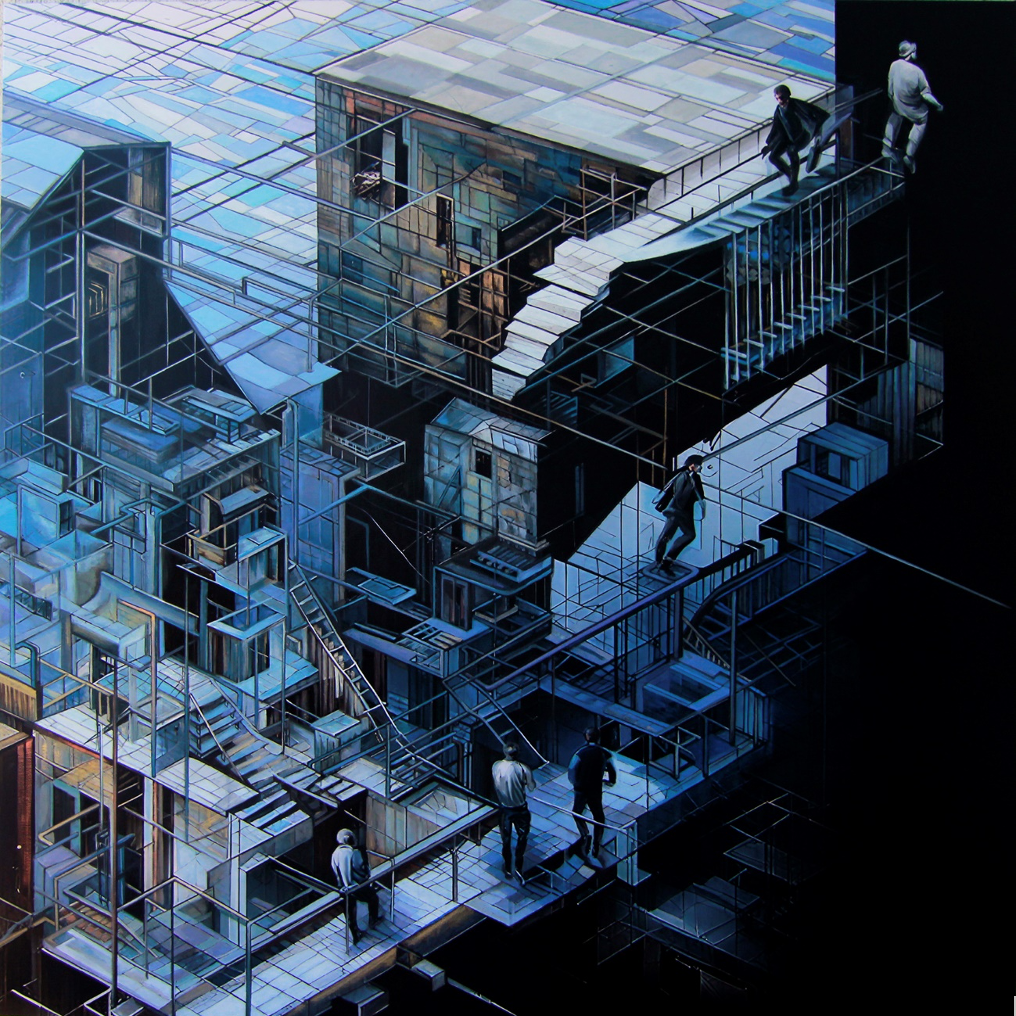
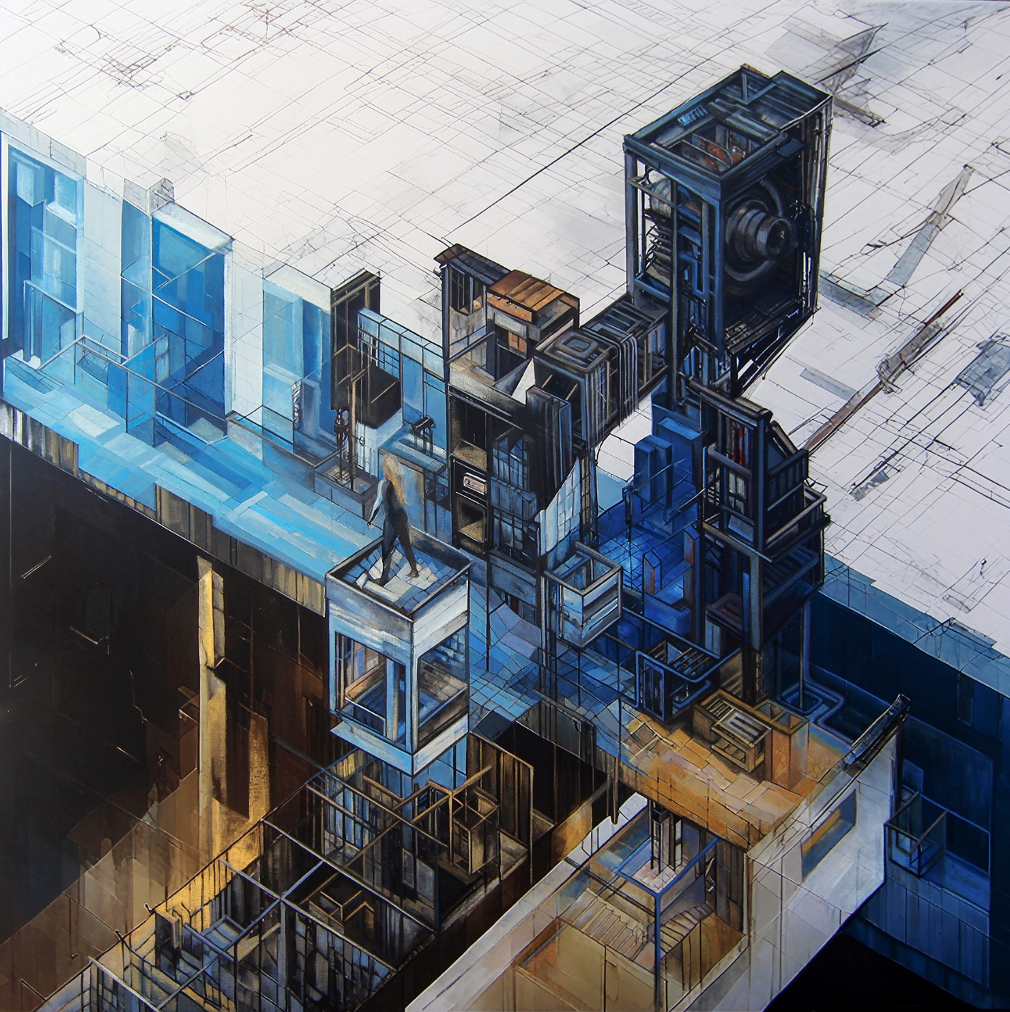
Katarina Andjelkovic. Blue city. A hyper-condition of water encounters, 2023-24. Acrylic and pasta on canvas, 100×100 cm.

Katarina Andjelkovic. Blue city. Re-collecting water encounters, 2023-24. Acrylic and pasta on canvas, 100×100 cm.

Katarina Andjelkovic. Blue city. Unfolding spaces in between building fragments, 2023-24. Acrylic and pasta on canvas, 100×100 cm.

Katarina Andjelkovic. Blue city. Re-collecting water encounters, 2023-24. Acrylic and pasta on canvas, 100×100 cm.

Katarina Andjelkovic. Blue city. A sequential journey through water processes, 2023-24. Acrylic and pasta on canvas, 100×100 cm.

Katarina Andjelkovic. Blue city, 2023-24. Acrylic and pasta on canvas, 100×130 cm.

The extreme conditions of an unprecedented rainstorm paralyze the city. Affected by post-apocalyptic floods, city infrastructure suddenly grows, congests and overwhelms buildings. In this way, the infrastructure supports the movement of water in horizontal and vertical directions and pumps water out of inhabited areas with a pipe system. The question is open: can color in painting offer a way to discover water as architecture, that is, how the elements of nature like water can become architecture using the language of art? By integrating various shades of blue into the city structure, infrastructure and abstract tectonics, I deal with the representation of architectural elements in relation to the polyvalent meaning of the color, the formal and material qualities of the image. In the game of mosaic abstract planes and collage fragments, the blue color grows into a constructive grid that carries the exposed decaying structures of the buildings. These congested infrastructural grids speculate on how water becomes an archetype of the city’s reconstruction process after flood disasters. The exploration of architectural representation reintroduced painting as a way of thinking about space, light and color. Nevertheless, the paintings are essentially modern: they are pictures of fragments, collages, assemblages, parts that represent the whole of mosaic abstract planes and rectangular forms. The project consists of 8 spatial sequences in which unexpected environments and places are transformed into active protagonists.

Exhibition program: 21-29 June 2024

The author will give a multimedia lecture entitled “Image making in the aftermath of the digital revolution.” All presented works were published in international scientific journals (Arts & Humanities Citation Index, Web of Science) and exhibited internationally.

BIOGRAPHY

Katarina Andjelkovic, with a Ph.D., M.Arch.Eng., M. Applied Arts, is a theorist, practicing architect, researcher and painter. She is a high-skilled draftsman, writer and researcher. Andjelkovic is simultaneously engaged in architectural practice, teaching, and research. Katarina’s research, writing and teaching, focus on how ideas can be translated across different media, crossing architecture, visual arts and film. Katarina is currently a MUSAE artist-in-resident (Politecnico di Milano). Katarina has extensive experience in teaching architecture and visual arts: as a Visiting Lecturer at Coburg University of Applied Sciences – Faculty of Design (Department of Architecture) in Germany (2023); as a Visiting Professor at Epidemic Urbanism Initiative (Columbia University and Morgan State University, U.S.); as the main instructor of the HAND-DRAWING COURSE at SMT New York, U.S. (2021), a Visiting Professor and Chair of Creative Architecture, University of Oklahoma (2017), Institute of Form Theory and History in Oslo, Institute of Urbanism and Landscape in Oslo, Norway, at The University of Belgrade – Faculty of Architecture. Katarina is guest-lecturing and mentoring at TU Delft – Faculty of Architecture and the Built Environment, AHO – Oslo School of architecture and design, FAUP Porto, DIA Anhalt Dessau, ITU – Istanbul Technical University. She lectures internationally at conferences in more than 40 countries in Europe, United Kingdom, North America, Canada, Australia, China, and South America. Katarina has published her research widely in international journals (Web of Science). She is a full author of the Preliminary Architectural Design, a national project supported by the government of Serbia. She won the Belgrade Chamber of Commerce Award for Best Master Thesis defended at Universities in Serbia in all disciplines. Katarina has published 3 monographs and book chapters with Intellect United Kingdom, University of Chicago Press (U.S.), Routledge, Taylor and Francis Group (London, United Kingdom), Büchner-Verlag eG, Marburg/Germany, etc. During her Ph.D., Andjelkovic’s research stays were all at European universities in Copenhagen, Ljubljana, Porto, Dundee U.K., Brighton U.K., Dublin, Madrid, etc. Andjelkovic exhibited her artwork at 8 Solo Exhibitions and at more than 80 international architectural, fine arts, and photography exhibitions, including group exhibitions at Pall Mall Gallery in London, Royal Hibernian Academy in Dublin, MAAT Museum in Lisbon, International Biennial of Illustration ”Golden Pen” in Belgrade, Loughborough University in the United Kingdom, TU Delft in the Netherlands, the Museum of Applied Arts in Belgrade, the National Museum in Belgrade, Prodajna Galerija “Beograd” (Kosancicev venac, Belgrade), Gallery Singidunum in Belgrade, Stepenište in Art Education Center ”Šumatovačka”, Gallery of the Central Military Club, Suluj Gallery, Pavillion Cvijeta Zuzoric of the Association of Fine Artists of Serbia, and Mala Gallery of the Association of Fine Artists of Applied Arts and Designers of Serbia. Katarina is a recipient of EDRA’S 2022 AMBASSADOR FUND AWARDS [California, U.S., Awarded in South Carolina], THE ULUS 2021 Spring Exhibition Award “INVISIBLE PORTRAIT” [awarded by Association of Fine Artists of Serbia], and won numerous awards for her architecture design and urban design competitions.

Exhibition opening: Friday, June 21, at 19h.

Visits: Mon-Fri 10-20h, Saturday 10-17h, Sunday: closed.

Access: from the ground floor, catalogue (print) available during the event, e-catalogue available on demand.

Contact: Katarina Andjelkovic: katarina.code@gmail.com

Address: Singidunum Gallery, 40 Kneza Mihaila Street, Belgrade 11000, Serbia

Sharon Walters: Seeing Ourselves

Sometimes You Just Need Time Away, 2024

Sharon Walters: Seeing Ourselves


Solo exhibition at HackelBury Fine Art, London

9th May – 4th July 2024

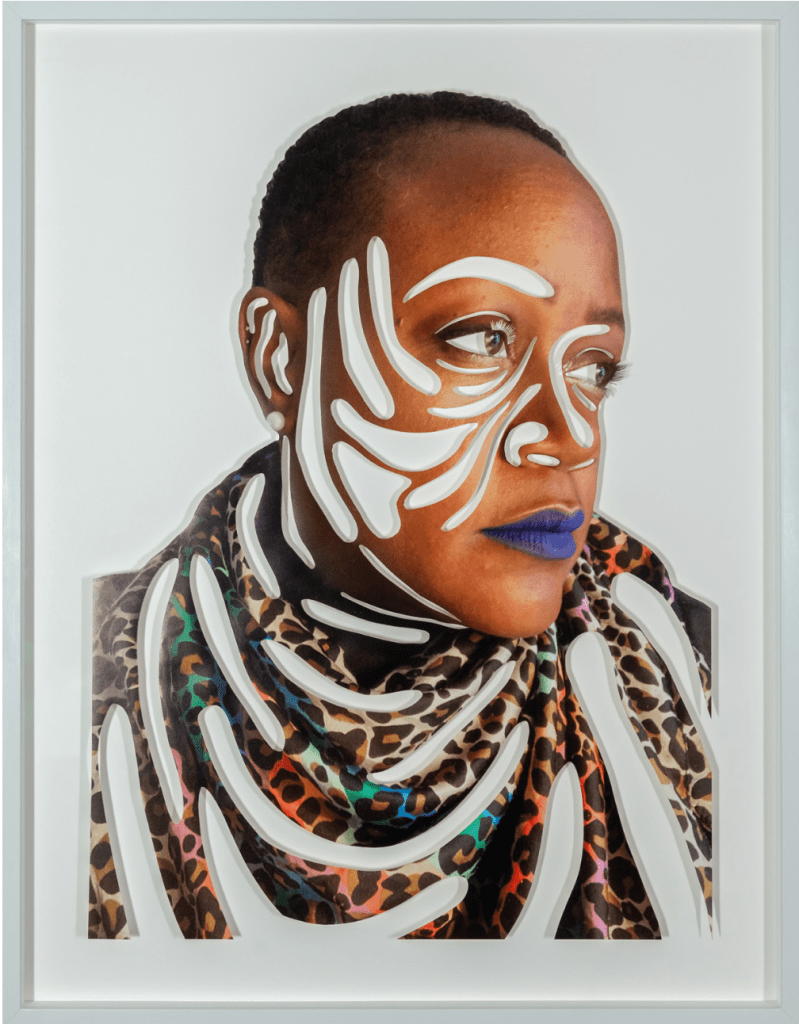
HackelBury Fine Art, London is pleased to present Sharon Walter’s first London solo exhibition. ‘Seeing Ourselves’ features work from the ongoing series, in which Walters creates intricate hand-assembled collages honouring Black Women – their history, culture and identity.

“My work aims to explore and indulge in the multiplicity of Blackness and the embrace of our non-monolithic experiences.”

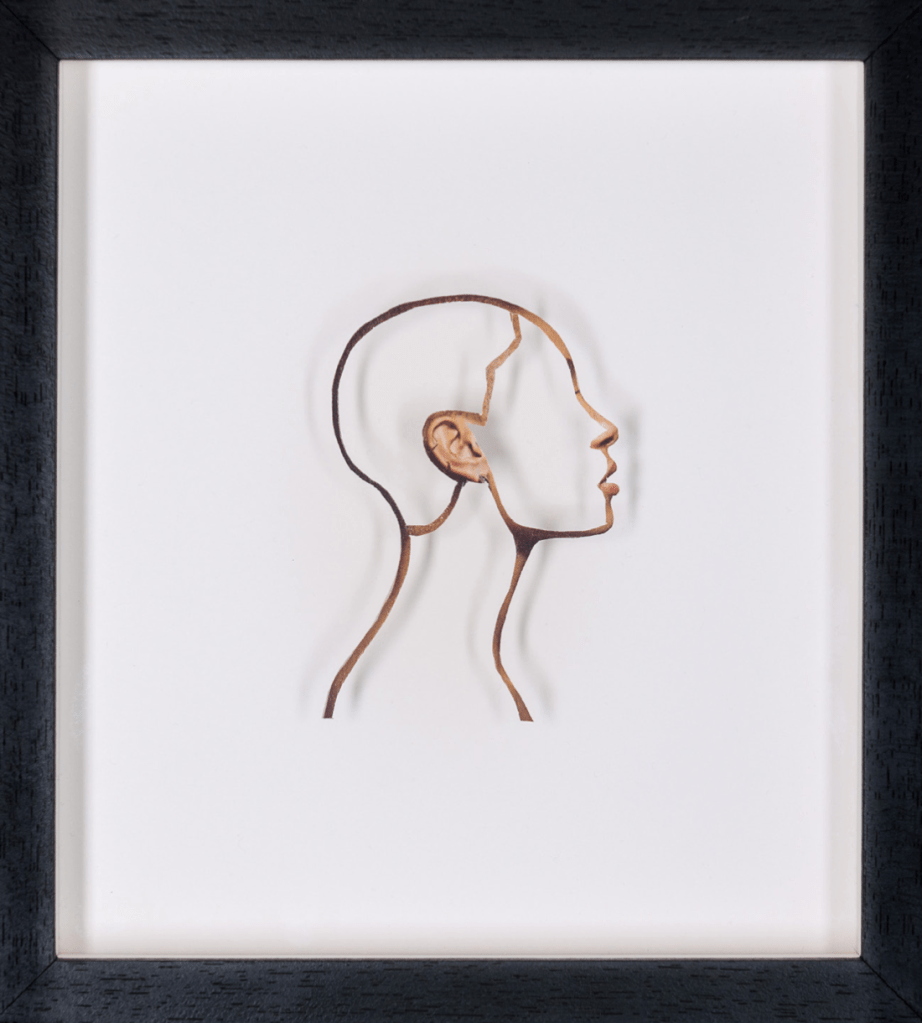
Walters explores themes of identity and representation through fragile and detailed paper cut-outs and collages where she creates multi-layered portraits in which she, literally and metaphorically, opens up space. These dimensional portraits provide a portal and empower those who are often excluded and unheard in mainstream Western society. She creates an alternative narrative which reflects the complexity of these women’s stories and experiences.

Letting Go, 2024

The title ‘Seeing Ourselves’ references the book by Frances Borzello which surveyed centuries of self portraits by white Western women artists. In her series ‘Seeing Ourselves’, Walters reclaims space to create a new inclusive way of seeing Black women. Her work is a response to this absence of their own reflections in mainstream Western media, arts and cultural life.

“I started making the work as a reaffirmation to take up space even in spaces where I did not see myself reflected back.”

Walters is an agent of change and notes that her own vulnerability allows her to create this work, motivated by a commitment to create visibility and accessibility for Black women.

“If we don’t see ourselves represented back, it can act as a barrier to not succeeding”

She draws on a myriad of material to create her portraits from magazine clippings to photos taken by herself, and other images donated by women globally and in this way she generates multiple conversations about empowerment, diversity and representation.

Unbroken, 2023

About Sharon Walters

Sharon Walters is a London-based artist, educator and project curator. She holds a Fine Art BA (Hons) from Central Saint Martins and has over 20 years experience working with marginalised communities. She regularly collaborates with organisations and communities organising and hosting workshops, talks, podcasts, events and curating projects.

In 2023 , Walters was included in ‘Like Paradise’ at Claridge’s ArtSpace, London, curated by Ekow Eshun and ‘Rites of Passage’ at Gagosian, curated by Péjú Oshin. She won second prize at the Mosaic Art Prize exhibited at Hauser and Wirth. She directed a short film, performed by actor Jyuddah James, using quoted extracts from ‘The Interesting Narrative of the life of Olaudah Equiano,’ displayed in the Black Atlantic exhibition at Fitzwilliam Museum, Cambridge (2023). This is currently being shown at the UN in New York (23 Feb – 28 March 2024). Previously, Sharon had a solo exhibition at Midlands Arts Centre, Birmingham, England (2022), and was included in the Black Minds Matter group exhibition at Sophie Tea Art Gallery, London (2020); The Chapel Gallery, London (2019); and Gunnersbury Park Museum, London (2019).

In 2022, she was commissioned by the National Portrait Gallery, London, to create a portrait of race equality campaigners and radical publishers Eric and Jessica Huntley. The piece was exhibited at the Gunnersbury Park Museum, London (2023) before joining the collection at the National Portrait Gallery.

Since 2020, Walters has worked in partnership with the National Maritime Museum to create and host the podcast series ‘Seeing Ourselves’ – alongside a series of live and online events exploring the representation and misrepresentation of the people of African descent in museum collections. She collaborated with historians, artists and prominent cultural thinkers and the project has had a significant impact and led to important change in the institution.

Walters works are in private and public collections including the National Portrait Gallery and the Soho House Art Collection.

About HackelBury

HackelBury was founded twenty-five years ago by Sascha Hackel and Marcus Bury. The gallery is committed to championing artists who push the boundaries of their medium to create meaningful and contemplative work.

Originally renowned for showcasing classic 20th-century photography, the gallery has embraced more conceptual and abstract art over the past 15 years, expanding its stable of artists to include those working in photography, drawing, painting and collage.

Hackelbury Fine Art represents a select group of artist whose work reflects a profound depth of thought and dedication to their craft.

FOR ALL PRESS ENQUIRIES PLEASE CONTACT

Camilla Cañellas – Arts Consultancy & PR
E: camilla@culturebeam.com M:+34 660375123

Phil Crook – HackelBury Fine Art
E: phil@hackelbury.co.uk T: +44 20 7937 8688

Instagram @hackelburyfineart

LuginsLand of Art launches the collective exhibition ‘Space & Time’

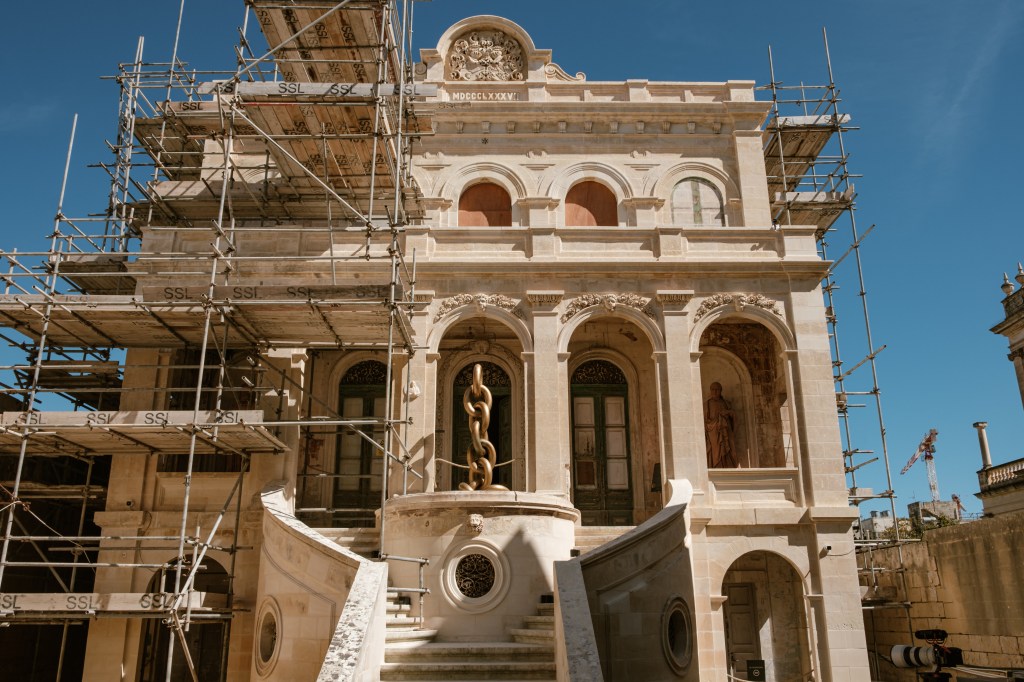
Villa Luginsland. Photo by Brian Grech.

LuginsLand of Art launches the collective exhibition ‘Space & Time’ and Educational Programme inviting the audience to witness the ongoing restoration of this historical, architectural gem in Malta.

The exhibition is open for visitors during the Educational Programme and on the selected days: May 20th-24th and May 27th-30th 12:00pm – 3:00pm.

On March 15th, LuginsLand of Art, formerly known as Villa Luginsland, held an exhibition preview called “Space & Time.” The exhibition was curated by Boris Kudlička, a renowned set designer and architect from Slovakia. The event also marked the launch of a new concept to create dedicated spaces for the artistic community within the Villa, which is currently undergoing restoration.

Ministers Owen Bonnici and Minister Stefan Zrinzo Azzopardi graced the occasion, witnessing the restoration endeavours and visionary aspirations of the villa. The project is supported by OmenaArt Foundation, founded by Omenaa Mensah, Polish philanthropist, businesswoman, and art collector, who welcomed esteemed guests and artists to the villa.

“For the first time, we are happy to open the doors to LuginsLand of Art . My team and I have been working on this unique project for many months. We are excited to share the beginning of something truly special. I have always had a profound admiration for historic edifices. I am extremely excited to breathe new life into one of the most significant historical sites in Malta and provide an opportunity to share a dedicated area to the artistic community in the future” – says Omenaa Mensah.

Joanna Popiol, Director of LuginsLand of Art, underscored the meticulous conservation efforts and fruitful collaboration with the Superintendence of Cultural Heritage, highlighting the commitment to preserving and honouring the villa’s rich heritage and legacy.

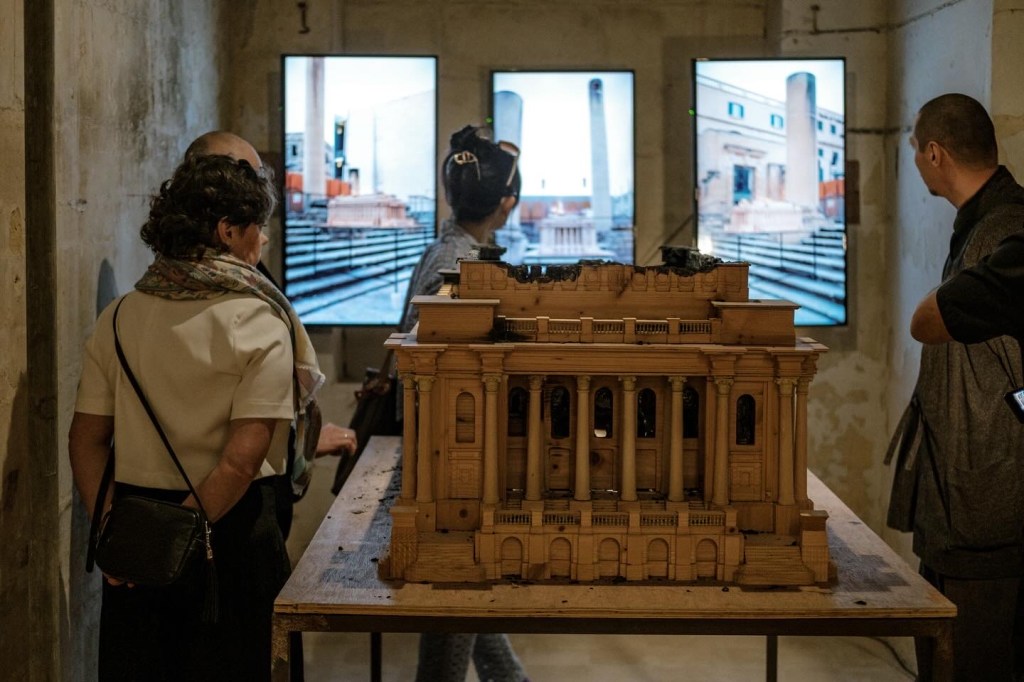
‘Space & Time’ exhibition. Photo by Brian Grech.

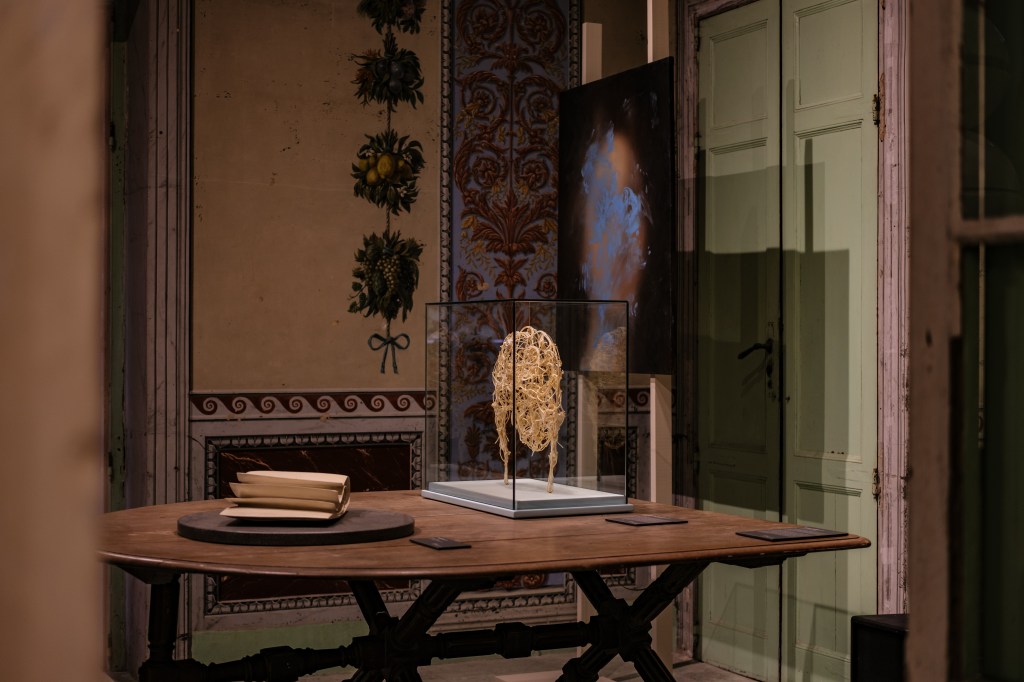
The front part of the villa was dedicated to its long history and showcasing the ongoing restoration works, research and efforts in preserving the historical aspects. The inaugural exhibition ‘Space & Time’ curated by a renowned Slovakian set designer and architect – Boris Kudlička with curatorial collaboration of Maria Galea and Joanna Szulc, showcases the works of renowned Maltese and Polish artists and encompass both site specific installations which have been created in line with the curatorial concept and the historic reference of the site, as well as a curated selection of works from pre-existing series by the artists. The visual narrative establishes an intriguing dialogue between Neo-Renaissance architecture and Contemporary Art, aiming to create an intersection between the past and present through intercultural exchange.

“The main inspiration for the exhibition is the villa itself, its profound history and marvellous architecture. We invited renowned Maltese artists to create site-specific works that represent the dialogue with the space and temporal dimensions of the villa. I am very happy with the diversity of the collection as the artists utilise different mediums and each of them presents their own unique perspective to the subject.“ – says the curator Boris Kudlička

Cultural Manager Maria Galea underlines the gratitude felt as Maltese citizen in appreciating the work being conducted to both preserve and revive such a magnificent historical space. “It is admirable that Luginsland of Art and OmenaArt Foundation are inviting artists to be part of it, creating an important intercultural exchange.”

Featured Artists:

Mario Abela, Victor Agius, Matthew Attard, Norbert Attard, John Paul Azzopardi, Austin Camilleri, Monika Falkus, Antoine Farrugia, Maurycy Gomulicki, Nicolas Grospierre, Michał Jackowski, Ida Karkoszka, Lia Kimura, Marcin Maciejowski, Karol Palczak, Janek Simon, Nikola Vudrag, Xawery Wolski, Jakub Julian Ziółkowski

Site specific works

The commissioned site-specific art installations at LuginsLand of Art feature the works of Maltese artists Matthew Attard, Victor Agius, Mario Abela, and Antoine Farrugia. These pieces integrate history, nature, and architecture, with the respect to villa’s profound history. Each artist brings a unique perspective to their work, aiming to blend with the villa’s architectural and archaeological elements. From Matthew Attard’s digital landscapes to Victor Agius’s sculptures, these works evoke a dialogue between the past and present. Mario Abela’s installation prompts viewers to reflect on their impact on the world, while Antoine Farrugia’s use of Maltese limestone pays homage to the villa’s architecture. Together, these pieces form an intriguing display of artistic expression, inviting visitors to explore the intersection of time and space at LuginsLand of Art.

‘Space & Time’ exhibition. Photo by Brian Grech.

Educational Programme

Alongside the exhibition, LuginsLand of Art is also organising the educational programme launched on the 23rd of March with the panel ‘Art & Architecture’, followed by the session ‘Art & Archaeology’ in April. The programme encompasses 5 discussion panels and workshops, each delving into various facets of art and its relationships, including architecture, archaeology, community, and artistic legacy. These panels feature distinguished Maltese and international artists, art historians, and art professionals who bring their perspectives on historical, social, and anthropological issues to the fore. The programme aims to foster an environment for discussion and offers an opportunity to explore the villa’s ongoing construction, restoration, and preservation efforts. The programme will extend until the end of May.

The Educational Programme:

Art & Architecture – 23th March

Art & Archaeology – 6th April

Art & Conservation – 4th May

Art & Technology – 18th May

Art & Legacy – 31st May

About Omenaa Mensah

Omenaa Mensah is a Polish philanthropist, businesswoman, art collector, and founder of OmenaArt Foundation. With her rich experience, Omenaa leads worldwide projects and initiatives in the realms of design, architecture and art. She passionately invests in emerging artists, bolstering their growth and creativity. Motivated by her deep-seated love for art, she takes on ambitious endeavours aimed at conserving and rejuvenating historical sites. Her expertise has garnered accolades from stalwarts in architecture and design, including luminaries like Boris Kudlička, Bruno Moinard, Alessandro La Spada, and Gio Pagani. Omenaa is also devoted to emphasising the importance of social responsibility within cultural realms. Her foundation is engaged in philanthropic activity, such as the coordination of the Grand Charity Auction TOP CHARITY, one of the most prestigious philanthropic events in Europe that promotes the best Polish and international artists. The initiative has been recognised and selected by Luxury Lifestyle Awards which celebrate the best luxury services all over the world.

Photo Credits: Brian Grech

Links:

LuginsLand of Art website
Educational Programme

Registration to view the exhibition
LuginsLand of Art Facebook

LuginsLand of Art Instagram
OmenaArt Foundation website

For more information contact: alicja@villaluginsland.com