Green Agency: Katia Huemer on Curating Beyond the Trend
An Interview with Katia Huemer by Mei-Hsin Chen, PhD, Professor at the University of Navarra, Spain
Preamble
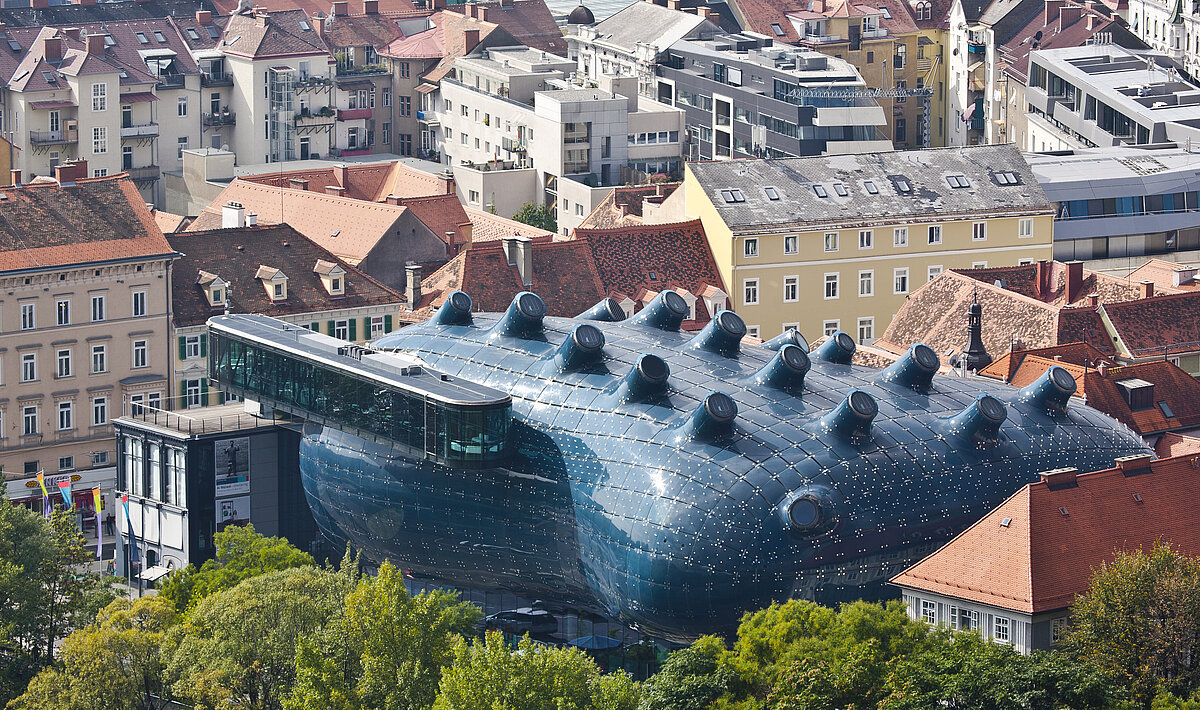
The following interview explores the intersection of aesthetic ambition and ecological responsibility within the framework of the Kunsthaus Graz (Fig. 1), Austria. Architecturally iconic and affectionately known as the ‘Friendly Alien,’ the Kunsthaus stands as a biomimetic landmark in the city of Graz, Styria—a region famously dubbed the ‘Green Heart of Austria.’ However, beneath its avant-garde skin, the institution is navigating a profound internal transformation, having recently earned the Austrian Ecolabel (Österreichisches Umweltzeichen) as an accredited ‘Green Museum.’
In this conversation, I sit down with Katia Huemer, one of the key curators at the Kunsthaus Graz whose practice is defined by a rigorous commitment to contextual integration. Huemer offers a candid look at the ‘state of constant negotiation’ that defines modern curating—from the logistical paradoxes of international shipping and the material waste of monumental installations to the transformative potential of ‘Green’ institutional DNA. Through her reflections, we move beyond the theory of sustainability to examine the practical, ethical, and often conflicting realities of the museum as a catalyst for political agency.
Interview
I. Regional Roots: Art in the Styrian Landscape
Mei-Hsin Chen (MC): Given the Kunsthaus Graz’s steadfast commitment to ‘Sustainable Thinking, how would you describe the specific ecological or sustainability themes—moving beyond the broad discourse of climate change—that are currently being interrogated by contemporary artists in Graz and Styria? I am particularly interested in how local practitioners address regional specificities, such as the Styrian landscape—I am thinking of artists like Markus Jeschaunig—resource management, or the localized waste streams explored in the exhibition Feeding the Ghost (September 17, 2025– November 2, 2025), which you curated.
Katia Huemer (KH): To address your question, I would like to highlight an artist other than Markus Jeschaunig. A particularly resonant example in this context is the Styrian artist Anita Fuchs. Her practice is profoundly process-oriented and defined by a meticulous sensitivity to local environments, investigating the intersections of nature within both urban and rural landscapes.
Fuchs frequently operates at the nexus of art and science, often collaborating with researchers. A primary example is her project Versuchsfeld (Test Field), an ongoing artistic research initiative conducted over several years at locations such as the MuseumsQuartier in Vienna and the Graz Opera House. In these interventions, Fuchs replaces ecologically unproductive turf with curated seed mixtures specifically designed to support pollinators like bees and butterflies. This transformation—from a sterile lawn to a species-rich wild plant habitat—is shared with the public through workshops, lectures, and meticulous documentation. She exemplifies the artist who works with extreme local specificity.
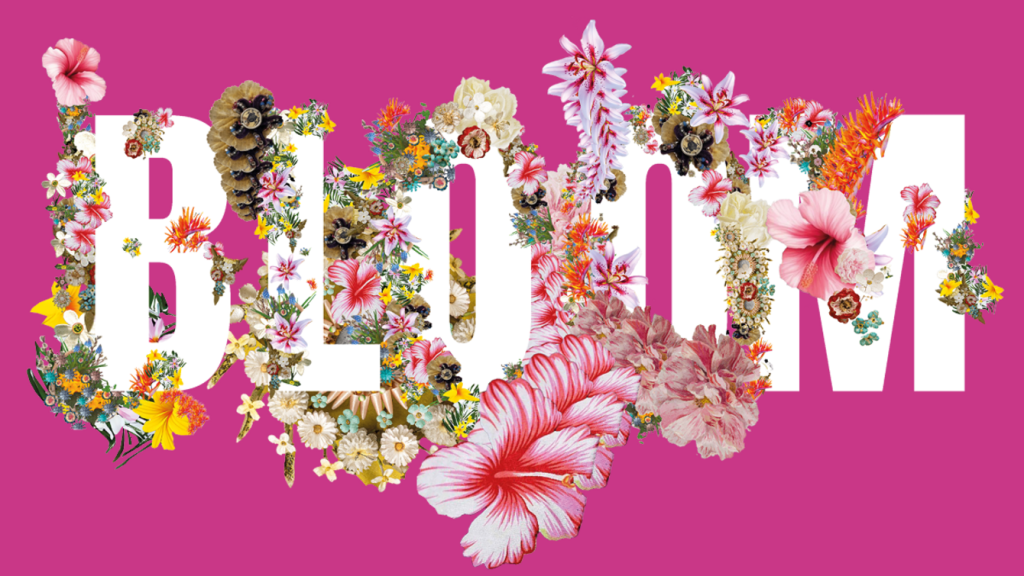
For our upcoming Bloom project (running from March 21 to November 8, 2026) (Fig. 2), which involves eight institutions within the Universal Museum Joanneum, we have commissioned Fuchs to conduct a survey of flora within a 500-meter radius of each site. She composes bouquets from these findings without distinguishing between wild growth, domestic gardens, or commercial flower shops. The resulting work—presented through photography rather than the ephemeral bouquets themselves—serves as a poignant commentary on biodiversity, seasonality, and the complexities of the global flower trade.
On a different note, your research might benefit from examining the art collection of Martin Roth’s family here in Styria. Roth’s family operates Saubermacher, a private waste management and recycling firm, and they have curated a collection that focuses specifically on the themes of resources and waste. From time to time, they commission local artists—such as the media artist Richard Kriesche and the sculptor Hans Kupelwieser —to create works that engage with the company’s core mission of sustainability.
Finally, I must mention Martin Roth (1977-2019) himself, an exceptionally talented artist who was deeply invested in these themes. In 2023, the Kunsthaus hosted a posthumous exhibition of his work titled You can see more from far away (February 10 – May 21, 2023), curated by Katrin Bucher Trantow and Michaela Leutzendorff Pakesch. This project presented both a professional and ethical challenge, as it involved living animals. We had to navigate the delicate balance between honoring his artistic vision and adhering to stringent animal protection protocols. It was a profound exhibition.
II. Material Paradoxes: Innovation vs. Protocol
MC: Your curatorial portfolio suggests a profound emphasis on process. Could you elaborate on how you evaluate and champion artists who are pushing the boundaries of sustainable materiality, closed-loop systems, or innovative, low-impact production techniques? Furthermore, how is the dialogue between artistic innovation and ecological ethics navigated in the presentation of these works?
KH: That is an exceptionally complex and nuanced challenge. The nature of this dialogue depends heavily on the individual temperament of the artist; some practitioners maintain such specific aesthetic visions that they allow for very little flexibility. This tension is often amplified when working with artist estates. For instance, in our current exhibition, Unseen Futures to Come Fall (September 18, 2025–February 15, 2026), curated by Andreja Hribernik, we are featuring Bill Viola’s magnificent work, The Raft. We initially envisioned presenting it in an open configuration that would harmonize with the organic, biomimetic architecture of our ‘Friendly Alien.’ However, the estate’s stringent protocols required a traditional ‘black-box’ environment. Consequently, we were compelled to construct an elaborate temporary architecture for this single piece—a process that consumes significant resources only to be dismantled post-exhibition.
There is also a distinct difference between curating solo and group exhibitions. In group shows—such as my recent Project 24/7: Work between meaning and imbalance (May 1, 2024–January 19, 2025), which examined the intersection of labor and ecology—the institution maintains greater agency over the spatial design. For that exhibition, we utilized industrial heavy-duty shelving as our primary architectural framework. After the show concluded, these components were repurposed as permanent storage in our archives, embodying a practical, circular approach to exhibition design.
On an institutional level, the Kunsthaus is constantly striving to refine its internal workflows as an accredited ‘Green Museum.’ We are transitioning toward digital formats to minimize paper consumption and are increasingly committed to the reuse of exhibition architecture. A significant milestone in this journey is our collaboration with the City of Graz and Markt der Zukunft, culminating in the Environmental Art Award, presented for the first time in 2025.
Ultimately, we inhabit a state of constant negotiation. While we strive to feature international artists, the logistical realities of carbon-heavy transport and non-sustainable materials often present a profound ethical conflict. I frequently reflect on Katharina Grosse’s 2014 exhibition , which featured a monumental spatial sculpture composed of vast amounts of synthetic foam. At the time, it was an extraordinary aesthetic achievement, but if proposed today, I doubt the institution—or perhaps even the artist—would choose that material path. We mitigated the impact by donating the foam to local kindergartens and for industrial insulation, but the paradox remains: it was a brilliant exhibition that generated a staggering amount of waste. I believe that as long as we remain transparent about these ‘wrong’ decisions and use them as catalysts for institutional learning, we continue to move the system forward.
III. Aesthetic Agency: Art as a Catalyst for Change
MC: The magnitude of the contemporary ecological crisis demands a holistic perspective. How have the artists you collaborate with interpreted concepts such as ‘integral ecology,’ or navigated the intersection of environmental degradation with social, labor, and economic realities? Furthermore, have you observed a burgeoning trend toward interdisciplinary, research-based artistic practices within the Graz creative community?
KH: While I cannot provide a definitive sociological assessment of Graz specifically, there is an undeniable global shift toward interdisciplinary works that engage with these systemic issues. For instance, we recently hosted a symposium for Emilija Škarnulytė’s exhibition, Waters and Beyond (November 8, 2025–February 15, 2026), which examines water as a multifaceted political, poetic, and ecological force.
One of our keynote speakers, the curator and author Filipa Ramos, addressed a poignant question from the audience: Can art truly effect change in the face of such overwhelming global crises? Ramos argued that environmental issues are, at their core, aesthetic problems. They are inextricably linked to human desire and our subjective definitions of beauty and value.
Ramos also reflected on her experience participating in the 13th Shanghai Biennale as head of research and publications, noting the intense governmental oversight aimed at neutralizing systemic critique. Her conclusion was profound: art is taken most seriously by those who fear its influence. It possesses a transformative potential that extends far beyond the confines of the art world. Because art holds a vital social role and the power to catalyze a collective desire for change, our mission is to support and promote works that embrace this political agency and offer radical new perspectives.
IV. Contextual Integration: Bridging Local and Global
MC: How do the unique cultural and environmental landscapes of Graz and Styria—the ‘Green Heart of Austria’—shape artistic responses to global ecological crises? Furthermore, what is your curatorial strategy for integrating these distinct local voices into the broader, international discourse on eco-art?
KH: As an international venue, the Kunsthaus Graz is committed to bridging the gap between regional practice and global visibility. Our strategy is built on the principle of contextual integration: rather than isolating local art, we feature it within curated group exhibitions that juxtapose Austrian perspectives with international counterparts. This dialogue is reinforced through our publishing efforts. By including local artists in our exhibition catalogues and distributing those volumes through our global museum library network, we ensure their work enters the international academic and artistic record. Ultimately, our goal is to maintain a rigorous balance, elevating local and international artists with equal weight—an approach that applies across our entire program, well beyond the scope of ecological themes.
V. The Power of Narrative: Storytelling and Humor
MC: In your experience, what narrative strategies or visual approaches—whether poetic, activist, analytical, or speculative—have proven most effective in contemporary Austrian art for stimulating critical reflection? Furthermore, how can artistic practice move beyond mere observation to encourage genuine behavioral change or a deeper ecological consciousness among the public?
KH: That is a challenging question to address, but in my experience, the most effective way to engage an audience is through the power of storytelling—by making it clear how these global crises intersect with their individual lives. I have also found that a measured use of humor serves as an essential icebreaker for otherwise heavy or daunting topics.
A compelling example is Christoph Schwarz’s film Supercargo (2010), which we featured in the 24/7 exhibition. Schwarz, a Vienna-based Austrian filmmaker and climate activist, documents his journey to China aboard a massive container ship for an artist residency. He is essentially the only passenger, surrounded entirely by empty containers waiting to be filled with consumer goods for the return trip to Europe. The film is incredibly witty; as the journey progresses, the isolation leads him to form increasingly absurd and lonely relationships with the containers.
Yet, beneath the humor, Schwarz provides staggering visual evidence of the ecological toll of global shipping. While we are theoretically aware of the environmental damage caused by these vessels, many remain oblivious to the vast number of emptynautical miles traveled purely to sustain a culture of hyper-consumption. I believe such works resonate far more deeply than those that rely on alarmism. Schwarz is an excellent example of an artist who has found a way to integrate climate activism into art that is charming rather than alienating. His project Cabriobeet (2021)— in which he transformed a car in Vienna into a neighborhood garden bed—serves as a brilliant symbolic critique of the spatial privileges afforded to private motorized transport in our cities.
VI. Institutional DNA: Sustaining the Green Museum
MC: The fact that the Kunsthaus Graz holds the Austrian Ecolabel is a significant point of pride and responsibility. As an accredited Green Museum, how does the institution integrate sustainability into its curatorial and operational DNA? Furthermore, how does this institutional commitment influence your decision-making when conceptualizing exhibitions with an ecological focus?
KH: Sustainability considerations are embedded in our daily operations and, depending on how one defines the term, deeply influence our programming. To ensure a lasting impact rather than a series of ephemeral interventions, we organize our program around annual themes. This structure allows one exhibition to flow conceptually into the next, facilitating a sustained discourse over a longer duration. This approach is vital for transcending short-term thinking and fostering a more permanent sustainable consciousness.
In addition to our physical exhibitions, we launch annual social media projects dedicated to themes such as ecology, the climate crisis, and the UN Sustainable Development Goals (SDGs). A key example is our project centered on the 93 Recommendations of the Austrian Climate Council (Klimarat). These recommendations unfortunately received limited public attention, so we commissioned artists to create works that re-introduced these critical issues to a wider audience. I believe digital platforms are uniquely suited for such initiatives because they are highly accessible; they help lower the institutional threshold for those who might otherwise find a traditional museum environment intimidating.
VII. Radical Honesty: Learning from Curatorial Conflict
MC: I am curious to explore the practical challenges you have navigated in your personal curatorial experience. Have you ever encountered a conceptually brilliant artwork that posed a significant challenge to the museum’s own sustainability goals—perhaps due to carbon-heavy logistics or high-energy requirements? How do you navigate that curatorial conflict, and where do you draw the line when an artwork’s ecological message appears at odds with its means of production?
KH: As I previously mentioned with Bill Viola and Katharina Grosse, these contradictions are a constant presence. Recently, I navigated a situation where the ecological themes I perceived in an artist’s work stood in stark contrast to their personal actions—specifically regarding frequent air travel. I find it increasingly difficult to justify unnecessary air miles, and I must admit that such realizations can diminish my appreciation for the work. It prompts a self-reflective question: was my interpretation of the work skewed by my own values, or was I perhaps focusing too heavily on an ecological aspect that the artist did not intend?
As curators, we must be vigilant. We cannot treat sustainability as a ‘trend’ to be followed just because many artists are currently riding that wave. The climate crisis is the defining challenge of our era, and while it is natural for artists to engage with it, we must distinguish between genuine commitment and superficial alignment.
Reflecting on Katharina Grosse’s 2014 solo exhibition at the Kunsthaus, she created a monumental, painterly spatial sculpture using enormous quantities of synthetic foam. It was an extraordinary aesthetic achievement, but looking back a decade later, I doubt we—or even the artist herself—would make those same material choices today. We did attempt to mitigate the impact by donating the material for industrial insulation and to local kindergartens for play areas, with the remainder being recycled. Yet, the paradox remains: it was a landmark exhibition that generated a staggering volume of waste. I believe we all inhabit these conflicts. As long as we remain honest about the wrong decisions we make and treat them as essential learning opportunities, there is a path forward.
Author’s Note and Acknowledgements
This interview, conducted on October 7, 2025, stems from the research project Art and Ecology at the University of Graz, funded by the University of Navarra. I am deeply grateful to the Department of Art History and Musicology for the scholarly environment provided during my stay, and to Prof. Sabine Flach and Dr. Katrin Nahidi for their guidance. Special thanks to the Kunsthaus Graz for their openness, specifically Director Andreja Hribernik and Katia Huemer for their generous collaboration and expertise.
This transcript has been edited for length and clarity. Throughout the text, additional information and links have been provided to assist the reader in further exploring the artists, exhibitions, and institutional frameworks discussed.
_______

Publishing in Art Style Magazine is free of charge for anyone. There are no article processing charges or other publication fees. Art Style Magazine is independent and supports the Open Access Movement. The editors of Art Style Magazine cannot be held responsible for errors or any consequences arising from the use of information contained in essays and articles published on the Art Style Magazine’s website and editions. Authors agree to the terms and conditions and assure that their submissions are free of third parties’ rights. The views and opinions expressed in the essays and articles are those of the author and do not reflect the views of Art Style Magazine. The authors of Art Style Magazine’s essays and articles are responsible for its content. The Art Style Magazine‘s website provides links to third-party websites. However, the magazine is not responsible for the contents of those linked sites, nor for any link contained in the linked site content of external Internet sites (see Terms & Conditions).
 Art Style | Art & Culture International Magazine