Joanne Leonard: Vintage Photographs and Early Collages 

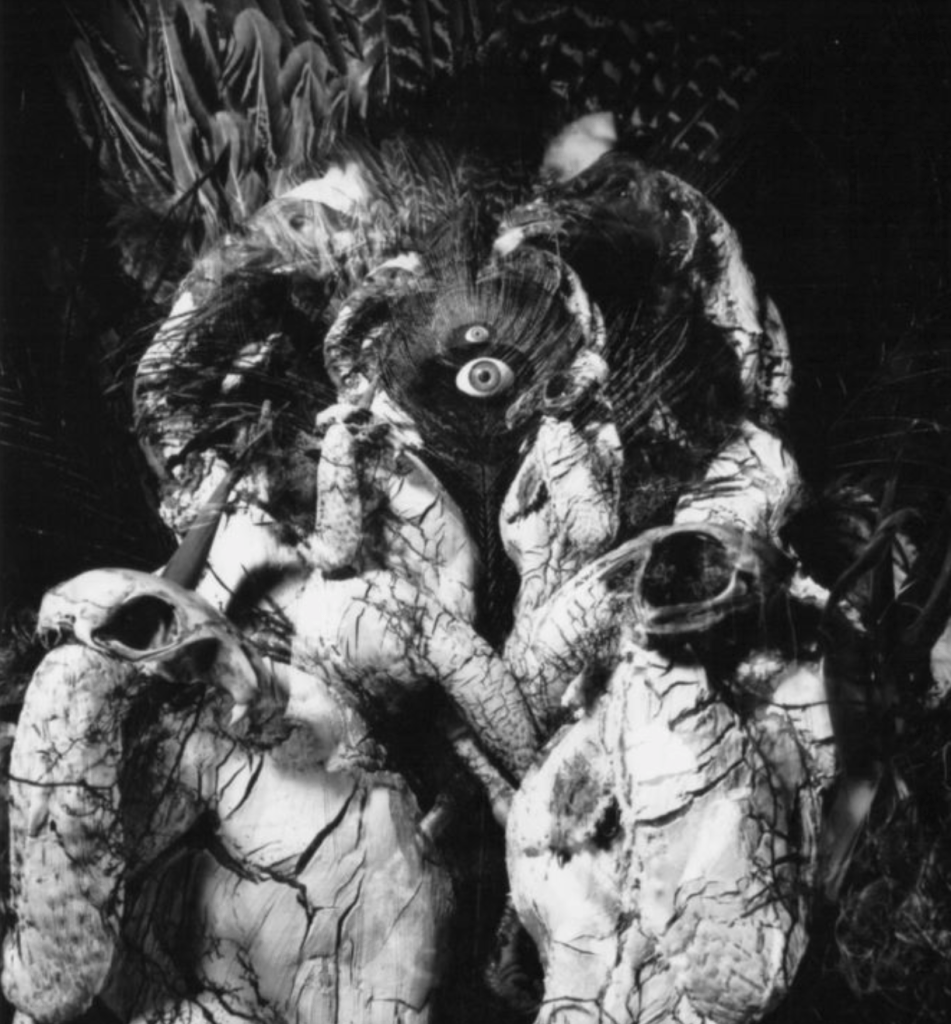
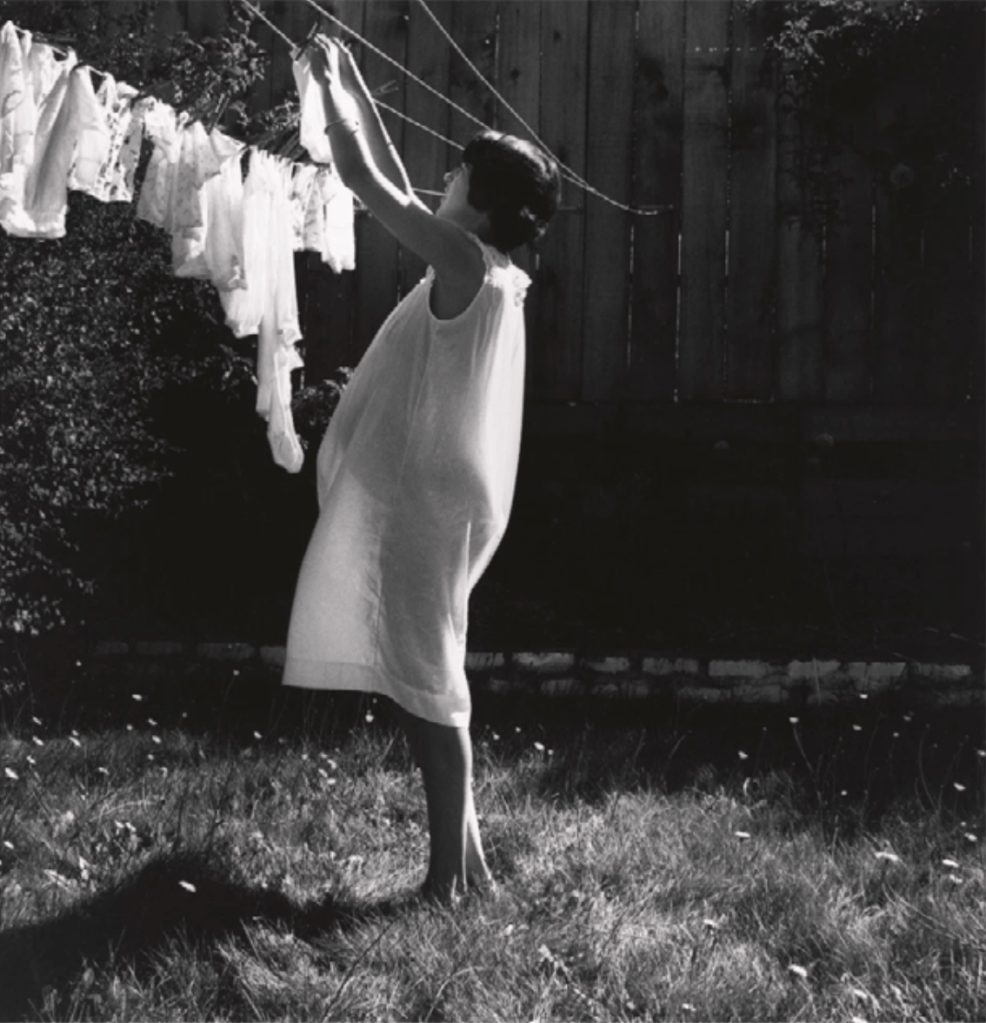
Sonia, 1966

JOANNE LEONARD

Vintage Photographs and Early Collages

29th May – 8th July 2025

“Artists are not turning inwards to preserve, or even indulge in the pleasures of their medium/ media. They are expanding the very capacities of their mediums and media both to formulate meaning and to affect us by each artist’s aesthetic process.” Griselda Pollock

HackelBury proudly presents the first UK solo exhibition by acclaimed artist, Joanne Leonard. Vintage Photographs and Early Collages features photographs from the 1960s and 1970s and unique early collage pieces from the 1970s and 1980s. This retrospective offers an intimate look into Leonard’s artistic evolution and her innovative approach to visual storytelling.

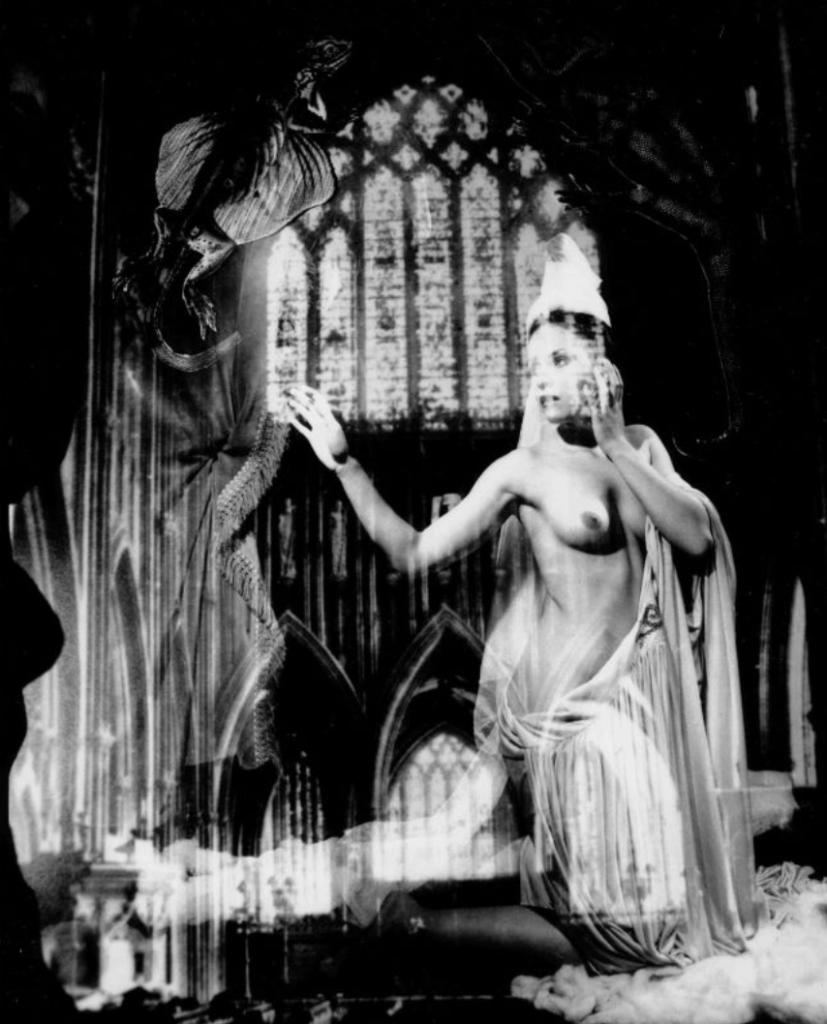
“I’m much inspired by looking at medieval works – particularly diptychs and triptychs – these forms are sometimes hinged and have doors that fold over the artwork – then open to reveal the imagery inside…. a suggestion of time and story unfolding.” JL

Another Morning, 1971

Known for her evocative and deeply personal imagery, which she describes as ‘intimate documentary,’ Leonard’s work from this era captures a profound sense of time and place. Blending documentary photography with poetic, dreamlike compositions, she draws inspiration from intimate family scenes, the realities of motherhood, and the political and social unrest of the time. The works on display offer an unfiltered glimpse into life as she experienced it. Her early collages, incorporating found imagery, handwritten text, and layered textures, reflect an experimental approach which challenges conventional artistic boundaries.

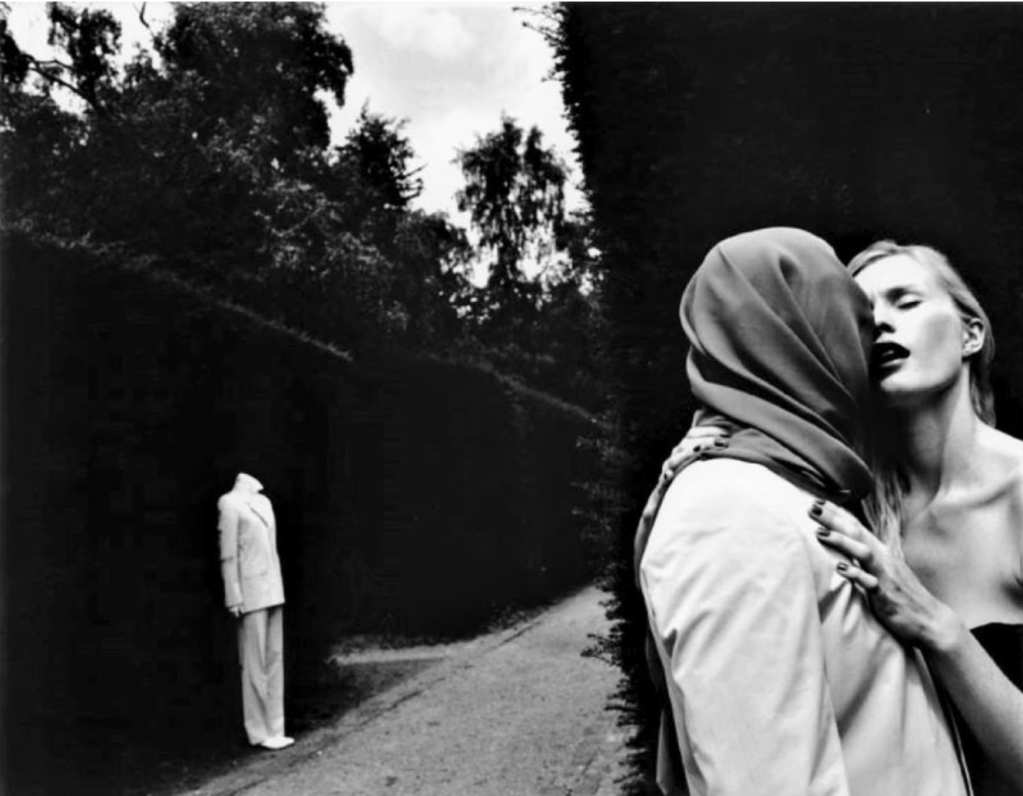
“One could say that collage allows a dialog, conversation, or push and pull – a layering of the past onto images from the present, a representation of dreams and even nightmares with collage layered onto scenes made in the light of day.” JL

Leonard’s practice provides a striking glimpse into the social and cultural landscapes of the mid-20th century, portraying moments of everyday life with a deeply humanistic perspective. Underpinned by a feminist ideology, she recognises overlooked intimate and personal moments within women’s lives.

Julia and the Window of Vulnerability (Variation with Lamppost) 1983

Inspired by the work of Mary Cassatt and Käthe Kollwitz, Leonard’s focus on the objects and artifacts of women’s lives is applied to both her early black and white photography, and to her photo collage and mixed
media work, to create a distinct visual language.

“In artwork I’d come to know growing up, if there was a focus on women it was most often as subjects of the male gaze – nude studies were most often made by men. These did not reflect the daily lives of women – or the world from the women’s own perspectives.” JL

About Joanne Leonard

Joanne Leonard is an American artist renowned for her transformative and expansive conceptual photographic practice. This later developed into new forms of photo-collage to explore the overlooked spaces, conditions
and moments within women’s working and parenting lives. In her series Dreams and Nightmares, she addresses heterosexual desire and its tragedies as well as images of the strange and often disturbing beauty of modern domestic appliances and kitchen spaces. Leonard’s work was hailed by American feminist critic Lucy Lippard in her collection From the Center (1976). Leonard is also widely studied for intermedial work, text and images in Being in Pictures: An Intimate Photo Memoir (2008).

Leonard’s photographs have been collected by and featured in exhibitions at major museums, including; San Francisco Museum of Modern Art, Whitney Museum of American Art, Museum of Modern Art and Metropolitan Museum of Art in New York, the Los Angeles County Museum of Art, the International Center of Photography, New York and the Harry Ransom Center, Austin, Texas. Her work was shown in the group exhibition Medium & Memory, curated by Griselda Pollock at HackelBury in 2023 and work has recently been acquired by the Victoria & Albert Museum, London. Her work is currently on show at the ICP in New York and the San Francisco Museum of Modern Art.

In addition to her celebrated artistic practice, Leonard has cultivated a distinguished record as both scholar and educator. Leonard is one of the few photographers and women artists published in Janson’s History of Art. She completed thirty-one years on the faculty at the University of Michigan, Ann Arbor, earning the title of Diane M. Kirkpatrick and Griselda Pollock Distinguished University Professor in 2004. During her tenure, Leonard was Director of the Program in Visual Culture at the Institute for Research on Women and Gender for three years and received the John H. D’arms Faculty Award for Distinguished Graduate Mentoring in the Humanities in 2001. She retired in 2009 after dedicating forty years of her life to teaching as a college professor.

About HackelBury

HackelBury was founded twenty-six years ago by Marcus Bury and Sascha Hackel. The gallery is committed to championing artists working with the visual arts who push the boundaries of their medium to create meaningful and contemplative work.

The London based gallery initially showcased classic photography from the 20th century including Henri Cartier- Bresson, Berenice Abbott, Malick Sidibe, and Sebastião Salgado. The transition from traditional photography to more conceptual work was as intuitive as it was organic, beginning with artists such as William Klein, Pascal Kern, Doug and Mike Starn, Garry Fabian Miller, Katja Liebmann, Ian McKeever, Stephen Inggs and Bill Armstrong.

In recent years the gallery has taken on emerging artists such as Oli Kellett, Nadezda Nikolova, Alys Tomlinson, Coral Woodbury and Sharon Walters.

Each artist, whether emerging or established, creates work defined by a depth of thought and breadth and consistency of approach. The small group of artists with whom HackelBury work, represent a diversity of practice yet share an artistic integrity which the gallery is fully committed to supporting in the long-term.

NOTES TO EDITORS

Journal of a Miscarriage – Victoria & Albert Museum, London

The V&A has recently acquired a portfolio of 31 facsimile prints of Joanne Leonard’s body of work, Journal of a Miscarriage, a set of unique photo-collages she originally made in 1973. Created following the loss of her pregnancy, the series charts 53 days before, during and after her miscarriage, viscerally depicting feelings of elation, rage, deep sadness, ambivalence and more.

The work can be viewed by appointment every Wednesday and Thursday at the Prints and Drawings Study Room, Level 3, V&A South Kensington

American Job: 1940 – 2011

International Center for Photography, New York

23 Jan – 5 May 2025

Drawing from works by more than 40 photographers in the ICP collection, including Joanne Leonard, and with the addition of exhibition prints from contemporary photographers, American Job: 1940- 2011 highlights the collection’s breadth and contemporary relevance by surveying the photographic response to labor organizing and strike activity, race and gender discrimination in labor, organized labor’s role in politics, labor and activism, and the intersection of labor and the social changes wrought by the economic restructurings of the twentieth century. This exhibition is guest curated by Makeda Best, photography historian and Deputy Director of Curatorial Affairs at the Oakland Museum of California.

FOR ALL PRESS ENQUIRIES PLEASE CONTACT

Camilla Cañellas – Arts Consultancy & PR
E: camilla@culturebeam.com M:+34 660375123

Phil Crook – HackelBury Fine Art
E: phil@hackelbury.co.uk T: +44 20 7937 8688

Instagram @hackelburyfineart

HACKELBURY FNE ART LTD

4 LAUNCESTON PLACE, LONDON, W8 5RL

T: 020 7937 8688

http://www.hackelbury.co.uk

HackelBury Fine Art presents Oli Kellett’s solo exhibition, Fountains

Fountains #01, 2024

OLI KELLETT
HackelBury Fine Art, London 28th March – 17th May

HackelBury Fine Art presents Oli Kellett’s solo exhibition, Fountains, from 28th March until 17th May 2025.

Following the success of Cross Road Blues (2016–2020), which captured still moments of people waiting at crossroads, Kellett continues his exploration of the urban environment with his latest series, Fountains.

In Fountains, Kellett shifts his focus from wide cityscapes to the delicate, often unseen beauty of tiny water droplets propelled into the air by the fountains of Trafalgar Square in London. Having travelled the world for Cross Road Blues, the artist now finds inspiration much closer to home—just steps away from his beloved National Gallery.

I watched the tiny droplets of water, almost completely weightless, and at the mercy of the slightest breeze, magical as they disperse through the crowds.” OK

Using a telephoto lens and capturing these very fine water droplets suspended in the air, Kellett looks through a translucent veil, creating painterly, almost ethereal compositions.

He embraces an element of chance, surrendering control to the atmospheric forces of wind, light, and weather. This approach reflects his broader artistic philosophy—the search for the universal in the everyday.

As with much of his work, Kellett was specifically drawn to images which evoke art historical references. The fragmented droplets echo the pointillist technique of Seurat, while other works recall paintings by Courbet, Auerbach or the dreamlike qualities of masters such as Monet, Van Gogh, and Whistler.

Fountains #02, 2024

About Oli Kellett

Oli Kellett is a British artist based in Hastings, UK, who studied at Central Saint Martins in London. From 2016–2020, he devoted himself to exploring the urban setting and our relationship with the crossroad and how people navigate their lives in his series Crossroad Blues. The book with the same title, Crossroad Blues, by Oli Kellett was published by Nazraeli in 2023. From 2020 onwards, his work took on a more introspective approach when he took a step back from the camera with his Life Drawings series and daily Soap Dish drawings.

While Kellett is strongly influenced by painting and the compositional techniques used, he loves the chance moment which one can capture with a photograph and is intrigued by moments of human contemplation. In 2018 Oli Kellett was awarded the Rose Award for Photography and the Royal Academy Arts Club Award, London. In 2021 he was shortlisted for the Photo London Emerging Photographer Award. He was awarded the Royal Photographic Society International Photography Exhibition 161 Bronze Prize. Works from Kellett’s Soap Drawings series were included in the Royal Academy Summer Exhibition in 2022 and 2023.

In 2024 Kellett was shortlisted for the 7th John Ruskin Prize and his work was exhibited in January 2025 at Trinity Buoy Wharf, London. Oli Kellett has works in private collections in the UK, Europe and the USA.

Fountains #03, 2024

About HackelBury Fine Art

HackelBury Fine Art was founded twenty-six years ago by Marcus Bury and Sascha Hackel. The gallery is committed to championing artists working with the visual arts who push the boundaries of their medium to create meaningful and contemplative work.

The London based gallery initially showcased classic photography from the 20th century including Henri Cartier-Bresson, Berenice Abbott, Malick Sidibe, and Sebastião Salgado. The transition from traditional photography to more conceptual work was as intuitive as it was organic, beginning with artists such as William Klein, Pascal Kern, Doug and Mike Starn, Garry Fabian Miller, Katja Liebmann, Ian McKeever, Stephen Inggs and Bill Armstrong. In recent years the gallery has taken on emerging artists such as Oli Kellett, Nadezda Nikolova, Alys Tomlinson, Coral Woodbury and Sharon Walters.

Each artist, whether emerging or established, creates work defined by a depth of thought and breadth and consistency of approach. The small group of artists with whom HackelBury work, represent a diversity of practice yet share an artistic integrity which the gallery is fully committed to supporting in the long-term.

FOR ALL PRESS ENQUIRIES PLEASE CONTACT

Camilla Cañellas – Arts Consultancy & PR
E: camilla@culturebeam.com

M:+34 660375123

Phil Crook – HackelBury Fine Art
E: phil@hackelbury.co.uk

T: +44 20 7937 8688

Instagram @hackelburyfineart

HACKELBURY FINE ART LTD

4 LAUNCESTON PLACE, LONDON W8 5RL

T: 020 7937 8688

http://www.hackelbury.co.uk

Time for Women! Empowering Visions in 20 Years of the Max Mara Art Prize for Women 

Don’t miss the exhibitions at Palazzo Strozzi: Tracey Emin during the Easter holidays. Sex and Solitude, the largest exhibition ever held in Italy dedicated to one of the most famous and influential artists on the contemporary scene, and Time for Women! Empowering Visions in 20 Years of the Max Mara Art Prize for Women, a special event celebrating the twentieth anniversary of the Max Mara Art Prize for Women, one of the most important awards dedicated to supporting female artists. 

TIME FOR WOMEN!

Palazzo Strozzi and the Collezione Maramotti present Time for Women!, an exhibition celebrating the 20th anniversary of the Max Mara Art Prize for Women – one of the most important awards dedicated to supporting female artists – and the long-standing collaboration between Max Mara, Whitechapel Gallery and the Collezione Maramotti, through the works of the nine winners of the prize from 2005 to the present: Margaret Salmon (1975, New York), Hannah Rickards (1979, United Kingdom), Andrea Büttner (1972, Germany), Laure Prouvost (1978, France), Corin Sworn (1975, United Kingdom), Emma Hart (1974, United Kingdom), Helen Cammock (1970, United Kingdom), Emma Talbot (1969, UK), Dominique White (1993, UK). 

The Max Mara Art Prize for Women is a biennial award created through a collaboration between Max Mara, Whitechapel Gallery, and Collezione Maramotti. It is aimed at female artists and consists of a six-month residency in Italy. During this time, the winner can dedicate themselves to research for the production of a new project that is then exhibited at the Whitechapel Gallery in London and the Collezione Maramotti in Reggio Emilia.

The exhibition in Florence, in the Strozzina spaces at Palazzo Strozzi, pays tribute to two decades of female artistic innovation and creativity by presenting, for the first time all together, the projects that the nine winning artists conceived following the long residency in Italy, a central part of the award. Painting, video, sculpture, and installation will alternate in a journey of reflection on themes such as identity, memory, the body, society, and politics.

Time for Women! Empowering Visions in 20 Years of the Max Mara Art Prize for Women is promoted and organized by the Fondazione Palazzo Strozzi and the Collezione Maramotti.

Main Sponsor: Max Mara.

Thanks to Whitechapel Gallery.

INFO: 

www.palazzostrozzi.org / T. +39.055.2645155 

PRESS OFFICE

Fondazione Palazzo Strozzi: 

Lavinia Rinaldi, l.rinaldi@palazzostrozzi.org | +39 055 391711 

Collezione Maramotti: 

Zeynep Seyhunzeynep@picklespr.com | +39 (0)349 0034 359 

Maria Cristina Giusti, cristina@picklespr.com| +39 (0)339 8090 604 

Max Mara:

Andrea Iacopi, T: +39 0277 77921, E: iacopi.a@maxmara.it

TRACEY EMIN. SEX AND SOLITUDE

Curated by Arturo Galansino, General Manager of the Palazzo Strozzi Foundation, the exhibition investigates Emin’s multifaceted activity from painting, drawing, video, photography, and sculpture, experimenting with techniques and materials such as embroidery, bronze, and neon. The title refers to two key words, sex and solitude, that permeate the more than 60 works on display, which cover different moments in the artist’s career, from the 1990s to the present day, in an intense journey through the themes of the body and desire, love and sacrifice.

Tracey Emin, I waited so Long (Ho aspettato così a lungo) 2022.
Private collection c/o Xavier Hufkens Gallery
© Tracey Emin. All rights reserved, DACS 2025.Foto HV-Studio.

Many of the works in the exhibition are being shown in Italy for the first time, such as the monumental bronze sculpture I Followed You To The End (2024), exhibited in dialogue with the Renaissance space of the Palazzo Strozzi courtyard, or the historic installation Exorcism of the last painting I ever made (1996), reconstructed in one of the rooms on the Piano Nobile. A fundamental part of the exhibition is also new productions, in different media, created for the occasion.

Tracey Emin is famous for her direct and raw approach to translating personal experiences into profoundly intimate, intense, and powerful works. She never represents specific events, but captures emotions such as sexual passion and melancholy, which are made explicit in an artistic universe made up of different dimensions, forms, and media, in which desire and love are intertwined with pain and sacrifice.

Contemporary art is an integral part of Palazzo Strozzi’s identity and we are proud to present Tracey Emin’s work in a major exhibition unprecedented in Italy, allowing the public to discover one of the most famous and influential artists on the contemporary scene,” says Arturo Galansino, General Director of the Fondazione Palazzo Strozzi and curator of the exhibition. “The exhibition at Palazzo Strozzi follows a thematic path, offering the public an immersion in the feelings that animate Tracey Emin’s art. Sex and solitude, opposite poles evoked by the title, represent the fulcrum of her artistic practice, an intimate dialogue between the desire for connection and the inevitable isolation of existence”.

Tracey Emin. Sex and Solitude is promoted and organized by the Fondazione Palazzo Strozzi. Public supporters: the Municipality of Florence, the Region of Tuscany, the Metropolitan City of Florence, and the Florence Chamber of Commerce. Private supporters: Fondazione CR Firenze, Intesa Sanpaolo, Fondazione Hillary Merkus Recordati, the Palazzo Strozzi Partners Committee.

Main Sponsor: Gucci.

INFO: 

www.palazzostrozzi.org / T. +39.055.2645155 

PRESS OFFICE

Fondazione Palazzo Strozzi – Lavinia Rinaldi

Cell. +393385277132 l.rinaldi@palazzostrozzi.org

PROMOTION

Susanna Holm–Sigma CSC, T. +39 055 2478436 susannaholm@cscsigma.it

Brixen, South Tyrol: Art is Everywhere

Barth Halle, Jürgen Eheim, 2025. © Brixen Tourismus 2025.

Brixen, South Tyrol: Art is Everywhere

Once upon a time, the Prince-Bishops transformed Brixen into a spiritual and artistic hub, and even today, Brixen continues to exude a strong sense of artistry. Monuments, museums, fountains, and galleries, as well as hotels and industrial buildings, all bear witness to the deep appreciation of the people of Brixen for ancient, new, and modern art.

It’s not just April 15, the World Art Day, which was established in 2017 to commemorate Leonardo da Vinci’s birthday, that draws special attention in Brixen and its surroundings. Throughout the year, the former bishop’s city celebrates art from all eras and in all its diverse forms and styles. Whether ancient, old, new, modern, or contemporary, the city’s special relationship with art throughout the centuries is palpable to both residents and visitors alike. Brixen was founded in 901 by the Prince-Bishops and has been a centre of the arts ever since, characterized by its unique architecture and extensive, exceptional art collections.

Art, culture, and curiosities in museums and galleries

When one thinks of a museum in Brixen, the mind’s eye immediately conjures up the awe-inspiring Hofburg, the former magnificent seat of the Prince-Bishops, a testament to the rich history and grandeur of the region. Upon stepping into the courtyard, where the famous light and music shows take place during the Advent season, one can immediately sense the artistic and cultural affinity of the rulers of yesteryear, who were deeply committed to fostering spiritual and secular well-being. Even emperors graced this place with their presence, as they journeyed to Rome to meet the Pope, leaving a lasting impression on the city. This place is a treasure trove of art, spanning from the Middle Ages, Renaissance, and Baroque periods to the 20th century, all housed alongside the impressive Cathedral Treasury and the globally unique Nativity Scene Collection. Beyond the historical treasures, the Hofburg hosts a vibrant tapestry of exhibitions each year, showcasing a diverse range of themes and topics. Until June 29, 2025, an anthology of works by the South Tyrolean artist Berty Skuber will be on display, showcasing her unique and captivating style.

In 1602, the town pharmacy, a treasure of Brixen, opened its doors, and since 1787, it has been in the capable hands of the Peer family of pharmacists. Despite numerous renovations to the historic building and the evolution of the pharmacy industry, a treasure trove of history has been preserved, now housing one of the most intriguing and fascinating museums, the Pharmacy Museum. Here, you’ll embark on a journey through four centuries of pharmaceutical history, where you’ll witness the evolution of medicine and its impact on society. Beyond measuring instruments, laboratory equipment, and packaging from bygone eras, the cabinet of curiosities captivates visitors with its intriguing collection of so-called lure objects, such as a stuffed crocodile or a fragment of mummy, evoking a sense of wonder and awe. The collection of historical medicinal drugs from minerals, animals, and plants, such as the thickened ox gall or the sugared woodlice, is truly awe-inspiring. A few years ago, the entrance area of the Pharmacy Museum, nestled right beside the actual pharmacy, was transformed into a captivating and artistic masterpiece. In perfect harmony with the theme, the South Tyrolean artist Manfred Alois Mayr crafted the entrance portal in the form of a pill blister, while a bronze-crafted Aesculapian snake slithered onto the building’s facade. Inside, you’ll be greeted by three colossal bronze pills, standing tall and proud.

Old and new in harmony in the name of art – this is how the time-honoured Neustift monastery presents itself to visitors from near and far. Located just outside Brixen, surrounded by vineyards that produce award-winning white wines, the entire monastery complex impresses with its miniature version of the Castel Sant’Angelo in Rome and the miracle fountain in the first courtyard. The monastery was founded in 1142 and has been inhabited and administered by the Augustinian canons ever since. A centre of art through the ‘tradition of monastic art patronage’: late Gothic winged altars from Michael Pacher’s time through to Baroque frescoes are preserved here. A new addition is the recently opened Kunst Galerie Kloster Neustift, a space for contemporary artists from the European region of Tyrol-South Tyrol-Trentino, such as Peter Burchia, Markus Gasser, Walter Dalfovo, Martina Tscherni, Helmut Nindl and Sylvia Barbolini.

Experience contemporary art within ancient walls at the oversized Franzensfeste fortress. Built at the time of the Napoleonic Wars, but never involved in hostilities, the Franzensfeste has not only been open to the public for particularly interesting and exciting guided tours for several years, but is also an ideal location for several permanent exhibitions, such as ‘Bunker’, ‘The Cathedral in the Desert’ and ‘Permanent Art Installations’, as well as for new contemporary art exhibitions every year, thanks to its generous space. 

In the StadtGalerie Brixen, a renovated gem of contemporary art, you’ll find a world of artistic expression. The Südtiroler Künstlerbund, the South Tyrolean Artists’ Association, was entrusted with the task of filling the gallery with captivating content and championing the ‘art of the present’ of local artists. Each year, a committee selects a curator who takes on the exciting challenge of organizing 4 to 5 exhibitions. The inaugural exhibition, curated by this year’s curator Marco Pietracupa, was a captivating journey through the works of Roger Weiss and Valentina De’Mathà, titled ‘Tutti i presenti che non sono mai esistiti’.

Museums and exhibitions are places you visit—but in Brixen, there’s also a place where art lovers go shopping. Since 1895, the Kompatscher family name has been synonymous with art and culture in the town. Back then, Jakob Kompatscher started out as a bookbinder in Brixen. Today, his great-grandson Jakob Kompatscher runs the Kompatscher Gallery, a space where visitors can admire and purchase paintings, sculptures, and nativity figurines created by local, national, and international artists. And the next generation is already in the business: Johannes is dedicated to the production of picture frames, ensuring that the family’s artistic legacy continues.

Art in the city, on the mountain, on squares, houses and silo towers

Brixen and its surroundings are best explored with open eyes. There’s more to discover than just historic monuments, churches, and cloisters. Art is woven into the very fabric of the city, with works by artists scattered throughout. They are there to inspire, and at times, to provoke thought.

Here, where the Eisack and Rienz rivers converge, water plays a significant role in shaping the city and its surroundings, with numerous fountains adding to its charm. The renowned Water Light Festival, which has gained recognition beyond South Tyrol, has also left its mark on Brixen. The next edition is set to take place from 29 April to 17 May 2026. Traces of past festivals can still be seen around the city: the fountain in Hartmannplatz, created by artists Rüdiger Witcher and Stefano Peluso, dates back to the 2018 edition, while Massimo Uberti’s “Battistero d’oro” from 2022 continues to adorn the fountain in front of the Hotel Elephant.
The ‘Fountain of Life’ on Cathedral Square was created by artist Martin Rainer and depicts the cycle of life and the different phases of human life as a spiral.

Sacred art and frescoes from various eras can be admired in the majestic Cathedral of Brixen. Particularly fascinating is the cloister right next to the cathedral—one of South Tyrol’s most significant artistic landmarks. Its frescoes, dating back to the 14th and 15th centuries, tell vivid stories through their intricate details. Among the most curious depictions is that of the biblical war elephant, a rare and captivating sight in religious art.

Globes, spheres and curves are the favoured shapes of artist Lukas Mayr’s sculptures. Three oversized spheres form his work of art, which stands in the middle of the roundabout at the southern entrance to Brixen. ‘Source of Life’, the title of the sculpture, was actually intended as a fountain and has already been exhibited as such elsewhere. 

That even noise barriers can be transformed into works of art is brilliantly demonstrated by the 19 oversized fly agaric mushrooms created by artist Matteo Picelli (known as Egeon) at Brixen’s new Mobility Centre. But why fly agaric mushrooms? As the expert jury explained: “The fly agaric symbolises strong connections. It forms a symbiotic relationship with other plants, exchanging essential nutrients, water, and chemical signals.” A fitting metaphor for a hub designed to bring people together.

What do Dante Alighieri, Walther von der Vogelweide and the two Mafia judges Falcone and Borsellino have in common? The internationally renowned mural artist Igor Scalisi Palminteri has decorated two schools in Brixen with oversized figures. The two most important poets Dante Alighieri and Walther von der Vogelweide adorn the façade of the Liceo Alighieri school and thus represent the interplay of two cultures in South Tyrol, while the two judges Giovanni Falcone and Paolo Borsellino, who were killed by the Mafia, give their names to the ITE Falcone e Borsellino school. 

The municipality of Brixen has a deep appreciation for the arts and has earned a reputation as a true patron of artists. In collaboration with the South Tyrolean Artists’ Association, the municipality has acquired over 30 artworks by local artists over the past two years. These pieces have been thoughtfully placed throughout the recently fully restored town hall, transforming the building into a vibrant showcase of regional creativity.

The two silo towers of barth, an internationally renowned company building interior design, are a striking landmark visible from afar. Standing over 20 metres tall, these towers have been transformed into works of art—first by Esther Stocker in 2006, and later by Eva Schlegel in 2023. Both artists also have pieces on display in the company’s private art gallery at the barth headquarters. Incidentally, in South Tyrol, the name Barth immediately brings to mind the numerous works of renowned architect Othmar Barth, a key figure in regional culture and architecture. Today, the family business is in its fifth generation, led by Ivo Barth and his son Max.

Art on Brixen’s local mountain Plose also inspires reflection and imitation. The ‘Take Me Home’ project was realised in collaboration with the South Tyrolean Artists’ Association. The artists Ali Paloma and Mirijam Heiler have designed four rubbish bins that ‘remind us that we have to take our rubbish home with us.’

Art in your holiday retreat

Brixen’s oldest district, Stufels, located just beyond the bridge Adler Brücke, is known as the city’s artistic quarter. And right here stands the Arthotel Lasserhaus, a 15th-century noble residence, now a listed heritage building, distinguished by its strikingly decorated façade. Following an extensive restoration and redesign by Studio Vudafieri Saverino Partners from Milan, this historic building now offers guests ten unique rooms and suites, each blending history with contemporary comfort. Scattered throughout the Arthotel, visitors will find an inspiring collection of artworks—ranging from contemporary pieces by five renowned artists (Ingrid Hora, Peter Kogler, Petra Polli, Esther Stocker, and Alexander Wierer) to baroque masterpieces from the esteemed Faller Art Collection.

A striking new architectural icon has emerged in the heart of Brixen’s old town—the Boutique Hotel Badhaus. Designed by Bergmeisterwolf Architektur, the hotel is housed within two distinctive towers, offering 21 elegantly designed rooms, each featuring bathrooms crafted from water-green quartzite and a refined interior. A passageway seamlessly connects the contemporary structure with the surrounding historic buildings, creating a dialogue between past and present. In collaboration with the South Tyrolean Artists’ Association, artist Michael Fliri has reinterpreted the site’s heritage—the original Badhaus, which first opened in 1374—through a mesmerising installation. His “liquid starry sky”, composed of hundreds of handcrafted ceramic tiles reflecting light, evokes the essence of water and history. Adding to the artistic experience, guests are welcomed at the entrance by a suspended aluminium sculpture of a bathrobe, an elegant nod to the building’s centuries-old bathing tradition.

Terraces, panoramic views, striking architecture, and a giant. The steep hillside beneath St. Andrä, at the foot of the Plose above Brixen, has profoundly shaped the distinctive design of the Santre Dolomythic Home (Architect Marco Micheli). Partially embedded into the rock, every sunlit, terraced floor offers breathtaking panoramic vistas across the entire Eisack Valley. A true standout feature is the “Giant of Santre,” a 15-metre-high figure created by the artist Golif, majestically positioned against the rock face behind the glass lift. 

The new Boutique Hotel Pachers in Neustift embraces the harmony of indulgence and art. Culinary delights follow the principles of “slow food,” blending Alpine and Mediterranean influences. Artistically, guests can admire two exhibition pieces during the hotel’s first year after opening: Anima by Rosmarie Weinlich and Traubenreich by Katharina Berndt. Each artwork tells its own story—Anima, a light installation, captures the hotel’s spirit, while Traubenreich, a reflective piece, mirrors the surrounding vineyards, bringing their essence into the heart of the hotel.

Art + Craft = Artisan mastery in Brixen

Is art a craft, or is craft an art? Both—because creating something special, something truly unique, requires not only skilled craftsmanship but also artistic inspiration.

Wolfram Ladurner makes stunning handmade vases from glass. These unique pieces are for sale in his family business Janek 1912 Glas Art

Alexander Patzleiner, Xander, is a master of quill embroidery stitching, a time-honoured craft that weaves together art and tradition. From belts to traditional shoes to cell phone cases, every embroidered leather piece is a masterpiece, a work of art that tells a story.

Markus Damini, a creative spirit, calls Stufels, the artists’ quarter, his home and studio. His artisanal creations are primarily crafted from leather, which he meticulously shapes and combines with other materials to breathe life into his artistic masterpieces.

WiaNui, which translates to ‘like new’, is fully dedicated to the art of upcycling. In the store, you’ll find a treasure trove of products that have been given a second lease on life, breathing new life into old items. The new location at the Adlerbrücke will now be a showcase for the works of exceptional artists, creating a vibrant and inspiring space for artistic expression.

By the way: On 24 May 2025, the SelberGMOCHT market will take place in Brixen on the cathedral square. Craftspeople and artists will be exhibiting their products (jewellery, felt slippers, accessories and much more). A real treasure trove of original and unique gift ideas. 

Information on: www.brixen.org

Capital Must Not Exceed Poetry: Claudio Tozzi’s Exhibition Insight

Multitude, Claudio Tozzi, 1968

Claudio Tozzi: Capital Must Not Exceed Poetry

marcelo guarnieri gallery | são paulo

Opening: March 29, 2025, from 11 am to 5 pm

Visitation: March 29 to April 30, 2025

Between March 29 and April 30, 2025, Galeria Marcelo Guarnieri presents “É necessário que o capital não exceda a poesia” (Capital must not exceed poetry), the first exhibition by artist Claudio Tozzi (São Paulo, 1944) at São Paulo location. The exhibition brings together works made by the artist between 1968 and 2024, covering more than fifty years of intense production, during which he reflected on the power of the constructed image in a visual transit between public and private space. The exhibition includes a critical text signed by curator Diego Matos. 

Claudio Tozzi began his artistic production in Brazil in the 1960s, approaching the language of Pop Art and the Brazilian “New Figuration” program with a critical reading of the emerging mass consumer culture that was part of a newly installed military dictatorship. In those early years, he paid special attention to symbols linked to popular militancy, such as images of protesting crowds or the face of Che Guevara, for example. The screw, a trivial object with a strong political charge when associated with the working class, runs through several decades of his production, becoming a symbol in itself within his poetics. Tozzi explores its geometry, sculptural qualities, structural function, and ability as a piercing object to articulate space-in and space-out.

His interest in the technical and visual possibilities of the reticule, initially explored through serigraphy, was reconfigured through dotted paintings or works such as “Polution” (1973), in which he explored the dot as a particle in the physical composition of the atmosphere. Still in the 1970s, as part of his investigations into compositional structures and the formation of the image in processes of integration and disintegration, he dedicated himself to the relationship between light, color, and pigment. In more recent productions, between 2022 and 2024, he explored the reticular nature of the grid format through serialized geometric compositions using materials as diverse as rubber and nylon.  

Diego Mattos observes in the exhibition’s critical text: “Tozzi has never lost sight of a future perspective in which he resiliently maintains the idea: Capital must not exceed poetry. This is perhaps a reflection that functions as the conceptual anchor of his production and has been appropriated in the most recent work selected for the exhibition. […] In this way, at a time of great sensitivity to the unresolved impasses of the past, such as the discussion of the amnesty law and the struggle for memory, truth, and justice, the artist’s works gain a new injection of historical pertinence and help us to think about the real emergencies of now. Just look, for example, at the profusion of images of astronauts represented in the most varied ways in his works: a heroic figure from the times of the Cold War who continues to be an ideology in the space race and the dispute over symbolic power.

Claudio Tozzi: Capital Must Not Exceed Poetry

by Diego Matos, March 2025

A necessary preamble

To present the vast artistic output of Claudio Tozzi (São Paulo, 1944) is to take a wide-ranging flight over more than six decades of contemporary Brazilian art. In this way, the exhibition produced and organized for the context of Galeria Marcelo Guarnieri, in São Paulo, sheds light on aspects of the artist’s poetics and practice that go far beyond his works linked to the new Brazilian figuration, sometimes treated as a manifestation of national pop art.

In the exhibition, it is possible to glimpse various paths of his experimentation that reverberate to this day, linking him unquestionably to the radicalism of Brazilian art in the 1960s and 1970s. However, Tozzi has never lost sight of a future perspective, in which he resiliently maintains the idea that “capital must not exceed poetry.” This is perhaps a reflection that functions broadly as the conceptual anchor of his production and which has been appropriated in one of his most recent works, a piece that is also present in this exhibition. 

From the idea of his art as a subjective reportage in the 1960s, formulated graphically, to the interferences and shuffling of object and graphic signs of the landscape under construction in the 1970s and 1980s, Tozzi’s repertoire provides us with an abundant apparatus for understanding the relations of capital and power that sustain our political-urban condition. The beginning of his artistic journey coincides with his first years as a student at the Faculty of Architecture and Urbanism of the University of São Paulo (FAU-USP), and the consolidation of his first studio in partnership with his generational peers, a time of great political unrest in the early years and, soon afterward, of intense repression, censorship and terrorism with the arrival of the Brazilian civil-military dictatorship in 1964. As such, there was no way contemporary expression could pass unscathed by the facts of the country’s reality. If we revisit some themes from our recent history today, let’s also do so by looking at Brazilian artistic production.

In fact, there is a real class consciousness and a genuine interest in thinking about Brazil in all its magnitude, paving the way for modern foundations and with a clear interest in socio-cultural transformations among all its peers, not just those who orbited the FAU-USP context or even in the São Paulo art circuit. Part of this artistic class was allied to student militancy and other social movements. Moreover, even though there was a clear separation between daily activities, real contamination between merits could occur.

It was almost inevitable, at times, that an ethical and social stance would require a position that was as political as it was aesthetic. This was what Hélio Oiticica discussed in his seminal text, Brasil Diarreia (1970), in which he assessed the state of the arts in the country. At the end of the text, he wrote: “There is no such thing as ‘experimental art,’ but the experimental, which assumes not only the idea of modernity and the avant-garde but also the radical transformation in the field of prevailing concepts-values: it is something that proposes transformations in behavior-context, that swallows and dissolves coexistence.” For this reason, a considerable part of Tozzi’s production, which radicalized language, is based on Oiticica’s far-sighted approach. In the exhibition, it is possible to recognize and understand his approach being put into practice at the end of the 1960s through the photographic and historical record of the Guevara flag (1968) produced by the artist.

Guevara, Claudio Tozzi, 1968.

Its public display occurred at a happening conceived and promoted by Hélio Oiticica himself in Praça General Osório, south of Rio de Janeiro, in February 1968. Both his banner and those of his peers – Nelson Leirner, Flávio Motta, Carlos Scliar, Marcello Nitsche, Carlos Vergara, Rubens Gerchman, Glauco Rodrigues, Anna Maria Maiolino, Pietrina Checcacci, among others – were arranged on clotheslines and trees, in an organic and ephemeral action, which included performance situations and activation of these devices. It was a clear move away from institutional spaces and a collective embrace of freedom in life, between celebration and demonstration. Months later, the siege would be closed with the arrival of the most violent and limiting institutional act, AI-5. Curiously, this political condition, with its strong castrating and anti-civilization content, contributed to an even more radical handling of our contemporary art, with the most diverse fissures in the language and circuit of art itself.

A historical perspective

Far beyond the world of art, there is no way to dissociate the current debate from our cultural wealth in times of new historical reparations. In general, plastic production has walked and is walking, pari passu, with our continuous historical process and its socio-economic and cultural reverberations. Claudio Tozzi is also part of this process. His work, while exploring the intricacies of language, is also a historical document of a passage of time, even causing critics in the past to define it with a reportage value. We’ve talked about this before.

Like many of his peers, the artist was a direct victim of the structure of the state of exception. His work was destroyed and seized, and he was persecuted, interrogated, and imprisoned. One way or another, in his professional activity, Tozzi never made concessions, whether in his decades-long teaching at FAU-USP or in the coherence, ethical, and ideological rigor of his production. As a student of professor and artist Sérgio Ferro – now one of his great friends – he learned the indelible mark of the political struggle that also took place in the aesthetic field. From an intellectual tradition based on historical materialism and the radicalism of the modern ideology in the Brazilian context, he built a production with a strong spatial concern (the space of life and experience), in which he always combined graphic and formal expression with the country’s cultural reality. 

Today, at a time of great sensitivity to the unresolved impasses of the past, such as the discussion of the amnesty law and the struggle for memory and truth, reparation and justice, the artist’s works gain a new injection of historical relevance and help us to think about the real emergencies of now. Between the title (text) and the work (image and material), we can see the precise choice of signs that tell us a little about the human adventure contaminated by everyday life and citizenship. In this respect, the 1971 work O retrato (The Portrait) provides an interesting reading of the meaning of “looking,” a cognitive function built far beyond the physicality of the five human senses. 

It’s also enough to notice, for example, the profusion of images of astronauts represented in the most varied ways in his works: a heroic figure from Cold War times, who continues to be a human ideology in the space race and the dispute for material and immaterial power. In fact, in recent times, when we see the traumatic return of astronauts trapped in a space station for several months, the doubling of the stakes in the space race in the face of the imminent climate catastrophe, and the new romanticization of the idea of exponential and infinite growth and expansion, as well as the frightening rearmament around the world, works with clear symbolic and semiotic value like the artist’s works gain a kind of new relevance in the historical present.

Austronauts, Claudio Tozzi, 1969

Another important issue is understanding that his conceptual and practical initiatives have spanned six decades of our history, making it possible always to be sensitive to social and behavioral transformations. Beyond a poetic perception, there is always a purpose to which the drawing or project seeks to respond. I’m not talking about the utilitarian aspect of design but an intention that goes beyond the formal condition of the work. In many of these works, there is a concern to understand and problematize the very nature of the space established by architecture and urbanism, as well as its unfolding in the conditions and characteristics of the city, art’s contact with notions of territoriality, etc. All of this, however, is under the umbrella of an irreducible understanding of relief such as that given by the show’s title. 

Some plastic-poetic contributions

Claudio Tozzi is responsible for a poetics of iconography, all rooted in his time. To this end, one of his longest-lasting initiatives is the canvases he produced with a keen command of reproducibility techniques, in which he examined (and continues to examine) the idea of the crowd and the power of collectivity as representation, more often than not, after photographing many of the popular demonstrations he attended. Since then, the artist has maintained the importance of three plastic factors: colors, pigments, and the study of light. Each of these factors has been refined over the years, along with the characters and objects he has chosen to represent. Note, for example, that a clear compositional study is dedicated directly to these three elements of plastic analysis, the series Color, Pigment, Light, first produced in 1974.

More broadly, two initiatives stand out in this selection of works, both because of their low profile in recent exhibitions and the expressive power of the signs that make them up. The first is the representation of the “screw” as a protagonist element. There are various forms of presentation, from technical drawing to perspective, from colors to multiple shadows, among others. In a certain sense, all of them focus on a pendulum ratio between the precision of contact, fixation, and union and the metaphor of violence in movement and force. This sophisticated perception of violence is the result of a traumatic reading by those who have actually been under the control of the mechanisms of a state of exception. Curiously, the presence of the “nail” element, a recurring sign in the work of his colleague Carlos Zílio in those same 1970s, is from the same period. 

The second, also highlighted, refers to the “interferences” in which images are superimposed using the silkscreen technique or in the suggestion of collages. In these cases, there is a search for graphic accuracy and a radical overlapping of signs that cause noise and strangeness. There is deliberate confusion in the definition of territories that integrate the natural and the built, as well as the disposable and the space of the landscape. These works can be easily paralleled with the North American production of the time and the more radical practices of Brazilian environmental art. Drawing these parallels is a critical exercise after browsing the exhibition.

In some of these works, there is also the representation of what actually exists in a given situation superimposed on another that may not exist, creating falsely real images, such as a combination of train tracks, for example. Also from the same period is the series of pollutions: in these cases, the titles act with the same force of meaning as the superimposed images that were conceived using different reproduction techniques. Thematizing and materializing the very idea of pollution seems to me to be something unprecedented for that moment in the early 1970s.

In the cases in which the object “screw” is brought in, there is a look that happens like a magnifying glass, one that goes into the intricacies of the fitting of the screw itself, in what defines it as such. On the other hand, in the contributions dedicated to the chaotic and overlapping outer space, the gaze is on what is outside, on the city and its most diverse and apparently random developments. It is a critical perception of the uncontrollable contemporary city. In both compositions, there is reverence for time. It is the only unwavering constant, captured momentarily in each image constructed by the artist. It is by observing the indices of time recorded in art that we gain a more accurate understanding of our history, our places, and our exchanges in the collective. As Chico Buarque (Julinho de Adelaide) – a lifelong friend and college classmate of Tozzi – said in the first verse of the song Jorge Maravilha (1974): “There’s nothing like time after a setback.” And that’s why making art is always about fighting for the next new time.

Claudio Tozzi. Courtesy of the artist. © Claudio Tozzi

galeria marcelo guarnieri | são paulo

Info: contato@galeriamarceloguarnieri.com.br

Alameda Franca, 1054
São Paulo
[ mapa/map ]

www.instagram.com/galeriamarceloguarnieri/

Exposing Pasithea at Gallery 612, Santa Monica, California

Gallery 612 Presents Exposing Pasithea

A solo painting showcase by artist Rachel Berkowitz

Gallery 612, Santa Monica, CA, proudly announces the upcoming solo exhibition by Rachel Berkowitz, Exposing Pasithea, on view from May 9th to May 31st. The opening reception will take place on May 17th from 5 PM to 8 PM at 612 Santa Monica Blvd, Santa Monica, CA 90401.

Exposing Pasithea

This series of oil paintings captures the goddess Pasithea’s essence of tranquility, blending soft Romanticism with the fast-paced energy of modern life to highlight the importance of self-care and reflection. Set within intimate, nature-infused spaces, each piece portrays a figure of divine femininity surrounded by contemporary symbols of nurturing. The work evokes a mystical yet playful invitation to pause and embrace rest, offering a visual sanctuary amid life’s chaos.

Each Pasithea is both grounded in the mundane and elevated by the surreal, capturing the delicate balance between self-care and introspection. The goddess acts as a bridge between reality and dreams, encouraging viewers to embrace stillness in a world that rarely slows down.

Join us for the opening reception on May 17th from 5 PM – 8 PM at Gallery 612 for an evening of art, conversation, and reflection.

About the Artist

Rachel Berkowitz (b. 1993) is a Los Angeles-based artist specializing in painting, drawing and photography. A UCLA Fine Art graduate, her work explores nature, magic, and human experience, focusing on biophilic structures that promote conservation and mental awareness. She has exhibited internationally, won fine art competitions, and her work has appeared in Netflix’s Selling SunsetBill Nye The Science Guy and the Wall Street Journal. Berkowitz has attended prestigious global artist residencies and has had many solo artist

showcases. Passionate about community engagement, she teaches art to underprivileged youth and creates nature-inspired murals, fostering creativity, conservation awareness and human connection through her art.

For press inquiries or further information, please contact:

Rachel Berkowitz

info@rachelberkowitzart.com http://www.rachelberkowitzart.com http://www.instagram.com/rachelberkowitzart

Gallery 612
612 Santa Monica Blvd, Santa Monica, CA 90401

http://www.gallery612.com

Art@gallery612.com

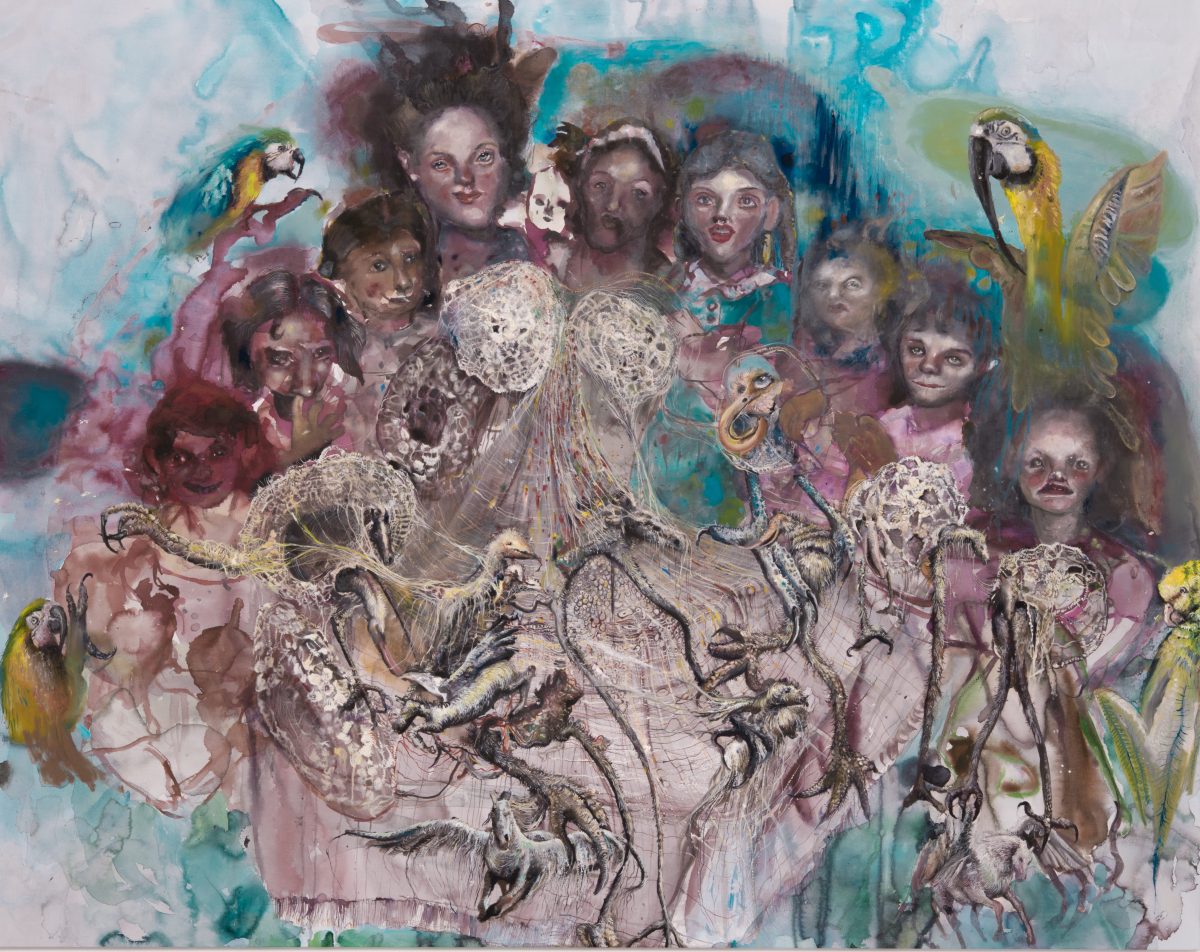
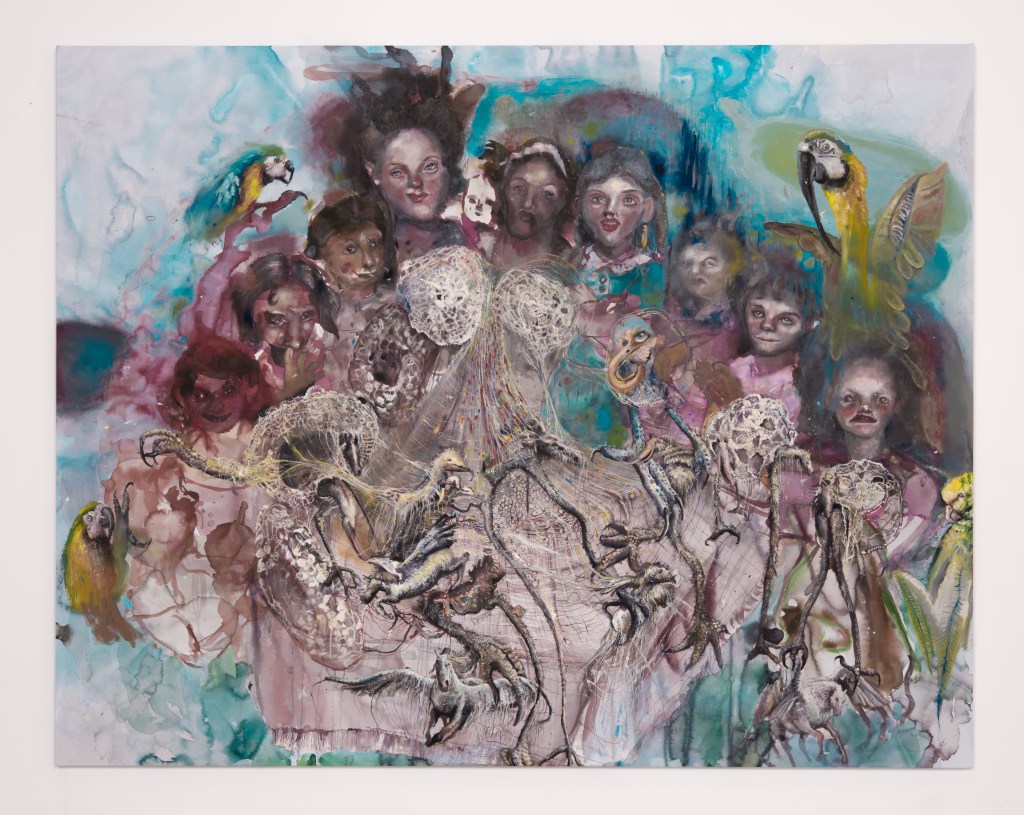
The goddess Pasithea, Rachel Berkowitz, 2025.

Renowned Polish and American Artist Paweł Grajnert Unveils New Exhibition in Chicago

Chicago, IL — The DragonFLY Gallery is proud to announce an upcoming solo exhibition by acclaimed artist Paweł Grajnert, opening on March 14, 2025. This marks Grajnert’s first major showcase in the United States, offering a unique opportunity to engage with his multifaceted body of work.

Grajnert, a Polish and American artist, has garnered international recognition for his contributions to visual art, filmmaking, and literature.

In addition to his cinematic achievements, Grajnert’s literary works have been featured in esteemed publications like Another Chicago Magazine and Bracken Magazine

The exhibition will feature a curated selection of Grajnert’s recent visual art pieces, reflecting his deep engagement with themes of nature, displacement, and ideology. Visitors can expect to experience diverse mediums, including painting, sculpture, and mixed-media installations.

“We are thrilled to host Paweł Grajnert’s work,” said the gallery’s curator. “His art resonates on multiple levels, inviting viewers to explore complex narratives and emotions.”

The opening reception is scheduled for March 14 at 6:00 PM, with the artist in attendance for a Q&A session. The exhibition will run through March 2025.

Exhibition Details

Opening Reception: March 14, 2025, 6:00 PM-9:00PM

Duration: March, 2025

Location: 2436 W Madison St, Chicago, IL 60612

For additional details, visit the gallery’s website or reach out via email

About DragonFLY

​We believe we must work together to address challenges and issues of under-resourced communities. We believe everyone has the capacity to succeed. At DragonFLY, we inspire creativity by challenging assumptions, pushing the boundaries and embracing the unknown. We put new ideas into practice, encouraging experimentation and transformation.

Ethos of Transfiguration, artist Francisco Guevara

Francisco Guevara, Patrocinio de Sangre, 2024.

Scarlet Red a Symbol of Transfiguration

Scarlet red, a color evoking passion and power, defined the transformative influence of the Society of Jesus in the Americas. As they spread Catholic ideology, the Jesuits established an ideological center in Puebla, Mexico, leveraging civil patronage and the wealth from cochineal—a pigment derived from native exploitation—to found powerful educational institutions. In Ethos of Transfiguration, artist Francisco Guevara, in collaboration with Benemérita Universidad Autónoma de Puebla and Museo Universitario Casa de los Muñecos, reinterprets this legacy. Curated by Dr. Alejandro Julián Andrade and designed by museographer Quetzalina Sánchez, the exhibition opens November 28, 2024, featuring a collection of 18th-century colonial works and Guevara’s contemporary creations to explore the vivid intersections of faith, art, and economic power.

“Ethos of Transfiguration” is a captivating exhibition by contemporary artist Francisco Guevara, curated by art historian Dr. Alejandro Julián Andrade. It highlights both the violence and allure of cochineal red, a thread weaving together stories that have faded over time. Through a nuanced exploration of the Society of Jesus and its patronage rooted in the production and trade of scarlet red, the exhibition presents a dialogue between 18th-century Spanish colonial paintings, some of which presumably include cochineal as a pigment, and Guevara’s conceptual works. This artistic and material journey encompasses featherwork, textiles, gemstones, silversmithing, marquetry, and tempera painting, contextualizing carmine’s production and symbolic power while delving into the political-religious tensions tied to the Jesuits and the intellectual elite they cultivated. In this interplay, the unique brilliance and fluidity of cochineal establish a philosophical and material dialogue, inviting viewers to engage with their own histories through color.

 The scarlet red produced by a tiny insect from the Americas not only transformed Spanish Colonial painting but became a cornerstone of the global colonial economy, shaping color technologies and art across Europe. This exhibition revisits the regional history of the Society of Jesus and its unique practices through a compelling dialogue between historical canvases from the former College of the Holy Spirit—portraits of Ignatius of Loyola, founder of the order, and images of Our Lady of Sorrows—and contemporary works by artist Francisco Guevara. Known for his critical reflections on historical processes, Guevara’s research-based practice transforms these explorations into objects notable for their beauty, effectiveness, and persuasive power. His approach extends beyond content, emulating, deconstructing, and reinterpreting original forms through materials whose symbolic and precious qualities have endured since the viceregal era. Through four thematic pillars—Jesuit missionary work, the order’s foundational history in Puebla, its educational legacy, and the figure of Saint Ignatius—Guevara revisits a narrative that laid the cultural and educational foundations of modern Mexico.

As part of its 15th anniversary celebrations, Arquetopia presents “Ethos of Transfiguration” in collaboration with Benemérita Universidad Autonoma de Puebla, and Museo Universitario Casa de los Muñecos BUAP. This exhibition comprises 32 artworks, including 14 18th-century paintings and 18 contemporary pieces, curated to bridge historical and modern perspectives. Designed by renowned museographer Quetzalina Sánchez, the exhibition opens on November 28, 2024, and will run through February 2, 2025.

Exhibition Details:

Title: The Ethos of Transfiguration: Scarlet Reverence, Faith, and the Legacy of Cochineal

Artist: Francisco Guevara

Curator: Dr. Alejandro Julián Andrade

Exhibition Designer: Quetzalina Sánchez

Venue: Museo Universitario “Casa de los Muñecos,” BUAP, Puebla, Mexico

Dates: November 28, 2024 – February 2, 2025

About Arquetopia: 

Arquetopia is an international nonprofit organization dedicated to promoting art and culture through residency programs, exhibitions, and educational projects. Celebrating its 15th anniversary, it continues to be a benchmark in supporting artists and preserving cultural heritage in Mexico and beyond.  

About Francisco Guevara:

Francisco Guevara is a multidisciplinary artist from Puebla and co-founder of Arquetopia and International Artist Residencies in Mexico, Peru, and Italy. His research focuses on the historical construction of differentiation and distortion through mediums such as painting, installation, and metalwork. His work centers on history, identity, and power dynamics, and has been exhibited internationally in Australia, Spain, Slovenia, Romania, the United States, and Japan. With over 20 years of experience in international art projects, curation, and teaching, he has received numerous accolades for his ability to connect the past with the present through art.

For more information and interviews, please contact:
Nayeli Hernandez, Programs Director Arquetopia Foundation
Email: nhernandez@arquetopia.org

For more detailed information about the exhibition, please visit the following link: https://franciscoguevara.art/

Light Form, A Solo Exhibition by Bill Armstrong

Blue Sphere #433, 2012

BILL ARMSTRONG

Light Form

27th September – 23rd November 2024

HackelBury is pleased to present Light Form, a solo exhibition by Bill Armstrong which explores visual perception and the transformative power of image making to create meditative photographic artworks.

Renowned for his iconic Infinity series, Armstrong explores the boundaries of the visible edge to create ethereal and dreamlike images. Light Form further delves into his fascination with impermanence and abstraction, creating otherworldly compositions which encourage viewers to contemplate their own reality.

“Extreme de-focusing enables me to blend and distil hues, creating rhapsodies of colour that are meditative pieces—glimpses into a space of pure colour, beyond our focus, beyond our ken.“

The exhibition includes abstract works from Armstrong’s MandalasBlue Spheres, and Darshan series, which reference Eastern philosophy and spirituality. 

Armstrong is deeply interested in the viewer’s emotional response to imagery, shape, and colour, aiming to disrupt and transform their experience and expectations.

“The nature of visual perception intrigues me: how the eye continually tries to resolve these images, but is unable to do so, and how that is unsettling.“

Mandala #450, 2003

Blue Spheres explores the universal significance of the circle and the mystical possibilities of the colour blue, whilst Darshandelves into spiritual themes in Eastern thought, referencing the square as a sacred object and its symbolism. The four sides of the square correspond to the four elements (earth, water, wind, and fire), the four seasons, and the four cardinal directions. The Mandala series continues the interest in meditation and its central role in Buddhist spirituality. 

“I am drawn to the idea that we can believe something is real, while at the same time knowing it is illusory, and the experience of visual confusion, when the psyche is momentarily derailed, can free us to respond emotionally. “

This exhibition encourages us to reflect on the universality of human experience – our mortality and the impermanence of life. 

About Bill Armstrong

Bill Armstrong (American b.1952) is renowned for his distinctive technique of photographing collages, creating an illusionary effect that blurs the line between reality and artistic construction. His process subjects the images to a series of manipulations including photocopying, cutting, painting and re-photographing that transforms the originals and gives them a new meaning and context. This approach allows Armstrong to explore themes of impermanence, abstraction and the boundaries of visual perception.

Armstrong graduated from Boston University in 1979 magna cum laude with an BA in History of Art and an MBA in 1987. He has held various teaching positions, including Photography Instructor at the International Center for Photography in New York, and Adjunct Professor of Photography at the School of Visual Arts in New York. He has exhibited extensively across the USA and internationally. He has a solo exhibition at Palau de la Musica Catalana, Barcelona, “Hero/Anti-Hero,” in October-November 2024.

Armstrong has been exhibited widely. Selected public exhibitions include ‘Blur: A Photographic History’, Musée Elysée, Switzerland, 2023, Northern Light, Irish Museum of Modern Art, Dublin and IN FULL LIGHT: Nine photographers interpret the Vatican Museums, Municipality of Milan- Department of Culture, Palazzo Reale, Milan 2018.

Untitled, 2024

About HackelBury

HackelBury was founded twenty-six years ago by Sascha Hackel and Marcus Bury. The gallery is committed to championing artists who push the boundaries of their medium to create meaningful and contemplative work. Originally renowned for showcasing classic 20th-century photography, the gallery has embraced more conceptual and abstract art over the past 15 years, expanding its stable of artists to include those working in photography, drawing, painting and collage.

Hackelbury Fine Art represents a select group of artists whose work reflects a profound depth of thought and dedication to their craft.

FOR ALL PRESS ENQUIRIES PLEASE CONTACT

Camilla Cañellas – Arts Consultancy & PR

E: camilla@culturebeam.com M:+34 660375123

Phil Crook – HackelBury Fine Art

E: phil@hackelbury.co.uk T: +44 20 7937 8688

Instagram @hackelburyfineart

Material Poetry: An Exhibition Exploring Contemporary New Media 

Sasha Stiles, Cursive Binary: Portrait of the Poet (Variation 1), 2024.

MATERIAL POETRY

October 3, 2024 – 2.30pm CET (online)

Ana María Caballero, Danielle Brathwaite-Shirley, Eduardo Kac, Franziska Ostermann, Sasha Stiles

HEK (House of Electronic Artsand synthesis gallery are pleased to announce MATERIAL POETRY, an exhibition exploring contemporary new media poetry, opening on October 3rd on Virtual HEK. Curated by Giorgio Vitale, MATERIAL POETRY showcases the work of five artists – Ana María Caballero, Danielle Brathwaite-Shirley, Eduardo Kac, Franziska Ostermann, and Sasha Stiles – each embracing distinct poetic languages and artistic strategies.

Danielle Brathwaite-Shirley ‘THE OCEAN REMEMBERED YOUR BODY’, 2021.

The exhibition delves into themes of intimacy, identity, and the self offering critical reflections on these topics through various media. Since the 1990s, poetry’s evolution has been profoundly shaped by technological advancements, moving away from the printed page and becoming a more dynamic, interactive, and inclusive art form. The incorporation of multimedia, hypertext, video, the web, emerging technologies like blockchain, and the role of performance have all contributed to poetry’s transformation in the digital age.

MATERIAL POETRY bridges analog and digital realms, embedding poetry into various artistic media and bringing it out of the ordinary. The exhibition disrupts the linearity of text, creating a unique space where the poetic emerges in the digital domain. In these artworks, the artists translate life into visual language, merging text with the viewer’s mind to recreate the lived rhythms and social textures of particular times and spaces, allowing someone else’s voice, words, and body to be experienced intimately. Each work in the exhibition reveals a different facet of this transformation.

Ana María Caballero’s Paperwork reflects the materiality of poetry and its role in transmitting memory. Through performances in cities such as Los Angeles, Bogotá, and Valencia, Caballero gathered audience reactions to her poetry, which she then used to generate digital paper sculptures. These sculptures invoke the architectural elements of each city, blending the personal with the public, and presenting poetry as both message and medium in a new, digital form.

In Danielle Brathwaite-Shirley’s THE OCEAN REMEMBERED YOUR BODY, players navigate a text-based video game that explores identity and memory. The ocean serves as both a metaphor and a physical space, drawing on the artist’s personal history and honoring the narratives of marginalized bodies. Inspired by early text-based adventure games, the piece encourages players to engage deeply with their imaginations, reconstructing the world from their own experiences and histories.

Eduardo Kac’s Letter, originally created as a VR experience, presents a poem in the form of two spiraling cones made of text. The work draws the viewer into an immersive reading experience, where the text can be rotated and navigated in three-dimensional space. Referencing moments of birth and death in the poet’s family, the poem’s emotional weight is amplified by its dynamic form. Letter is a powerful exploration of the spatial possibilities of language and is presented here in its video version, evocative of its vintage interactive form.

In Franziska Ostermann’s Can you hear me?, the artist stages a virtual Zoom call between different versions of herself. The fragmented conversations, filled with questions like Can you hear me?, highlight the challenges of authentic connection in the digital space. The piece underscores the alienation and separation caused by the very technology that enables the meeting, as the selves attempt to connect but never quite align.

Finally, Sasha Stiles’ Cursive Binary: Portrait of the Poet (Variation 1) is a layered, generative work that merges poetry with AI and digital language. Stiles collaborates with her AI alter ego to reinterpret her poem Portrait of the Poet as a Brief History of Humanity, transforming it into Cursive Binary – a language she developed for transhuman communication. The piece explores the intersection of human and machine, questioning the future of authorship and identity in a posthuman world.

Franziska Ostermann ‘Can you hear me?’, 2021.

MATERIAL POETRY is more than a collection of artworks – it is an intimate dialogue between language and form, with poetry becoming a living, breathing artifact: multifaceted and dynamic. These works challenge binary thinking and embrace hybridity, expanding our capacity to experience, comprehend, and engage with language on a deeply visceral level. They invite us into the ever-evolving story of what it means to be human.

synthesis gallery is a genre-defining cultural organization critically engaged with digital art. Since its inception in 2017, the gallery has produced over twenty-five exhibitions of new media art in Berlin and abroad, online and on-chain, and is dedicated to exhibiting internationally renowned, well-established artists alongside emerging ones.

HEK (House of Electronic Arts) in Basel is Switzerland‘s national center of excellence for all art forms that express and reflect new technologies and media. With its interdisciplinary orientation, the HEK provides a broad public with in-sights into art productions of different genres in the dialogue between art, media and technology. In a diverse programme of exhibitions, smaller festival formats, performances and concerts, the HEK is dedicated to current social themes and issues as well as technological and aesthetic developments.

Exhibition: October 3, 2024 – November 28, 2024

Opening: October 3, 2024 – 2.30pm CET (online)

Venue: virtual.hek.ch

Private tour: email to register (giorgio@synthesis.gallery)

The exhibition is generously supported by Le Random

Join the discussion about the exhibition online at:

Instagram: @synthesis.gallery 

Twitter: @synthesis

TikTok: @synthesis.gallery 

Website: synthesis.gallery