
Art as a Bridge Between Cultures.
OmenaArt Foundation and LuginsLand of Art’s Thematic Pavilion at the Malta Biennale 2026
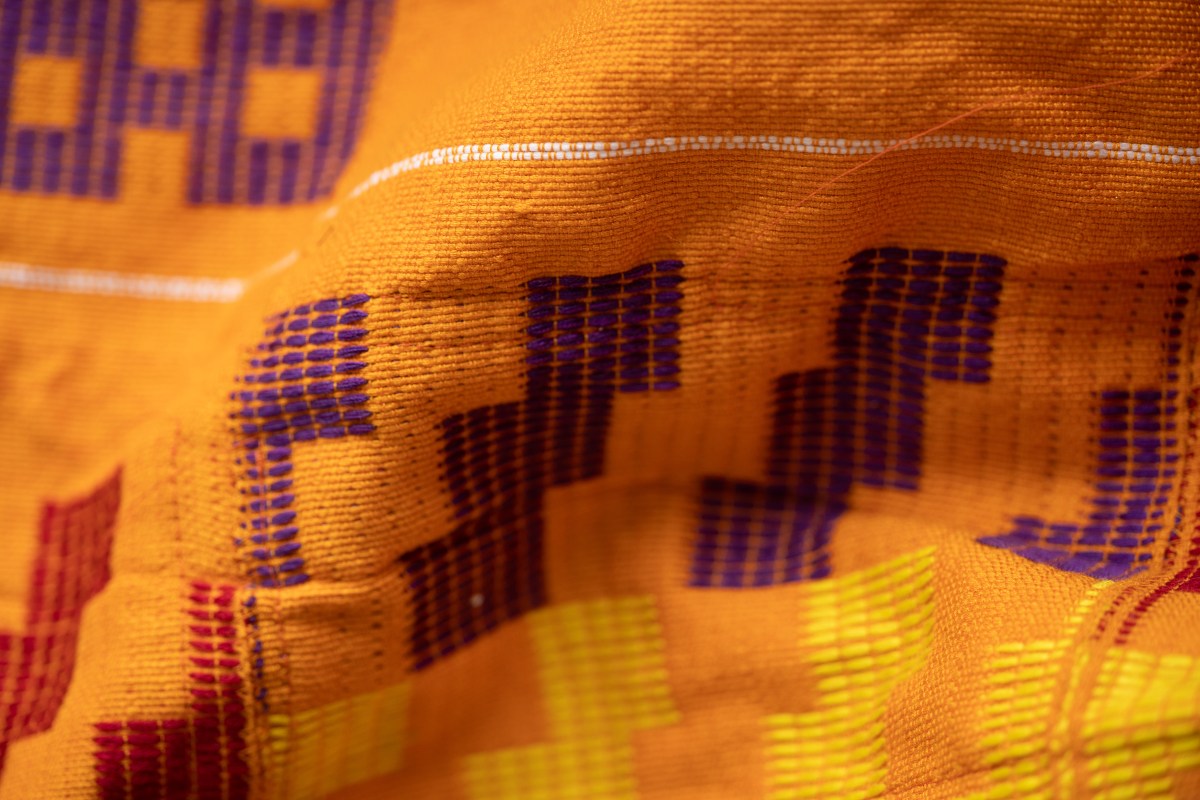
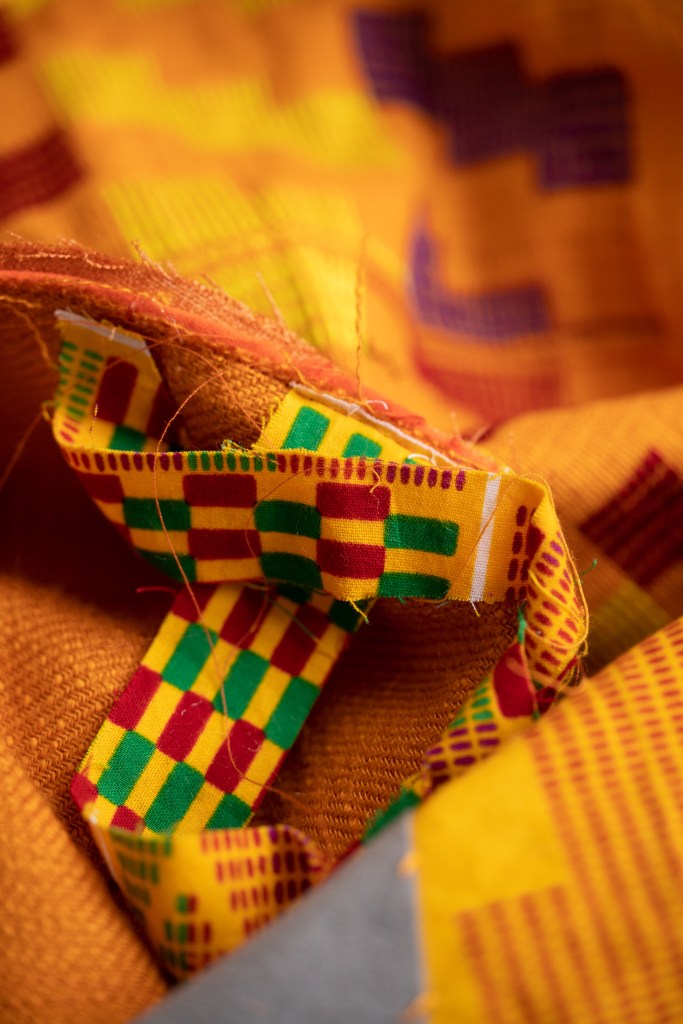
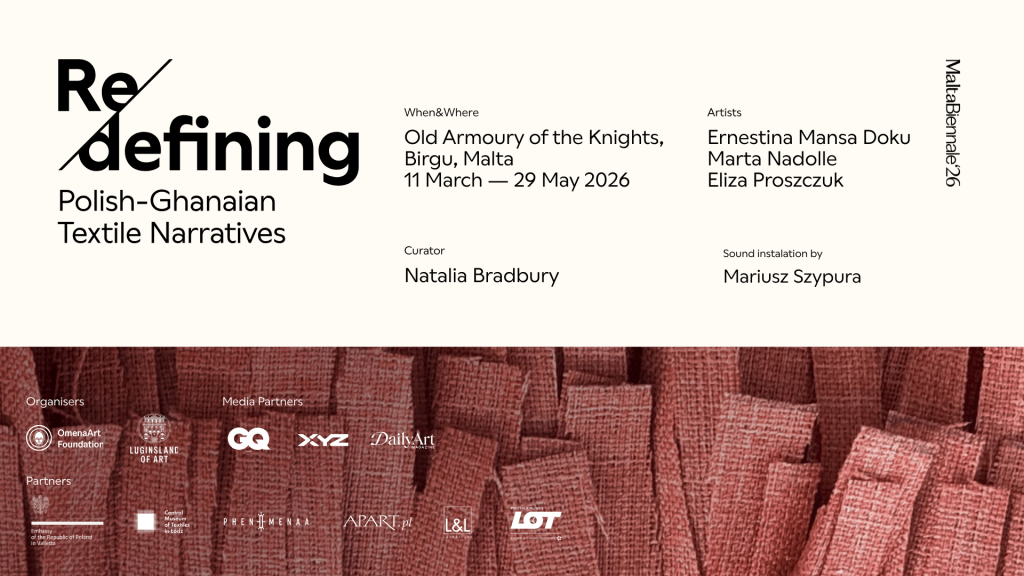
The OmenaArt Foundation and LuginsLand of Art will once again be situated at the intersection of cultures and contemporary artistic practices. In 2026, the Foundation returns to the Malta Biennale, with a thematic pavilion titled Redefining. Polish-Ghanaian Textile Narratives.
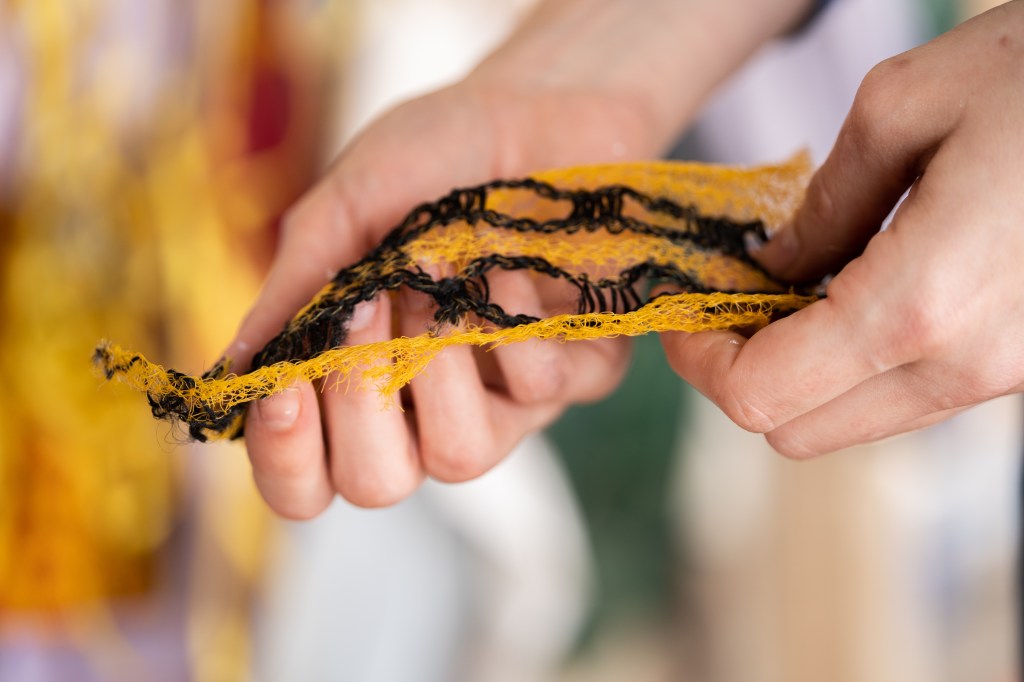
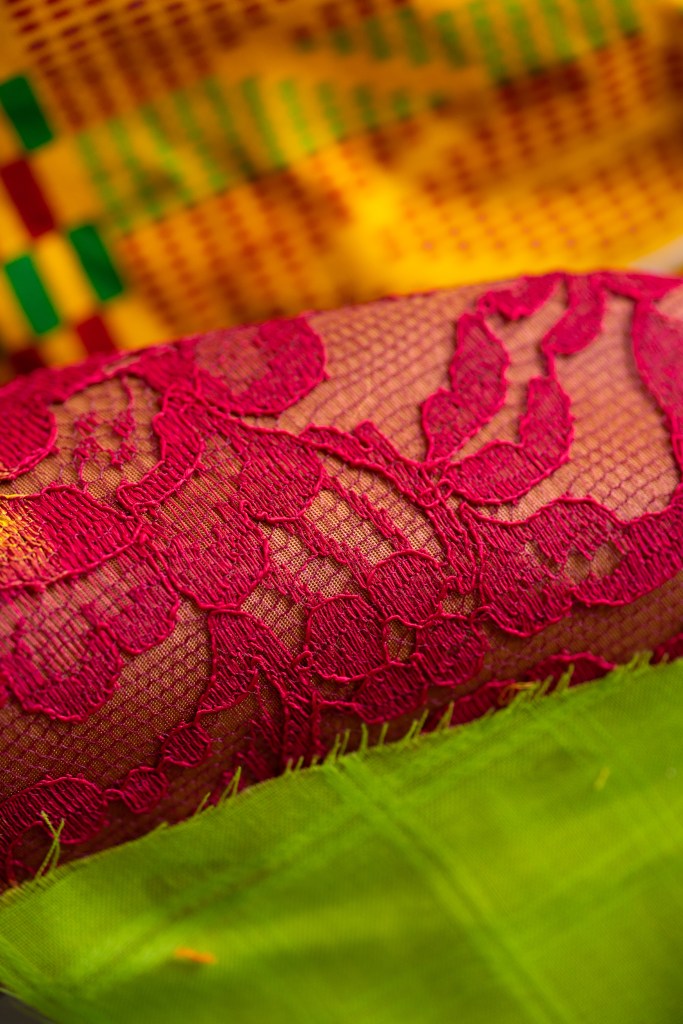
Curated by Natalia Bradbury, the exhibition will feature large-scale textile installations by Marta Nadolle, Eliza Proszczuk, and Ernestina Mansa Doku, created during their artistic residency in Malta. The artists, coming to Malta from Poland and Ghana, will intertwine the historical narratives of both countries, drawing on weaving traditions and the island’s local heritage. Their collaboration began during Accra Cultural Week 2025 in Ghana, where, together with local artists Moses Adjei, Cornelius Annor, and Raphael Adjetey Adjei Mayne, they conducted art workshops for children exploring the textile art heritage of Poland and Ghana. The workshops took place at Kids Haven School, built by the Omenaa Foundation.
“Our exhibition explores the theme of historical bonds and solidarity between Poland and Ghana. Through the artists’ works, we want to show that despite distance and differing experiences, we are united by shared emotions and values,” says Natalia Bradbury, curator of Redefining. Polish-Ghanaian Textile Narratives. “Ernestina Mansa Doku brings to the project an organic approach to material and nature; Eliza Proszczuk contributes a reflection on memory, emancipation, and the body; while Marta Nadolle offers a perspective focused on interpersonal relationships and observations of tensions between the public and the private. The juxtaposition of these three practices makes it possible to create works that operate both through personal narrative and through the universal language of contemporary art, legible within the international art circuit,” Bradbury emphasizes.
Running from 11 March to 29 May 2026, the OmenaArt Foundation’s thematic pavilion will reference the philosophy of Ubuntu – “I am because we are” – emphasizing interdependence, community, and mutual respect. This idea links the artists’ collaboration with historical Polish-Ghanaian relations that have developed since the 1960s. The artworks will be accompanied by a premiere sound installation by the composer Mariusz Szypura. The pavilion will also feature a public program including debates, panel discussions, and meetings with international experts.
The thematic pavilion is organized by the OmenaArt Foundation, which is dedicated to fostering relationships and promoting artists from Central Europe and West Africa. In 2025, the Foundation presented its African art collection for the first time at the TOP CHARITY Art exhibition at the Orangery of the Wilanów Palace. Also, OAF supported the creation of a monumental work by Ibrahim Mahama, which was exhibited at Zachęta – National Gallery of Art. The OmenaArt Foundation works closely with Phenomenaa Gallery in Warsaw, consistently strengthening the presence of African and non-European artists on the Polish art market.
“In recent years, African art has secured a significant position on the global art scene. Works by artists such as Amoako Boafo and Julie Mehretu achieve record-breaking prices at auctions and are presented in leading cultural institutions. In 2025, ArtReview magazine named the Ghanaian artist Ibrahim Mahama the most influential figure in contemporary art. That is why I am proud that through the activities of my Foundations, we support artists from this continent – investing in art and education, including through the construction of the innovative Kids Haven Sport & Art Complex in Ghana, and promoting their work on international platforms,” says Omenaa Mensah, CEO of the OmenaArt Foundation.
“I am especially delighted that our exhibition, presented during the Malta Biennale 2026, will highlight how powerful and inspiring intercultural dialogue can be – between Poland and Ghana, Europe and Africa – in the extraordinary setting of a Mediterranean island,” Mensah adds.
The exhibition will explore intercultural relationships across past, present, and future perspectives, while simultaneously interpreting the central theme of Malta Biennale 2026 – CLEAN | CLEAR | CUT – which refers to ideas of repair, connection, and purification.
The OmenaArt Foundation and Luginsland of Art project highlights the significance of the Polish and Ghanaian contemporary art scene. Through its presence at the Malta Biennale – an important global artistic platform – it strengthens intercultural dialogue and promotes the rich textile traditions of Poland and Ghana.
Artists
Ernestina Mansa Doku
Ernestina Mansa Doku (b. 2001) is a Ghanaian visual artist of the younger generation who lives and works in Accra. She works primarily with acrylic paint, as well as artistic textiles, animation, and sculpture. She completed her BA in Painting and Sculpture at Kwame Nkrumah University of Science and Technology (KNUST) in Kumasi, where she is currently continuing her MA studies in the same department. She is a member of the blaxTARLINES collective. In 2024, she received a scholarship from the OmenaArt Foundation as part of the Artis Arundo programme, which supports emerging talents.
The artist draws inspiration from nature and how it adapts to changing conditions and environments: pushing through cracks, clinging to surfaces, and intertwining with other objects. In her practice, she seeks to challenge anthropocentric perceptions of lived experience, opening space for a posthumanist perspective. She describes her creative processes as a form of surgical intervention; through deformation, reorganisation, transformation, multiplication, or division of forms, she strives to create something new. In the act of creating, Doku consciously embraces spontaneity and the role of chance. Her painting reflects horror vacui (Latin: fear of emptiness) – the artist deliberately saturates space with details and elements that often go unnoticed in everyday life.
Marta Nadolle
Marta Nadolle (b. 1989) is a Polish visual artist specializing in painting. She graduated from the Academy of Fine Arts in Gdańsk and the Academy of Fine Arts in Warsaw, receiving her diploma with distinction in 2014. In her artistic practice, she addresses themes of love, alienation, coming of age, intimacy, and interpersonal relationships. She reworks the tradition of the veduta, intertwining it with inspirations drawn from folk culture. By setting together these seemingly disparate elements and customs, she crosses the line between what is central and what is peripheral, between the public and private. Her works combine metropolitan narratives with intimate handcraft and folklore, exploring the emotional landscapes of the metropolis. From Nadolle’s paintings emerge the desires of contemporary city dwellers – for genuine closeness and some emotional calm.
Winner of Paszporty Polityki Prize 2023 in the field of Visual Arts. Her work has been exhibited both in Poland and internationally, including in Warsaw, Łódź, Sopot, Wrocław, Poznań, Prague, Bratislava, Stockholm, and at NADA Art Fair in Miami (2021). She has held several solo exhibitions, including Don’t Worry (LETO, Warsaw, 2022), I’ll Send Him Nudes (Galeria Dobro, Olsztyn, 2021), and 35 (Galeria Art Hub, Łódź, 2024). Nadolle’s works are held in the collections of the National Museum in Gdańsk, the Museum of Warsaw, and the mBank collection.
Eliza Proszcuk
Eliza Proszczuk (b. 1980) is a Polish visual artist, PhD in Fine Arts, academic lecturer, and researcher. She graduated from the Academy of Fine Arts in Warsaw (Faculty of Painting, 2006) and from the AKV St. Joost in Breda and Den Bosch (Netherlands), where she earned an international Master of Fine Arts degree (2009). She creates textiles, spatial objects, and collages, treating art as a tool for social change and a space of emancipation. In her practice, she explores themes of memory, inheritance, and women’s herstory, combining artistic activity with research and social engagement.
She has carried out projects with marginalized groups, including incarcerated women, patients of addiction treatment centers, and refugees. She is the author of, among others, the project Girls from the Castle, created in collaboration with female inmates of the Warsaw-Grochów Detention Centre (Ujazdowski Castle Centre for Contemporary Art, 2014; CSW Kronika, 2022), which examined childhood as a cell and culture as a prison.
She draws inspiration from the traditions of northeastern Poland, where she comes from, reconstructing and reinterpreting women’s crafts and narratives erased from official history. She collaborates with international academic and artistic institutions, including the University of St Andrews in Scotland and Humboldt University in Berlin. In 2022, she received a four-year COST grant (European Cooperation in Science and Technology) for a research-artistic project on sisterhood and social justice. Proszczuk is a co- editor of the publication Traces of Sisterhood (Academy of Fine Arts in Warsaw Press) and a co-organizer of events combining art and science, such as Care and Repair: Ungendering Memory and Museum Practices (Ethnographic Museum, Ljubljana, 2023) and Connecting Lines: Tracing Care at the Intersection of Feminism and Ecology (City of Women, Museum of Modern Art, Ljubljana, 2024). Since 2017, she has been working at the Academy of Fine Arts in Warsaw, where she leads the Textile in Architecture Studio. She is a two-time recipient of scholarships from the Polish Ministry of Culture and National Heritage and ZAiKS. She finds inspiration in the words of Pier Paolo Pasolini: “Culture as prison, art as liberation” – and consistently creates spaces where art becomes a tool for experimentation, therapy, and social transformation.
Mariusz Szypura – Sound Installation
Mariusz Szypura (b. 1972) is a composer, music producer, and audiovisual artist working at the intersection of music, design, and contemporary art. After years of activity on the Polish alternative scene (Happy Pills, Blimp, Silver Rocket), he focused on interdisciplinary artistic projects in which sound becomes a sculptural material and a tool for shaping experience.
In recent years, he has concentrated on large-scale audiovisual installations. In 2024, at the Centre for Contemporary Art Ujazdowski Castle in Warsaw, he presented the project in:human – an immersive environment exploring relationships between humans and technology through multichannel sound and image. During the Unsound Festival at Lincoln Center in New York, he presented êkhos, combining electroacoustic composition with stereoscopic projections.
His most extensive artistic undertaking is Chopin Residue – an international audiovisual project deconstructing the work of Frédéric Chopin through experimental compositional techniques combined with large-scale imagery, video installation, and spatial sound. In its musical layer, co-created with artists such as Adrian Utley, Lee Ranaldo, John Stanier, and Fennesz, it has been presented in venues including New York and Osaka. As a composer of music for exhibitions, Szypura creates autonomous sonic environments that engage in dialogue with both the artwork and the architecture. His compositions do not illustrate – they shape the rhythm of perception, the intensity of experience, and the viewer’s relationship with space.
Curator – Natalia Bradbury
Natalia Bradbury is an art historian, curator, and art advisor, living and working between Poland and the United Kingdom. She is the Executive Director of OmenaArt Foundation and Phenomenaa Gallery in Warsaw, which specializes in contemporary African and non-European art.
Her main area of research focuses on the growing significance and market value of a new generation of artists from West Africa and its diaspora, as well as from Central and Eastern Europe, particularly Poland. In her work, she analyzes the factors influencing the development of this segment, including relationships between global institutions, galleries, collectors, and auction houses. She initiates projects that situate contemporary artistic practices of Polish and African artists within a broader economic, social, and geopolitical context.
She is the author of exhibitions such as TOP CHARITY Art (2024, 2025), Other Geographies, Other Stories (Malta Biennale 2024, with Hanna Wróblewska), and Redefining. Polish-Ghanaian Textile Narratives (Malta Biennale 2026), co-curator of the Kids Haven Sport & Art Complex in Ghana. Mentor at Rafał Brzoska Foundation, she also serves as a juror for artistic competitions, including the 16th edition of Best Artistic Diplomas, organized by the Academy of Fine Arts in Gdańsk, and Loostro – Competition for Young Artists.
Organisers – OmenaArt Foundation & Luginsland of Art
About OmenaArt Foundation
OmenaArt Foundation implements unconventional artistic projects in Poland and internationally. The Foundation’s mission is to build intercultural dialogue, support artists, and promote contemporary art from Eastern Europe and Africa, with a particular focus on art in public spaces. OAF is also actively involved in the revitalization of historic buildings and in conservation and educational projects.
The Foundation coordinates the TOP CHARITY Auction – one of the most significant philanthropic events in Europe. Over the course of four years, the auction’s organizers have raised more than PLN 145 million. The funds have been allocated to the charitable work of the Omenaa Foundation, the Rafał Brzoska Foundation, and the Philanthropic Consortium, as well as to OmenaArt Foundation projects supporting artists and cultural institutions.
About Luginsland of Art
LuginsLand of Art organizes artist residencies, exhibitions, and public programmes in Malta. The project aims to breathe new life into one of the island’s most important architectural gems – Villa Luginsland in Rabat. The historic property, currently undergoing restoration, will be transformed into a center for exhibitions, discussions, and artistic events, fostering international artistic exchange and open dialogue about the past, present, and future.
Malta Biennale
Malta Biennale is an international contemporary art initiative inaugurated in 2024 under the patronage of UNESCO and the President of the Republic of Malta. The biennale’s concept centers on dialogue between contemporary art and cultural heritage – exhibitions are presented in historic sites, including Valletta, the Three Cities (Birgu, Cospicua, Senglea), and the Cittadella in Gozo.
The inaugural edition featured over 100 artists from 35 countries, as well as 14 national and thematic pavilions across 21 historic venues. The first participating countries included Poland, France, Germany, China, Austria, Serbia, Ukraine, Italy, Spain, and Malta.
This year’s Malta Biennale will take place from 11 March to 29 May under the theme CLEAN | CLEAR | CUT. The event’s Artistic Director is Rosa Martínez, a renowned curator and Artistic Director of the 51st Venice Biennale. She has also directed or curated biennials in Barcelona (1988–1992), Rotterdam (1996), Istanbul (1997), Santa Fe, New Mexico (1999), Busan (2000), São Paulo (2006), and Moscow (2005–2007).
Redefining. Polish-Ghanaian Textile Narratives
Thematic Pavilion of the OmenaArt Foundation, Malta Biennale 2026 (11 March – 29 May 2026)
Venue: Old Armoury of the Knights of Malta, Birgu, Malta Artists: Ernestina Mansa Doku, Marta Nadolle, Eliza Proszczuk Curator: Natalia Bradbury
Organisers: OmenaArt Foundation, LuginsLand of Art
Partners: Embassy of the Republic of Poland in Valletta, Central Museum of Textiles in Łódź, Phenomenaa Gallery, Apart, Luce&Light, LOT Polish Airlines
 Art Style | Art & Culture International Magazine