

The 18th International Architecture Exhibition
The Laboratory of the Future
By Christiane Wagner

The 18th International Architecture Exhibition, titled The Laboratory of the Future, takes place in Venice until Sunday, November 26, 2023. The exhibition is held at the Giardini, the Arsenale, and Forte Marghera.
The event is curated by Lesley Lokko and organized by La Biennale di Venezia. La Biennale di Venezia is taking significant steps towards combating climate change by promoting a more sustainable model for designing, installing, and operating all its events. In 2022, La Biennale achieved certifications for all the events held that year. This achievement was made possible by meticulously collecting data on the causes of CO2 emissions generated by the events and adopting consequent measures. The entire process of achieving carbon neutrality, conducted in compliance with international standard PAS2060, was certified by R.I.N.A.
The mobility of visitors is the most significant factor in the carbon footprint of all events. To address this issue, La Biennale launched a communication campaign in 2023 to raise awareness among the attendees. The 18th International Architecture Exhibition is the first major exhibition to test the process of achieving carbon neutrality and reflect on the themes of decolonization and decarbonization.
The International Exhibition has the power to act as an agent for change.
Lesley Lokko views architecture exhibitions as both a moment and a process. Although they share the structure and format of art exhibitions, architecture exhibitions differ from art in critical, often overlooked ways. In addition to the desire to tell a story, questions of production, resources, and representation play a central role in bringing an architecture exhibition to life but are seldom acknowledged or discussed. Right from the beginning, it was evident that the primary focus of The Laboratory of the Future would be ‘change.’
The Laboratory of the Future is an exhibition in six parts. It includes 89 participants, over half from Africa or the African Diaspora.
The Laboratory of the Future exhibition showcases the best and brightest architects, urbanists, designers, landscape architects, engineers, and academics from Africa and the Diaspora. The exhibition is divided into two main parts: the Central Pavilion in the Giardini and the Arsenale complex.
The Central Pavilion in the Giardini features 16 architectural practices representing a distilled force majeure of African and Diasporic architectural production. Visitors to this part of the exhibition can see the strengths and capabilities of these practices and how they are pushing the boundaries of architectural design.
The exhibition then moves to the Arsenale complex, where participants from the Dangerous Liaisons section and Curator’s Special Projects gather. Dangerous Liaisons is a section of the exhibition that explores the links between architecture and technology. At the same time, Curator’s Special Projects is a category that showcases the work of young and emerging architects.

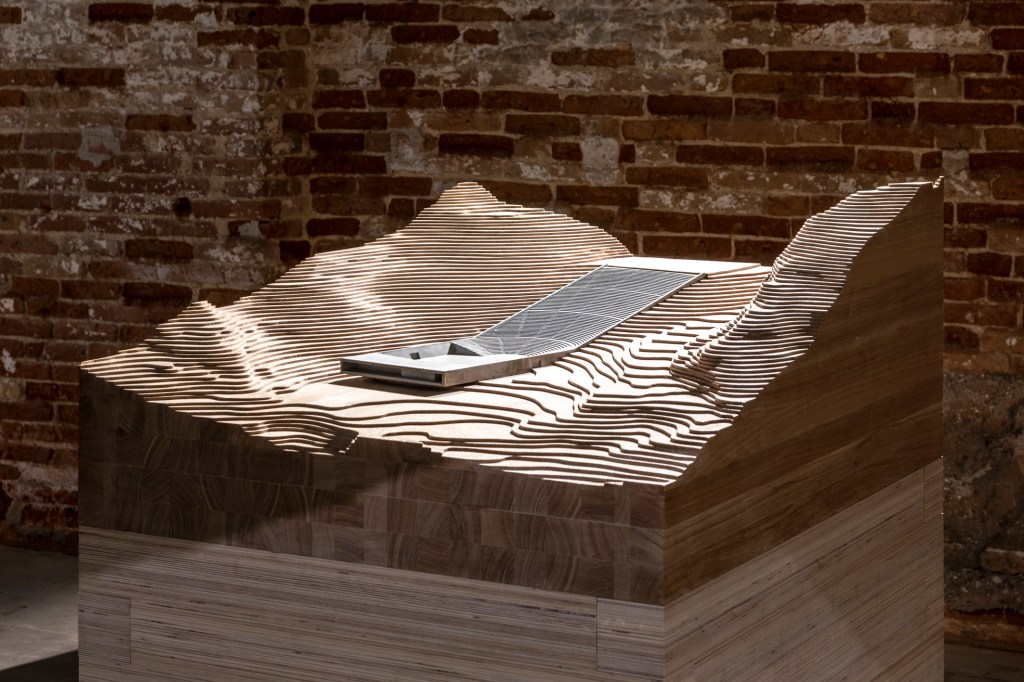
Throughout both venues, visitors will find young African and Diasporan practitioners, the Guests from the Future, engaging directly with this exhibition’s twin themes, decolonization and decarbonization. Their work provides a glimpse of future practices and ways of seeing and being in the world.
The Curator has thoughtfully opted to refer to participants as ‘practitioners’ rather than architects, urbanists, designers, landscape architects, engineers, or academics. This choice is because Africa’s diverse and intricate conditions and a rapidly changing world necessitate a distinct and more comprehensive understanding of the term ‘architect.’ This exhibition offers a unique opportunity to witness the work of some of the most talented architects and designers from Africa and the Diaspora and to gain a deeper understanding of the challenges and opportunities facing the field of architecture today. Among ‘practitioners’ from Africa and the Diaspora, there are a total of 64 countries participating in the Biennale Architecture, each organizing their exhibitions across the historic Pavilions at the Giardini, Arsenale, and the city center of Venice.


 Art Style | Art & Culture International Magazine